
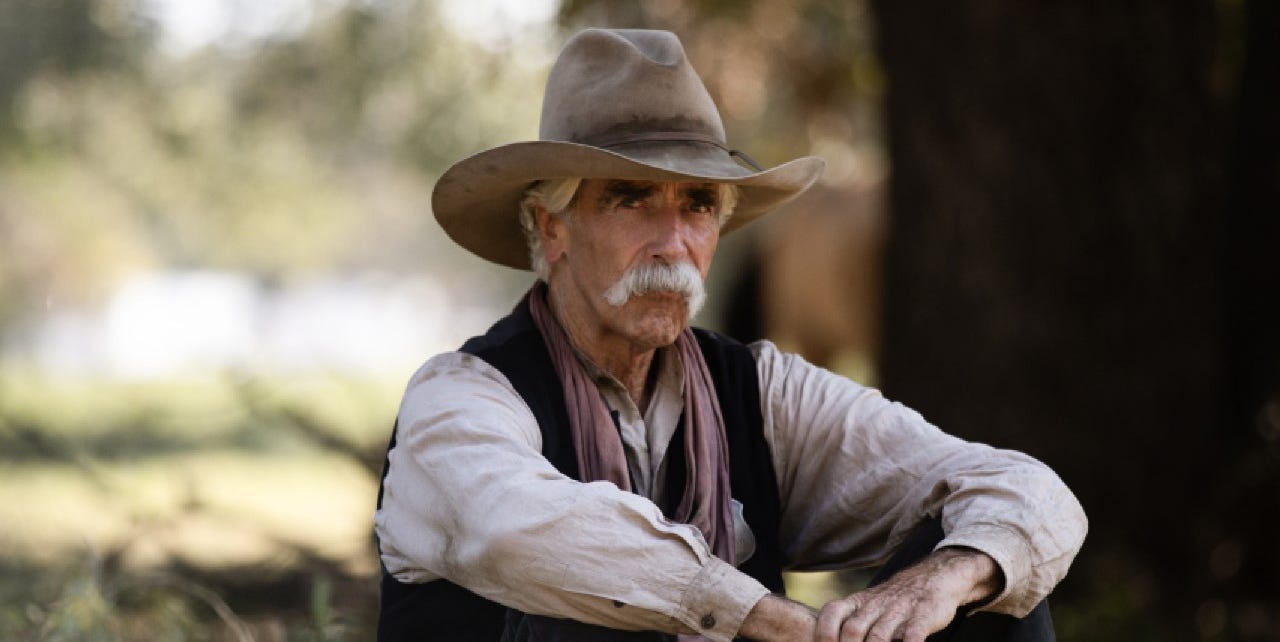
When Yellowstone became one of the biggest television phenomena in recent memory, the pressure to build a worthy universe around it was enormous. Spin-offs are notoriously difficult to pull off — most feel like pale imitations of the shows that inspired them. But 1883, Taylor Sheridan’s prequel miniseries, managed something genuinely rare: it earned an 89% approval rating on Rotten Tomatoes and left audiences and critics alike calling it not just a solid companion piece, but arguably the strongest entry in the entire Yellowstone franchise.
That’s a bold claim, and it holds up to scrutiny. While Yellowstone itself built a massive and devoted fanbase, 1883 is the project that demonstrated Sheridan’s range as a storyteller — and reminded viewers that prestige Western television can carry genuine emotional weight.
Here’s why 1883 continues to be discussed as the gold standard for franchise spin-offs, and why its reputation has only grown since it first aired.
What 1883 Actually Is — And Why It Worked So Well
1883 is a prequel to Yellowstone, tracing the origins of the Dutton family as they make the brutal journey westward across the American frontier. Rather than simply replicating the modern-day drama of Yellowstone, Sheridan used the prequel format to tell a fundamentally different kind of story — one rooted in hardship, mortality, and the unforgiving reality of 19th-century frontier life.
The series functions as a limited miniseries, which gave it a contained, cinematic quality that ongoing serialized dramas often struggle to achieve. There was no filler. Every episode moved. That structural discipline is part of what critics responded to so positively.
The 89% Rotten Tomatoes score reflects a critical consensus that 1883 wasn’t just good for a spin-off — it was genuinely excellent television on its own terms.
Why the Yellowstone Universe Needed a Show Like This
The Yellowstone franchise expanded rapidly, producing multiple spin-offs and continuation projects. Not all of them landed with the same force. 1883 stands apart because it wasn’t built around replicating what made Yellowstone popular — the power struggles, the ranch politics, the modern Western mythology. Instead, it stripped things back to something rawer and more elemental.
The frontier setting allowed Sheridan to explore themes that the present-day show couldn’t easily access: the cost of westward expansion, the violence of survival, and the generational sacrifice that eventually produced the Dutton legacy viewers already knew from Yellowstone.
That connective tissue between the two shows gave 1883 emotional stakes that a standalone Western might not have carried. Audiences already cared about the Dutton name. Learning what it cost to build something worth that name made every loss in the prequel hit harder.
What Set 1883 Apart From Other Franchise Spin-offs
Most spin-offs exist to extend a brand. 1883 exists to deepen one. That’s a meaningful distinction, and it shows in how the series was constructed.
- Miniseries format: The limited run gave the story a defined beginning, middle, and end — something serialized spin-offs often sacrifice in favor of keeping a franchise alive indefinitely.
- Tonal contrast: Rather than mimicking Yellowstone‘s modern drama, 1883 committed fully to its historical setting and the emotional register that came with it.
- Critical reception: An 89% Rotten Tomatoes score is not something most franchise spin-offs achieve. It placed 1883 in genuinely rare company.
- Storytelling discipline: Sheridan’s writing kept the focus tight, avoiding the sprawl that can dilute a spin-off’s impact.
- Emotional payoff: The series built to conclusions that felt earned rather than manufactured for cliffhanger purposes.
How 1883 Compares in the Yellowstone Franchise
| Show | Format | Rotten Tomatoes Score | Connection to Yellowstone |
|---|---|---|---|
| 1883 | Limited Miniseries | 89% | Direct prequel — Dutton family origins |
| Yellowstone | Ongoing Series | Not specified in source | Main series |
| Other Spin-offs | Various | Not specified in source | Various connections |
Note: Rotten Tomatoes figures for other franchise entries were not confirmed in
Taylor Sheridan’s Role in Making It Work
It would be difficult to discuss 1883‘s success without acknowledging what Taylor Sheridan brought to the project. Sheridan has built a reputation as one of the more distinctive voices in prestige television — someone with a clear point of view about the American West, its mythology, and its moral complexity.
With 1883, he wasn’t just extending a franchise. He was using the prequel format to say something specific about how the American West was actually built — through suffering, displacement, and an often brutal process of survival that the romanticized version of frontier history tends to gloss over.
That seriousness of purpose is what elevated 1883 above what it could have been. A lesser creative approach would have produced a serviceable prequel. Sheridan’s approach produced something that critics and audiences still point to as the franchise’s creative peak.
Why People Are Still Talking About It
The conversation around 1883 hasn’t faded the way buzz around most limited series does after the finale airs. That staying power says something real about the show’s quality. Viewers who came to it through Yellowstone often report that the prequel surpassed their expectations — and in some cases, surpassed the main series entirely in terms of emotional impact.
That’s the mark of a spin-off that transcended its origins. 1883 doesn’t require you to love Yellowstone to appreciate what it accomplishes. It works as a standalone piece of television. The fact that it also enriches the broader franchise is almost secondary.
For anyone still on the fence about watching it, the 89% Rotten Tomatoes score is a reasonable place to start building confidence. But the stronger argument is simpler: it’s a Western that takes its subject seriously, tells a complete story, and earns every moment of what it puts its characters through.
Frequently Asked Questions
What is 1883?
1883 is a prequel miniseries to Yellowstone, created by Taylor Sheridan, that follows the Dutton family’s origins as they journey across the American frontier in the 19th century.
What is 1883’s Rotten Tomatoes score?
1883 holds an 89% approval rating on Rotten Tomatoes, placing it among the most critically acclaimed entries in the Yellowstone franchise.
Is 1883 a limited series or an ongoing show?
1883 was produced as a limited miniseries, giving it a contained narrative with a defined ending rather than an open-ended serialized format.
Do you need to watch Yellowstone before watching 1883?
While 1883 connects to Yellowstone as a prequel, its critical reception suggests it functions as a strong standalone piece of television on its own terms.
Who created 1883?
1883 was created by Taylor Sheridan, who also created the main Yellowstone series and is widely credited as the driving creative force behind the franchise.
Why is 1883 considered the best Yellowstone spin-off?
Critics and audiences point to its miniseries format, tonal discipline, emotional depth, and 89% Rotten Tomatoes score as evidence that it surpassed the typical limitations of franchise spin-off television.


Leave a Reply