
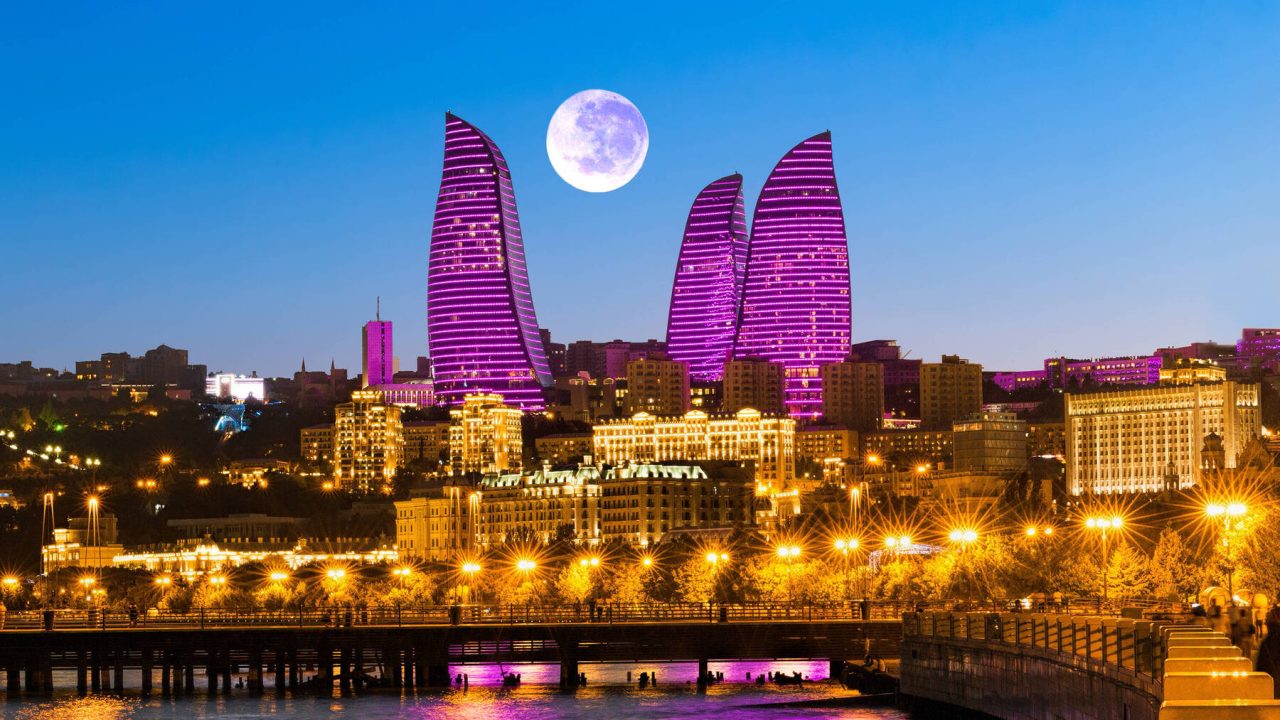
Here’s a claim that will make seasoned travelers uncomfortable: Baku Boulevard is more rewarding than the Promenade des Anglais in Nice, more atmospheric than Istanbul’s Bosphorus waterfront, and more surprising than anything along the Barcelona seafront. Most Western travelers have never set foot in Azerbaijan. That’s not humility. That’s a collective blind spot costing millions of wanderers one of the world’s most underrated urban experiences.
Baku, the capital of Azerbaijan, sits on the western shore of the Caspian Sea. It is a city of contradictions: medieval stone towers beside glass skyscrapers, Soviet-era parks beside cutting-edge art museums. And threading through all of it, like a spine, is the Boulevard. Founded in 1909, this promenade has watched empires collapse, oil booms reshape skylines, and generations of Bakuvians come out every single evening to simply walk.
This is a countdown of the five experiences along Baku Boulevard that, taken together, explain why this stretch of Caspian coastline deserves a permanent place on the global travel conversation.
The Countdown: 5 Experiences That Define Baku Boulevard
| Rank | Experience | Why It Matters |
|---|---|---|
| #5 | Deniz Mall and Waterfront Shopping | Modern commerce meets Caspian views |
| #4 | Baku Crystal Hall | Architectural spectacle on the waterfront |
| #3 | National Flag Square and the Flagpole | One of the world’s tallest flagpoles, full stop |
| #2 | YARAT Contemporary Art Centre | Azerbaijan’s boldest cultural statement |
| #1 | The Carpet Museum and the Boulevard’s Living Culture | Where identity, craft, and daily life converge |
#5 — Deniz Mall: Where the Caspian Meets Consumer Culture
It sounds like a strange entry for a travel countdown. A shopping mall. But Deniz Mall, positioned directly along the Boulevard, is not a generic retail box. It sits at the water’s edge, its design oriented toward the Caspian, and it functions as a social hub rather than a consumption machine.
Locals use it as a meeting point. Families gather on its terraces. The views from its upper levels frame the Caspian Sea in a way that no postcard quite captures. For travelers arriving after long flights, it also offers a useful orientation point: stand here, look out at the water, and Baku’s geography suddenly makes sense.
It matters because it signals something important about how Bakuvians use the Boulevard. This is not a tourist corridor. It is a living part of the city, and Deniz Mall is evidence of that integration.
#4 — Baku Crystal Hall: A Eurovision Legacy on the Waterfront
In 2012, Azerbaijan hosted the Eurovision Song Contest. The venue built for that event, Baku Crystal Hall, still stands along the Boulevard as one of the most visually striking structures on the Caspian waterfront. Its latticed exterior glows at night, reflecting off the water in a display that stops pedestrians mid-stride.
What makes Crystal Hall worth lingering near is what it represents. Azerbaijan used Eurovision to announce itself to a global audience that had largely ignored it. The building is a physical monument to that ambition. Walking past it on a warm Baku evening, with the Caspian stretching out behind it, you feel the weight of that cultural declaration.
The stroll along the boardwalk past Crystal Hall also brings you to views of the iconic National Flag Square, which sets up the next entry perfectly.
#3 — National Flag Square: A Statement Visible From the Sea
Azerbaijan’s National Flag Square sits along the Boulevard and features one of the tallest flagpoles on the planet. The Azerbaijani tricolor, blue, red, and green with a white crescent and eight-pointed star, flies at a height that makes it visible from considerable distances across the Caspian.
“The Boulevard runs alongside the Caspian Sea from one side of Baku to the other. The whole area has a lovely vibe. Many people are out for a walk or a jog.”
— TripAdvisor reviewer on Baku Boulevard
Standing beneath the flagpole and looking back toward the city, you get one of the Boulevard’s most arresting views: the medieval Old City walls visible in the distance, the Flame Towers rising above them, and the Caspian stretching endlessly behind you. Three distinct eras of Baku in a single glance.
This is the kind of moment that travel writers reach for superlatives to describe. Resist the urge. Just stand there and let the scale settle.
#2 — YARAT Contemporary Art Centre: Azerbaijan’s Cultural Counterargument
YARAT means “create” in Azerbaijani. The contemporary art centre bearing that name sits along the Boulevard and functions as the country’s most direct engagement with international contemporary art. It was founded in 2011 by artist Aida Mahmudova and has since hosted exhibitions, residencies, and public programs that connect Azerbaijani artists with global conversations.
For travelers who associate the Caucasus region exclusively with ancient history and carpet weaving, YARAT is a productive shock. The programming is genuinely ambitious. The building, a converted Soviet-era naval facility, carries its own architectural history into every exhibition.
YARAT ranks second rather than first because it requires a specific interest to fully appreciate. The number one experience on this list is available to every single person who walks the Boulevard, regardless of their relationship to contemporary art.
Number 1: The Carpet Museum and the Boulevard’s Living Soul
The Azerbaijan Carpet Museum is not just a museum. It is a building shaped like a rolled carpet, sitting directly on the Boulevard’s edge, overlooking the Caspian. From the water, it looks like a giant textile artifact deposited on the shore. From the inside, it contains one of the world’s most significant collections of Azerbaijani carpets, some dating back centuries.
Azerbaijani carpet weaving was inscribed on UNESCO’s Intangible Cultural Heritage list in 2010. The Carpet Museum exists to contextualize that heritage, to explain not just what these objects look like but what they mean. Each region of Azerbaijan developed distinct weaving traditions. The patterns encode geography, history, and identity in ways that take time to read but reward patience enormously.
But the Carpet Museum earns the top spot for a reason that goes beyond its collection. It anchors the Boulevard’s deeper meaning. This promenade has existed since 1909. It has survived the Russian Empire, the Soviet Union, and the turbulent post-independence years. Through all of it, Bakuvians kept walking here. They kept using this space as a place to breathe, to socialize, to exist outside the pressures of history.
The Carpet Museum, with its bold architectural statement and its insistence on cultural continuity, embodies that same refusal to be erased. It says: we were here, we made beautiful things, and we are still here.
Why This Order Matters and What You Should Actually Do
The temptation with a destination like Baku Boulevard is to treat it as a checklist. See the Carpet Museum, photograph the Flame Towers reflected in the Caspian, ride the Baku Eye observation wheel, and move on. That approach misses everything that makes this place worth the journey.
The Boulevard was founded in 1909 as a public space, and over a century later it still functions exactly as intended. People walk here at 7 AM and at 11 PM. Families, joggers, elderly couples, teenagers on phones, and tourists with cameras all share the same promenade without friction. That social texture is the actual experience.
The countdown above is structured to build toward that understanding. Deniz Mall and Crystal Hall show you the modern city. National Flag Square shows you the political identity. YARAT shows you the cultural ambition. The Carpet Museum shows you the root system beneath all of it.
Walk the Boulevard in that order and you will arrive at the Carpet Museum not as a tourist checking off an attraction, but as someone who has spent an afternoon learning how to read a city. The carpets inside will mean something different then.
Azerbaijan has spent years telling the world it exists. Baku Boulevard has been making that argument since 1909, one evening stroll at a time. The question is not whether it deserves your attention. The question is how much longer you plan to look the other way.
Frequently Asked Questions

You Might Also Like
Frankfurt and Munich Flight Cancellations Leave Dozens of Routes Disrupted
Fourteen flights canceled. Two of Germany’s busiest airports disrupted. And passengers bound for destinations as…

Canada Open Work Permit in 2026 Lets Global Workers In Without a Job Offer
Canada is offering foreign workers something most countries won’t: the ability to show up, find…
Goderich Beaches Ontario Locals Keep Returning to Every Summer
Tucked along the eastern shores of Lake Huron, Goderich, Ontario is the kind of place…
Leave a Reply