
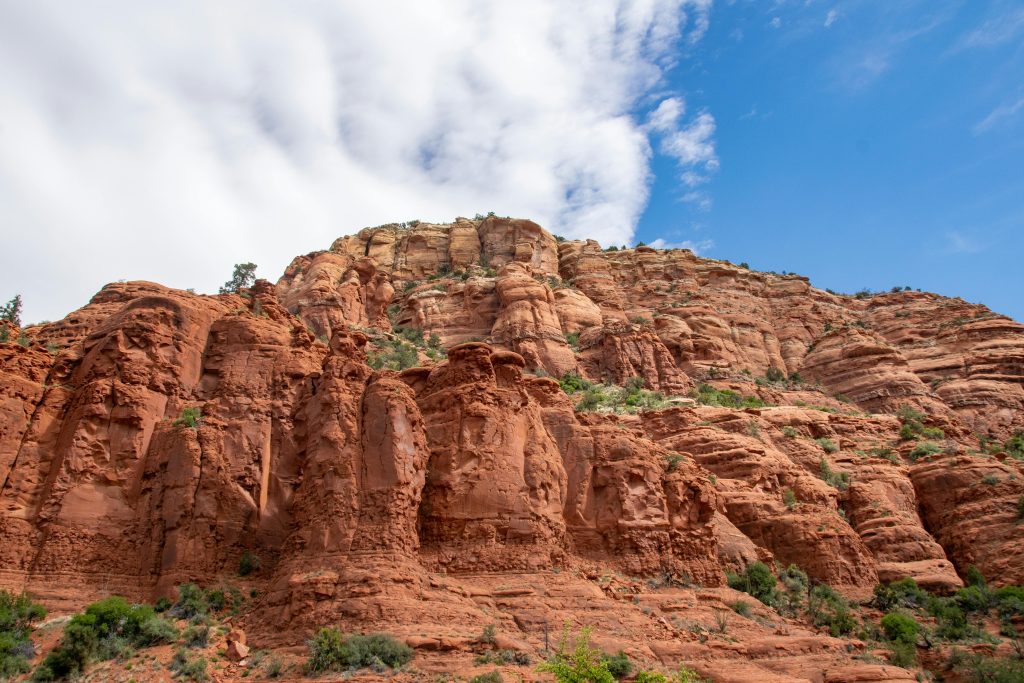
As of early April 2026, a price reduction on one of West Sedona’s most closely observed residential listings is prompting a harder look at whether the Arizona city’s luxury real estate run has entered a new and more uncertain phase. The property at 45 Birch Boulevard is now offered at $2.2 million — a figure that listing firm Sedona Elite Properties characterizes as a “significant price improvement” on its previous ask — and the adjustment is being read by local observers as more than routine.
West Sedona sits within the City of Sedona, which straddles Yavapai and Coconino counties in north-central Arizona, approximately 120 miles north of Phoenix. The city’s permanent population hovers around 10,000 residents, but its annual visitor count — estimated at roughly 3 million — has long made it one of the most economically complex small cities in the American Southwest. The gap between those two numbers tells much of the story of what is happening to housing here.
The Property and What It Signals
The details of 45 Birch Boulevard reflect the premium finishes that have become standard in West Sedona’s upper tier: granite countertops, stainless steel appliances, a cozy fireplace, and proximity to the area’s trail network and commercial corridor within minutes. Sedona Elite Properties describes it as “a rare opportunity to acquire modern architecture in the heart of West Sedona.” The townhome format places it among a class of properties targeting buyers seeking lower-maintenance ownership without sacrificing the architectural quality the market demands at this price point.
West Sedona — anchored near the intersection of State Route 89A and Dry Creek Road — is the city’s more commercially active zone, distinct from tourist-heavy Uptown Sedona north of the “Y” intersection. Properties here have historically attracted buyers seeking permanent or semi-permanent residency rather than vacation use alone, which makes a downward price adjustment here carry different weight than one further up the canyon.
The broader Sedona residential market has seen median prices climb substantially since 2020, driven by out-of-state buyers, short-term rental investors, and luxury developers who moved quickly on available parcels in West Sedona and the Village of Oak Creek to the south. The result, housing advocates have noted in public forums, is a city where the workforce keeping shops, restaurants, and trailheads running increasingly cannot afford to live anywhere near the trails they maintain.
Water, Resource Ceilings, and the Conversation Nobody Wants to Lead
Beneath the real estate conversation runs a harder one. Sedona’s water supply is drawn from the Verde River watershed and a series of underground aquifers in Yavapai County that have come under increasing strain as both permanent population and visitor traffic have grown across the past decade. Community members and municipal planners have repeatedly raised concerns about whether continued luxury development is sustainable given those constraints — a conversation that has intensified as regional water tables across the American Southwest face long-term pressure.
The tension is not unique to Sedona. Across the American West, communities that saw rapid luxury development through the early 2020s are now confronting the same underlying arithmetic: high-end construction generates tax revenue and headlines, but it also draws population and demand onto finite natural systems. In Sedona’s case, those natural systems — the red-rock formations, the riparian corridors, the visual and ecological integrity of the landscape — are precisely what the tourism economy depends on to sustain its value.
Big Sky, Montana and the Pattern Small Mountain Towns Share
Nearly 1,400 miles north, in Gallatin County, Montana, the unincorporated community of Big Sky has been living a closely parallel story. An estimated 3,000 year-round residents share infrastructure — and a severely constrained housing supply — with a resort economy that draws a multiple of that number seasonally. According to a community profile published by Explore Big Sky, the area has long centered its identity on its local population and year-round character even as development pressure built steadily through the 2010s and accelerated dramatically in the 2020s.
In Big Sky, as in Sedona, the tension between the amenity economy and the people who make that economy function has become a defining civic conversation. Workforce housing shortfalls — a phrase that now appears in planning documents from Bozeman to Flagstaff — are the practical outcome of markets where luxury supply consistently outpaces inventory accessible to workers earning hospitality and service wages.
What a Single Price Adjustment Actually Means for Residents
Price reductions in isolation rarely tell a complete story. A single listing’s downward adjustment can reflect seller circumstances, a reassessment of an original ask that was set above true market value, or a structural softening in the segment. Real estate professionals operating in small Western resort markets have noted, however, that when reductions begin appearing consistently in the luxury tier — the segment that previously moved quickly at aggressive ask prices — it frequently precedes a broader recalibration.
For Sedona’s year-round residents, a cooling luxury market delivers a complicated set of signals. Lower high-end prices do not automatically translate into more accessible housing for workers in the hospitality, service, and healthcare sectors that keep the city functioning. A property that remains out of reach at $2.2 million is not meaningfully different for a Sedona trailhead worker or restaurant employee than the same property at $2.6 million.
The more consequential question, planners and housing advocates say, is whether a broader correction — if that is what is beginning — creates conditions for middle-tier construction to accelerate, or whether the structural gap between Sedona’s identity as a luxury destination and the housing needs of its working population continues to compound. That question does not resolve at 45 Birch Boulevard. But it starts there, in April 2026, with a number: $2.2 million, and counting.
Frequently Asked Questions

You Might Also Like

Why Canadians Are Quietly Walking Away From US Travel in 2026
Canadian travellers are quietly but decisively pulling back from one of the world’s most familiar…
V&A East Opens April 18: Worth the Hype or Museum Overreach?
V&A East Museum opens April 18, 2026 in London. Is it a cultural revolution or…

Denmark Joins a Growing European Force Converging on Copenhagen in 2026
Copenhagen is about to become one of Europe’s most important meeting points for the meetings,…
Leave a Reply