
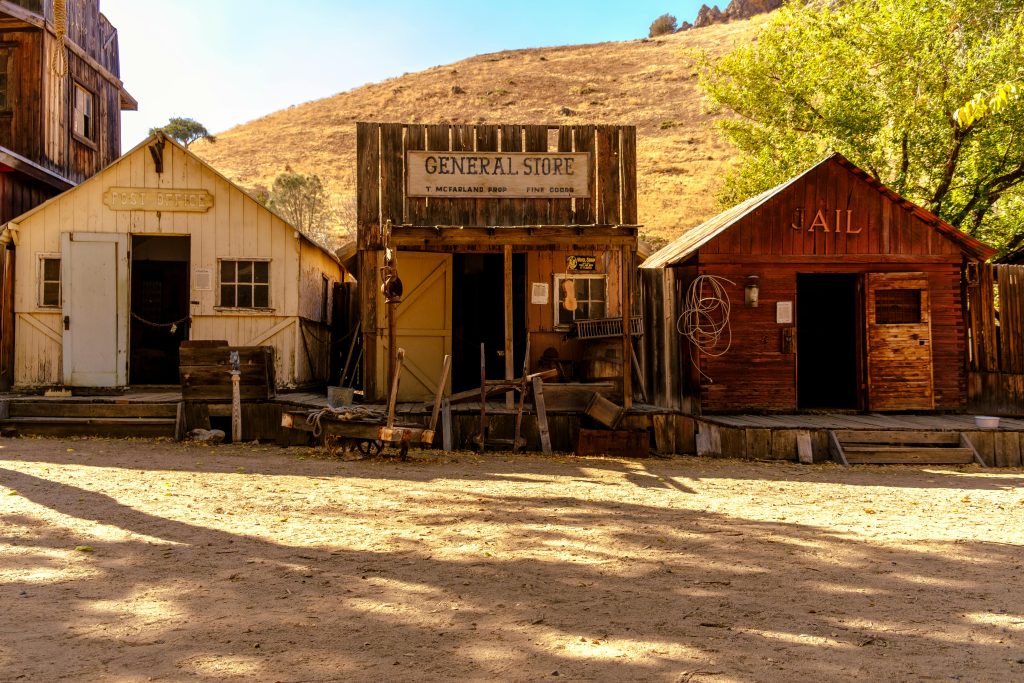
Roughly 400 people live in and around Fishtail, Montana — a ranching community tucked at the base of the Beartooth Mountains in Stillwater County, about 60 miles southwest of Billings. For every one of those residents, and for generations before them, a single building has functioned as grocery store, gathering place, and community anchor: the Fishtail General Store, which has operated continuously since approximately 1900.
That 125-year run is now entering a new chapter. According to KTVQ News, the store is preparing to transfer to new ownership — a transition that has drawn attention far beyond Stillwater County and sparked a broader conversation about the role of independent general stores in rural American life.
A Store That Outlasted Nearly Everything Around It
The Fishtail General Store has been a fixture in the community longer than Montana has had paved highways, commercial air travel, or television. The store predates both World Wars and has remained open through the Great Depression, successive economic downturns, and the steady population decline that has hollowed out hundreds of comparable rural communities across the Northern Rockies.
Its survival is not accidental. General stores of this type historically served a function that no single modern retail category fully replaces — combining groceries, hardware, local postal services, and informal community news into one physical space. In communities where the nearest large grocery chain may be 30 to 60 miles away, that combination remains genuinely practical, not merely nostalgic.
Fishtail sits near the entrance to the Stillwater River valley, a corridor used by hikers, fly fishers, and hunters accessing the Absaroka-Beartooth Wilderness. That geographic position has given the store a dual customer base: year-round locals who depend on it for essentials, and seasonal visitors who stop in as part of the regional experience. Both groups have kept the lights on across multiple ownership transitions over the decades.
What the Ownership Transfer Actually Means
The handover is being described locally as a “passing of the torch” rather than a closure or rebranding, according to reporting by KTVQ. The incoming owners have not publicly announced major operational changes, and the store is expected to remain open through the transition period.
The transfer raises practical questions that go beyond sentiment. General stores operating in remote rural communities face a specific set of economic pressures that large grocery chains do not: thin inventory margins, limited supplier leverage, aging infrastructure, and the difficulty of retaining staff in low-density areas. Whoever takes over the Fishtail store inherits not just a historic building but a complex, low-margin business model that has required consistent reinvention to survive.
The Broader Trend: Small-Town Stores Finding New Audiences
The Fishtail transition is happening against a backdrop of renewed national interest in independent general stores and small-town retail. A parallel development in Missoula, Montana’s second-largest city, saw a local grocery store claim recognition as the state’s best, according to Newsbreak — a designation that drove significant foot traffic and regional media coverage.
Separately, social media accounts documenting vintage and nostalgic retail experiences have accumulated millions of views in recent years. A Facebook post describing a “small-town grocery store going viral for fighting today’s fast-paced world with nostalgia” received widespread engagement, suggesting that the appetite for analog, community-rooted retail is not limited to the people who live near these stores.
The Fishtail General Store benefits from at least the first three of these factors. Stillwater County sits at the edge of a significant outdoor recreation corridor, and the store’s century-plus history has made it a destination in its own right for travelers interested in authentic Montana experiences rather than curated tourist attractions.
What Locals Say — and What the Community Stands to Lose or Gain
Community response to the ownership news has been largely cautious optimism, according to social media commentary documented by Q2 News on Facebook. Longtime customers have expressed hope that the store’s character will be preserved while also acknowledging that new ownership may bring necessary investment in infrastructure and inventory.
The concern is not unfounded. Historic rural stores that change hands sometimes undergo rapid transformation — either toward boutique, tourist-facing retail that prices out locals, or toward cost-cutting measures that erode the community function that made the store worth saving in the first place. Neither outcome serves Fishtail’s year-round population.
For a town the size of Fishtail, the store is not just a retail outlet — it is infrastructure. Its closure, or its transformation into something unrecognizable, would represent a material quality-of-life reduction for hundreds of households who rely on it for daily necessities. The new owners inherit that weight alongside the building’s deed.
Montana’s Rural Retail Landscape in 2026
Montana is the fourth-largest state by land area and ranks 44th in population, according to U.S. Census estimates. That combination — vast geography, sparse population — makes rural retail survival uniquely difficult. A store that would be considered a neighborhood shop in an urban context becomes critical infrastructure in Stillwater County.
The state has seen a growing recognition of this dynamic. Recognition awards for independent Montana grocers, increased local media coverage of small-town retail, and social media attention on stores with distinctive character have all contributed to a modest but real cultural moment around rural retail preservation. The Fishtail General Store’s ownership transition lands directly in the middle of that conversation.
Whether the incoming owners choose to lean into the store’s history as a selling point, modernize quietly, or attempt some combination of both will determine whether Fishtail’s 125-year retail streak extends to 150. The community, and a growing number of observers from well outside Stillwater County, will be watching.
Frequently Asked Questions

You Might Also Like

Rising Costs Are Threatening the Future of Panama City’s Mardi Gras — And Organizers Are Running Out of Options
Panama City's Mardi Gras celebration faces an uncertain future as rising operational costs pressure organizers…
Montana Still Has Working Soda Fountains From the 1930s — and Locals Have Never Stopped Going
Montana's historic soda fountains in Kalispell, Stevensville, and Virgelle have survived nearly a century. Here's…

Taylor Sheridan’s ‘The Madison’ Stars Michelle Pfeiffer in Montana — Critics Say He Wastes Her
A new Taylor Sheridan streaming drama landed in early 2026 with one of Hollywood’s most…
Leave a Reply