
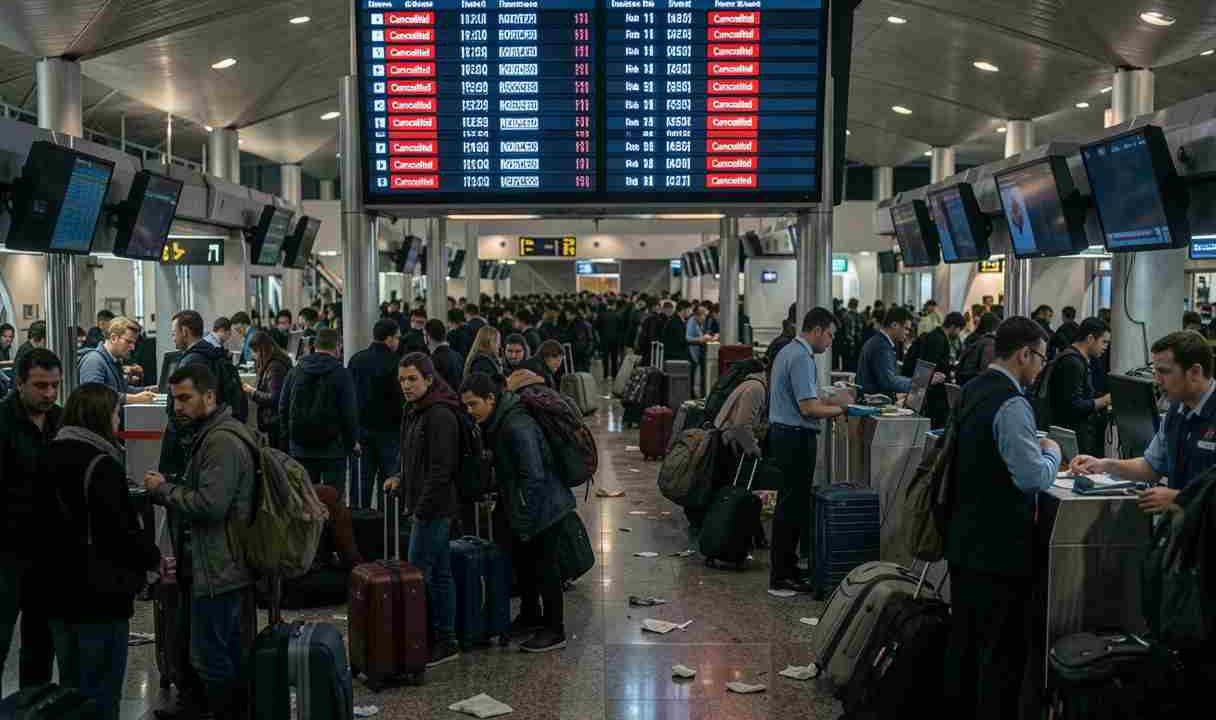
Dozens of flights out of Abu Dhabi International Airport have been cancelled across multiple consecutive days, leaving thousands of passengers stranded or scrambling to rebook on routes spanning the Middle East, North Africa, and South Asia. The disruption is not a one-day anomaly — data shows a sustained pattern of cancellations that has stretched from Friday through Wednesday, raising serious questions about what is going wrong at one of the Gulf’s busiest aviation hubs.
The routes hit hardest include destinations that carry enormous passenger volumes: Bahrain, Cairo, Doha, Jeddah, Mumbai, Delhi, Lahore, and Islamabad. These are not obscure connections. They are among the most heavily travelled corridors in the region, relied upon daily by migrant workers, business travellers, and families.
What makes this disruption particularly notable is its reach across aircraft types and airlines. Flights operated by Airbus A320-family jets and Boeing 737 variants — the two most common narrow-body aircraft in the world — appear to be disproportionately affected, suggesting the problem may run deeper than a single carrier’s scheduling issue.
What Is Actually Happening at Abu Dhabi Airport
According to available flight data, the cancellations are not clustered around a single day or a single airline. They span multiple days and multiple operators, which points toward a systemic disruption rather than an isolated incident. Whether the root cause is operational, logistical, regulatory, or some combination of all three has not been officially confirmed.
Bahrain-bound flights dominate the cancellation list — a detail that stands out. The sheer volume of Bahrain cancellations suggests something specific may be affecting that route, whether it is demand-related scheduling adjustments, bilateral aviation issues, or constraints at the destination end. Cairo routes are also under significant pressure, reflecting strain on one of the Gulf’s most active corridors connecting the region with North Africa.
The fact that narrow-body fleets — specifically A320-family aircraft and Boeing 737 variants — appear most impacted is worth noting. These planes handle the bulk of short-to-medium haul flying across the Gulf. Any operational or logistical constraint affecting these aircraft types would ripple across dozens of routes simultaneously, which may explain why so many different destinations are showing cancellations at once.
Routes and Aircraft Types Most Affected
The disruption covers a broad geographic sweep. Here is a breakdown of what the available data shows:
| Affected Route | Region | Aircraft Types Impacted |
|---|---|---|
| Abu Dhabi – Bahrain | Gulf / Middle East | Airbus A320-family, Boeing 737 |
| Abu Dhabi – Cairo | North Africa | Airbus A320-family, Boeing 737 |
| Abu Dhabi – Doha | Gulf / Middle East | Airbus A320-family, Boeing 737 |
| Abu Dhabi – Jeddah | Gulf / Middle East | Airbus A320-family, Boeing 737 |
| Abu Dhabi – Mumbai | South Asia | Airbus A320-family, Boeing 737 |
| Abu Dhabi – Delhi | South Asia | Airbus A320-family, Boeing 737 |
| Abu Dhabi – Lahore | South Asia | Airbus A320-family, Boeing 737 |
| Abu Dhabi – Islamabad | South Asia | Airbus A320-family, Boeing 737 |
Key patterns visible in the data include:
- Bahrain routes account for the largest share of cancellations on the list
- Cairo routes represent a second major pressure point, reflecting the high traffic volume on Gulf-to-North Africa services
- South Asian routes — particularly Mumbai, Delhi, Lahore, and Islamabad — are also repeatedly disrupted, affecting a passenger base that includes a large expatriate workforce
- The disruption spans from Friday through Wednesday, confirming this is not a single-day weather or technical event
- Narrow-body fleets are disproportionately affected compared to wide-body aircraft
Who Gets Hurt When Abu Dhabi Flights Are Cancelled
The human cost of this kind of sustained disruption is significant. The routes involved carry some of the highest volumes of migrant workers in the world. Labourers travelling between the UAE and South Asia — particularly India, Pakistan — often have tightly scheduled trips tied to work contracts, limited financial flexibility, and no easy backup options if a flight disappears.
Business travellers on Gulf-to-Gulf routes like Bahrain and Doha face their own headaches: missed meetings, cascading schedule failures, and the difficulty of rebooking on already-crowded alternative flights. For travellers on the Cairo corridor, the disruption feeds into a route that already operates under considerable demand pressure.
Passengers caught in multi-day cancellation waves also face the compounding problem of accommodation costs, rebooking fees, and uncertainty about when normal service will resume. When disruptions stretch across a full week, the financial and logistical burden on affected travellers grows substantially.
The Bigger Question About Gulf Aviation Reliability
What this disruption highlights is a vulnerability in the Gulf’s aviation network that rarely gets discussed openly. The region’s airports and airlines have expanded rapidly over the past two decades, and narrow-body fleets have been central to that growth — connecting secondary cities, regional hubs, and high-frequency short-haul routes. When those fleets face operational or logistical constraints, the knock-on effects are immediate and wide.
The concentration of cancellations on A320-family and Boeing 737 aircraft also raises a broader point about fleet diversity and resilience. Airlines heavily dependent on a single aircraft family for their short-haul network have limited flexibility when something goes wrong across that fleet type.
The precise cause of the current disruption — whether it is maintenance-related, crew scheduling, regulatory, or something else entirely — has not been confirmed in available reporting. Until airlines or airport authorities provide a clear explanation, passengers on affected routes should monitor their flight status closely and contact their carriers directly.
What Travellers Should Do Right Now
If you have a booking on any of the affected routes out of Abu Dhabi in the coming days, there are practical steps worth taking immediately:
- Check your flight status directly with your airline, not just through third-party apps
- Review your airline’s cancellation and rebooking policy — many carriers offer fee waivers during confirmed disruption periods
- If you hold travel insurance, check whether sustained operational cancellations are covered under your policy
- Consider arriving at the airport with extra time and documentation of your original booking if you have been rebooked
- Watch for official statements from Abu Dhabi International Airport or your carrier about the scope and expected duration of the disruption
The situation remains fluid. As of the latest available data, no official resolution timeline has been announced.
Frequently Asked Questions
Which routes are most affected by the Abu Dhabi flight cancellations?
Bahrain-bound flights have the highest number of cancellations, followed by Cairo, Doha, Jeddah, Mumbai, Delhi, Lahore, and Islamabad routes.
Which aircraft types are most impacted?
Flights operated by Airbus A320-family aircraft and Boeing 737 variants appear to be disproportionately affected, according to available flight data.
How long has this disruption been going on?
The cancellation pattern spans multiple days, from Friday through Wednesday, indicating this is a sustained disruption rather than a single isolated event.
What is causing the Abu Dhabi flight cancellations?
The precise cause has not been officially confirmed. Possible factors cited include operational or logistical constraints, route-specific demand fluctuations, regulatory issues, or airline scheduling challenges.
Are all airlines at Abu Dhabi Airport affected?
The disruption appears to involve multiple carriers operating narrow-body fleets, though no specific airline has been officially named as the sole source of the problem.
What should I do if my flight from Abu Dhabi has been cancelled?
Contact your airline directly to rebook, review your travel insurance policy for coverage, and monitor official communications from Abu Dhabi International Airport for updates on when normal service is expected to resume.



Leave a Reply