
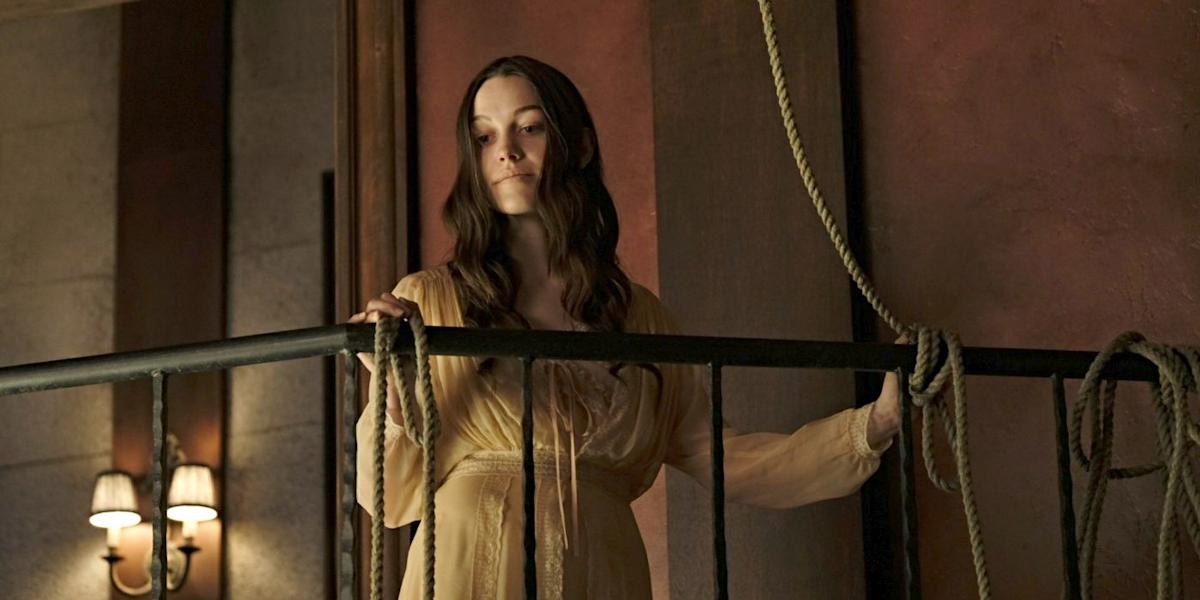
When horror fans talk about prestige anthology television, one name dominates the conversation almost every time: American Horror Story. Ryan Murphy’s FX franchise has earned its reputation over more than a decade of twisted storytelling, celebrity casting, and relentless cultural visibility. But there is another anthology series — quieter, slower, and in many ways more genuinely unsettling — that has never quite received the same level of mainstream recognition it deserves.
AMC’s The Terror is that show. And if you haven’t heard of it, or wrote it off after a brief glance at the premise, it’s worth taking a much closer look at what this series actually accomplished.
The comparison to American Horror Story isn’t just flattery toward an underdog. It’s a genuine argument about quality, craft, and the kind of horror storytelling that tends to last. The Terror did something that few genre shows manage: it used real historical events as the foundation for dread, and it built its horror slowly, deliberately, and with uncommon patience.
What The Terror Actually Is — And Why It Keeps Getting Overlooked
The Terror is an AMC anthology series in which each season tells a self-contained horror story rooted in history. The first season, which aired in 2018, was based on Dan Simmons’ novel of the same name and dramatized the doomed Franklin Expedition — the real 1845 British voyage to find the Northwest Passage, during which two ships, HMS Erebus and HMS Terror, became trapped in Arctic ice and all crew members perished.
The second season, subtitled Infamy, shifted entirely to a different story: a Japanese American community during World War II facing both the trauma of internment camps and a malevolent supernatural presence drawn from Japanese folklore.
The show never chased the same aesthetic as American Horror Story. There are no celebrity cameos designed to generate headlines, no deliberately shocking set pieces engineered for social media reaction. What The Terror offers instead is atmosphere, historical weight, and a specific kind of creeping dread that gets under your skin in ways that jump scares never do.
The Case for The Terror as Prestige Horror Television
American Horror Story built its brand on excess — more stars, more twists, more outrage per episode. That formula works, and it has earned a massive and loyal audience. But excess has a cost. The seasons that leaned hardest into spectacle often sacrificed coherence and emotional resonance in the process.
The Terror took the opposite approach. Season one spent its early episodes simply making you feel the cold. The isolation. The slow deterioration of men who were competent, disciplined, and still completely helpless against the environment closing in around them. The supernatural element — a creature stalking the ice — functioned less as a monster-movie device and more as a manifestation of everything the expedition couldn’t control or outrun.
That kind of restraint is genuinely difficult to pull off in genre television, where network pressures typically push toward faster pacing and more immediate payoffs. The Terror earned its horror through accumulation rather than spectacle.
How The Two Shows Compare Side by Side
| Category | The Terror (AMC) | American Horror Story (FX) |
|---|---|---|
| Format | Anthology — new story each season | Anthology — new story each season |
| Horror Approach | Slow-burn, atmospheric, historically grounded | High-concept, stylized, shock-driven |
| Season 1 Setting | Arctic, 1845 — the Franklin Expedition | Los Angeles haunted house, present day |
| Historical Basis | Yes — real events anchor each season | Occasionally, but not consistently |
| Cultural Visibility | Limited mainstream recognition | Widely discussed, award-nominated |
| Network | AMC | FX |
The contrast in cultural visibility is the most striking column in that table. Both shows are anthology horror series with serious production values. But one is a household name and the other is something horror enthusiasts recommend in whispers, as if they’ve found something the algorithm hasn’t fully catalogued yet.
The Part of This Story Most Horror Fans Are Missing
What makes The Terror particularly worth championing right now is what it represents as a model for horror storytelling. The series demonstrated that you can build genuine terror out of documented human history — out of events that actually happened to real people — and that doing so adds a layer of weight that purely invented horror rarely achieves.
The Franklin Expedition really did disappear. Those men really did die in the Arctic under circumstances that remained mysterious for over a century. Anchoring a horror story to that reality doesn’t diminish the supernatural elements; it amplifies them. You’re not just watching fictional characters suffer. You’re watching a story that gestures toward something that genuinely happened, and the horror becomes harder to fully shake off once the credits roll.
Season two’s focus on Japanese American internment during World War II carried the same quality. It used a specific, documented injustice as its foundation and built its supernatural horror on top of historical trauma in a way that felt purposeful rather than exploitative.
Why This Show Deserves a Bigger Audience Right Now
Anthology horror is having a genuine moment in television. Audiences have proven they have the patience and appetite for serialized, season-length horror stories that commit to a single narrative arc. The Terror arrived before that appetite was fully understood by the broader market, which may partly explain why it didn’t break through the way it deserved to.
The show is also exactly the kind of content that rewards the streaming era’s binge-watching habits. Each season is self-contained, meaning there’s no multi-season commitment required. You can watch season one in a week, feel the full weight of that Arctic story, and decide whether you want to follow it into the entirely different world of season two.
For viewers who have exhausted the American Horror Story catalog, or who have found themselves wanting something that prioritizes dread over shock, The Terror is the answer that’s been sitting quietly on AMC this whole time.
Frequently Asked Questions
What is The Terror about?
The Terror is an AMC anthology horror series. Its first season dramatizes the real 1845 Franklin Expedition, in which British ships became trapped in Arctic ice. Its second season, subtitled Infamy, follows a Japanese American community during World War II facing both internment and a supernatural threat.
Is The Terror based on a true story?
Season one is based on Dan Simmons’ novel and draws heavily from the real, documented history of the Franklin Expedition. Season two is grounded in the historical reality of Japanese American internment during World War II.
How does The Terror compare to American Horror Story?
Both are anthology horror series, but The Terror takes a slower, historically grounded approach focused on atmospheric dread, while American Horror Story tends toward high-concept, stylized, and shock-driven storytelling.
Where can I watch The Terror?
The Terror aired on AMC. Streaming availability may vary by region and platform — checking AMC’s current offerings or major streaming services is the best way to find it.
Do I need to watch both seasons of The Terror?
No. Each season is entirely self-contained with a new story, setting, and cast, so viewers can watch either season independently without prior knowledge of the other.
Is a third season of The Terror confirmed?
This has not been confirmed in the available source material. The anthology format means a new season would tell a completely different story if it were to move forward.


Leave a Reply