
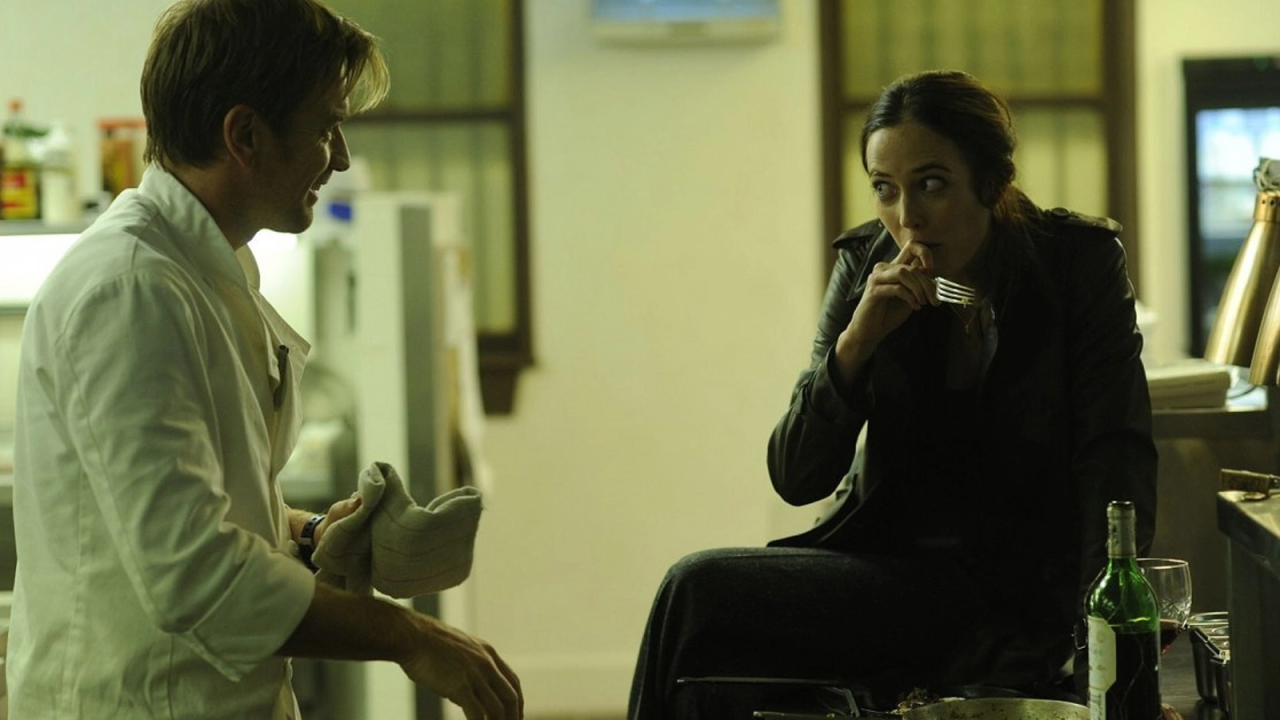
What happens when a love story unfolds against the backdrop of the world quietly falling apart — not with explosions or disaster spectacle, but with something far more intimate and unsettling? That’s the premise of Perfect Sense, a 2011 film that most people have never seen, and that turns out to be one of the more quietly devastating pieces of apocalyptic cinema ever made.
Fifteen years after its release, the film is finding new audiences who are discovering what a small group of devoted viewers have known for years: this movie hit differently than almost anything else in its genre, and it still does.
It didn’t arrive with fanfare. It didn’t top box office charts or spark a major awards conversation. But Perfect Sense has a strange, stubborn way of staying with you — and in an era when apocalyptic storytelling has become almost exhaustingly familiar, its approach feels more relevant than ever.
What Perfect Sense Is Actually About
Perfect Sense is a Scottish film directed by David Mackenzie and starring Ewan McGregor and Eva Green. The two play Michael, a chef, and Susan, an epidemiologist, who fall into a relationship as a mysterious pandemic begins stripping humanity of its senses — one by one.
It starts with smell. Then taste. Then hearing. Then sight. Each loss is preceded by an overwhelming emotional episode — grief, then rage, then euphoria — before the sense vanishes permanently. The world doesn’t end in fire. It dims, slowly and irreversibly, while people try to keep living anyway.
That’s the film’s central and most striking idea: life continues. Restaurants adapt. People find new ways to connect. The apocalypse here isn’t a rupture — it’s an erosion. And somehow, watching two people fall in love inside that erosion makes the whole thing feel achingly human rather than hopeless.
Why This Apocalyptic Romance Aged So Well
Most apocalyptic films age in predictable ways. The special effects start to look dated. The cultural anxieties that drove them become artifacts of a specific moment. The urgency fades.
Perfect Sense sidesteps almost all of that. Because it was never really about a disaster — it was about how people respond to loss, and how love functions as both a coping mechanism and a form of defiance.
The film’s pandemic isn’t a metaphor for any one thing. It’s spacious enough to absorb whatever the viewer brings to it. Watching it now, in the aftermath of years of real-world collective loss and social disruption, the film reads differently than it might have in 2011. The scenes of people adapting their daily lives to new sensory limitations, of businesses reinventing themselves, of couples trying to hold onto connection in the face of something neither of them can control — all of it resonates in ways the filmmakers couldn’t have entirely anticipated.
That’s the mark of genuinely durable storytelling. It doesn’t lock itself into a single reading.
The Performances That Make It Work
None of this would land without performances that earn the emotional weight the script demands. Ewan McGregor and Eva Green are both working at a high level here, and their chemistry is the engine that keeps the film from collapsing under its own bleakness.
McGregor plays Michael with a kind of restless, deflective energy — a man who uses humor and movement to avoid stillness. Green’s Susan is more guarded, more analytical, someone trained to observe crises rather than feel them. Watching them slowly dismantle each other’s defenses, even as the world outside loses another piece of itself, gives the romance genuine stakes.
The film trusts its actors to carry scenes that another production might have buried under score or visual effects. There are stretches of Perfect Sense that feel almost theatrical in their intimacy — two people in a room, trying to figure out what they mean to each other while time runs short in the most literal possible way.
What Sets It Apart from Other Apocalyptic Films
| Element | Typical Apocalyptic Film | Perfect Sense (2011) |
|---|---|---|
| Tone | Action-driven, survival-focused | Intimate, emotionally reflective |
| Disaster Type | External, violent, visible | Internal, sensory, gradual |
| Central Relationship | Often secondary to plot | The entire narrative engine |
| Resolution | Survival or defeat | Ambiguous, bittersweet |
| Visual Style | Large-scale spectacle | Restrained, close, human-scale |
The film also avoids one of the genre’s most persistent traps: the false hope ending. Perfect Sense doesn’t pretend things are going to be okay. But it also doesn’t wallow. It finds something in the space between those two options — something that feels honest about what it means to love someone when the future is genuinely uncertain.
Why It Deserves a Second Look Right Now
Films like Perfect Sense tend to be rediscovered in waves, often when the cultural mood catches up to what they were already doing. That moment feels like now.
Audiences have spent years consuming apocalyptic content — prestige television, blockbuster franchises, literary adaptations — and a certain fatigue has set in with the louder, more spectacular versions of the genre. There’s a growing appetite for stories that treat the end of things with more nuance, more grief, more actual human texture.
This film offers all of that. It’s quiet in the best possible way. It asks you to sit with discomfort rather than escape it. And it makes the case, without sentimentality, that connection matters most precisely when everything else is being taken away.
For a film that’s fifteen years old and still largely under the radar, that’s a remarkable thing to be able to say.
Frequently Asked Questions
What is Perfect Sense about?
Perfect Sense is a 2011 apocalyptic romance film in which a mysterious pandemic strips humanity of its senses one by one, while two people — a chef and an epidemiologist — fall in love amid the unfolding crisis.
Who stars in Perfect Sense?
The film stars Ewan McGregor and Eva Green as the central couple, with David Mackenzie directing.
When was Perfect Sense released?
The film was released in 2011, making it approximately 15 years old as of 2026.
Why is Perfect Sense considered underrated?
The film didn’t receive wide mainstream attention on release but has developed a devoted following over time, largely due to its unusually intimate and emotionally resonant take on apocalyptic storytelling.
How does Perfect Sense differ from typical apocalyptic movies?
Rather than focusing on survival action or large-scale spectacle, the film centers on a romantic relationship and explores how people adapt emotionally and practically to gradual, irreversible loss.
Is Perfect Sense worth watching today?
Viewers and critics who have revisited the film argue that it has aged remarkably well, particularly given how its themes of collective loss and human connection resonate strongly in the current cultural climate.




Leave a Reply