

For decades, certain science fiction novels carried an unofficial label that followed them like a curse: unfilmable. Too dense, too internal, too weird, too reliant on the reader’s imagination to ever survive a translation to screen. Frank Herbert’s Dune wore that label for nearly forty years before Denis Villeneuve proved the skeptics wrong. Now, Apple TV+ is preparing to take on another legendary “unfilmable” text — William Gibson’s Neuromancer — and the question the entire sci-fi world is asking is simple: can lightning strike twice?
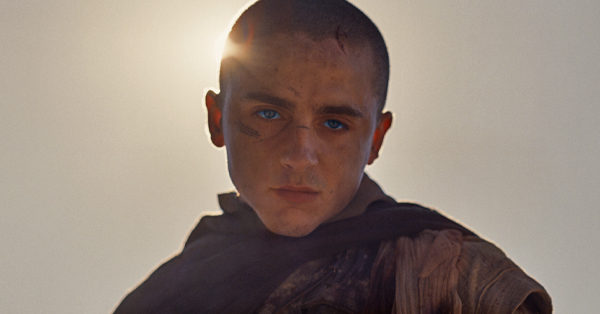
The timing feels significant. We are living through a genuine renaissance in ambitious science fiction adaptation, and the success of Dune: Part One and Dune: Part Two didn’t just make money — it changed the conversation about what is and isn’t possible on screen. If a novel that famously defeated David Lynch and stumped Hollywood for four decades could become one of the most acclaimed franchises of the modern era, then perhaps no book is truly beyond reach.
Neuromancer, Gibson’s 1984 cyberpunk landmark, has long been considered the harder challenge. Where Dune built an epic world of politics and prophecy, Neuromancer operates almost entirely inside the fractured consciousness of its narrator, a washed-up hacker navigating a neon-soaked digital underworld. It is a novel of texture, voice, and internal experience — exactly the kind of thing that tends to dissolve when you point a camera at it.
Why “Unfilmable” Has Always Been a Moving Target
The word “unfilmable” has never been a permanent verdict. It has always been a temporary one — a reflection of what current technology, storytelling conventions, and industry ambition could not yet achieve, rather than what was genuinely impossible.
Dune is the clearest proof of that. The 1984 Lynch adaptation was a sincere but troubled attempt that collapsed under the weight of The 2000 Sci-Fi Channel miniseries captured more of the plot but lacked the visual scale to match Herbert’s vision. It took Villeneuve — a director willing to trust silence, spectacle, and a two-film structure — to finally unlock what the book had always been waiting to become.
The lesson is not that the right director makes anything possible. It is that the right approach does. And approach is exactly what Apple TV+’s Neuromancer adaptation will live or die by.
What Makes Neuromancer Such a Specific Challenge
Gibson’s novel isn’t just stylistically dense — it is structurally unusual in ways that resist conventional screen narrative. The story follows Case, a hacker hired for a mysterious job in a future where the internet has become a physical space called cyberspace. But the plot is almost secondary to the atmosphere: a relentless, hallucinatory barrage of neon, corporate dystopia, and fractured identity.
Previous attempts to adapt Neuromancer never made it past development. The project has circulated through Hollywood for years, collecting attached names and then losing them, which itself tells a story about how seriously the industry has historically taken the challenge.
What Apple TV+ brings to the table — beyond resources — is a track record of prestige science fiction. Foundation, based on Isaac Asimov’s similarly “unfilmable” series of novels, has demonstrated that the streamer is willing to invest in long-form, philosophically ambitious sci-fi storytelling rather than just surface-level spectacle.
The Dune Parallel That Actually Matters
It is tempting to compare Neuromancer and Dune purely on the basis of their shared reputation for being unfilmable. But the more useful comparison is structural.
| Factor | Dune | Neuromancer |
|---|---|---|
| Original publication | 1965 | 1984 |
| Genre | Epic space opera / political sci-fi | Cyberpunk / tech noir |
| Core challenge | World-building scale and internal monologue | Atmosphere, voice, and digital-space visualization |
| Previous adaptation attempts | 1984 film, 2000 miniseries | Multiple stalled development cycles |
| Current platform | Warner Bros. / Legendary (theatrical) | Apple TV+ (streaming) |
Both novels share a core problem: they are as much about the experience of reading them as they are about plot. Strip away the texture and you lose the point. That is why so many earlier attempts at both properties produced something that technically told the story but felt hollow — the words were there, but the soul wasn’t.
What a Streaming Format Could Actually Do for Cyberpunk
One argument in favor of Apple TV+’s approach is the format itself. A streaming series — particularly one with the kind of per-episode budget Apple routinely deploys — offers something a two-hour film never could: time.
Time to build the world gradually. Time to let the atmosphere accumulate rather than rush past it. Time to develop Case as a character rather than a plot function. This is precisely what the Dune films benefited from by splitting the story across two features, and a multi-episode series could push that advantage even further.
The visual language of cyberpunk has also matured considerably since the 1980s. From Blade Runner 2049 to Altered Carbon to Severance — another Apple TV+ production — audiences and filmmakers alike have developed a richer shared vocabulary for depicting digital dystopia, corporate alienation, and fractured identity on screen.
Whether the Moment Is Finally Right
There is a version of this story where Apple TV+’s Neuromancer becomes the cyberpunk equivalent of Villeneuve’s Dune — a long-awaited adaptation that redefines what the genre can do on screen and introduces Gibson’s world to an entirely new generation of viewers.
There is also a version where the same qualities that make the novel extraordinary prove stubbornly resistant to visualization, and the project joins the long list of ambitious adaptations that tried and fell short.
What the Dune precedent offers, more than anything, is permission to believe the first version is possible. The unfilmable can be filmed. It just requires the right vision, the right platform, and a genuine willingness to honor what makes
Frequently Asked Questions
What is Neuromancer about?
William Gibson’s 1984 novel follows Case, a washed-up hacker hired for a dangerous job in a future where a digital network called cyberspace can be physically entered. It is widely credited as the founding text of the cyberpunk genre.
Where will the Neuromancer adaptation be available?
The adaptation is in development at Apple TV+, the streaming platform known for prestige science fiction projects including Foundation and Severance.
Why has Neuromancer been called unfilmable?
The novel’s power lies heavily in its dense atmosphere, internal voice, and the hallucinatory texture of its prose — qualities that are notoriously difficult to translate into a visual medium without losing what makes the story compelling.
Has Neuromancer been adapted before?
Multiple attempts to adapt the novel have circulated through Hollywood over the years, but none successfully made it to production. The project has a long history of stalled development cycles.
How does this compare to the Dune adaptations?
Like Dune, Neuromancer spent decades being considered too complex for screen adaptation. Denis Villeneuve’s two-part Dune film series is now widely cited as proof that ambitious, internally complex sci-fi novels can be successfully adapted with the right approach and sufficient resources.
Why might a streaming series work better than a film?
A multi-episode series format provides significantly more time to develop atmosphere, world-building, and character depth — advantages that proved crucial to the success of long-form sci-fi adaptations like Foundation on the same platform.


Leave a Reply