
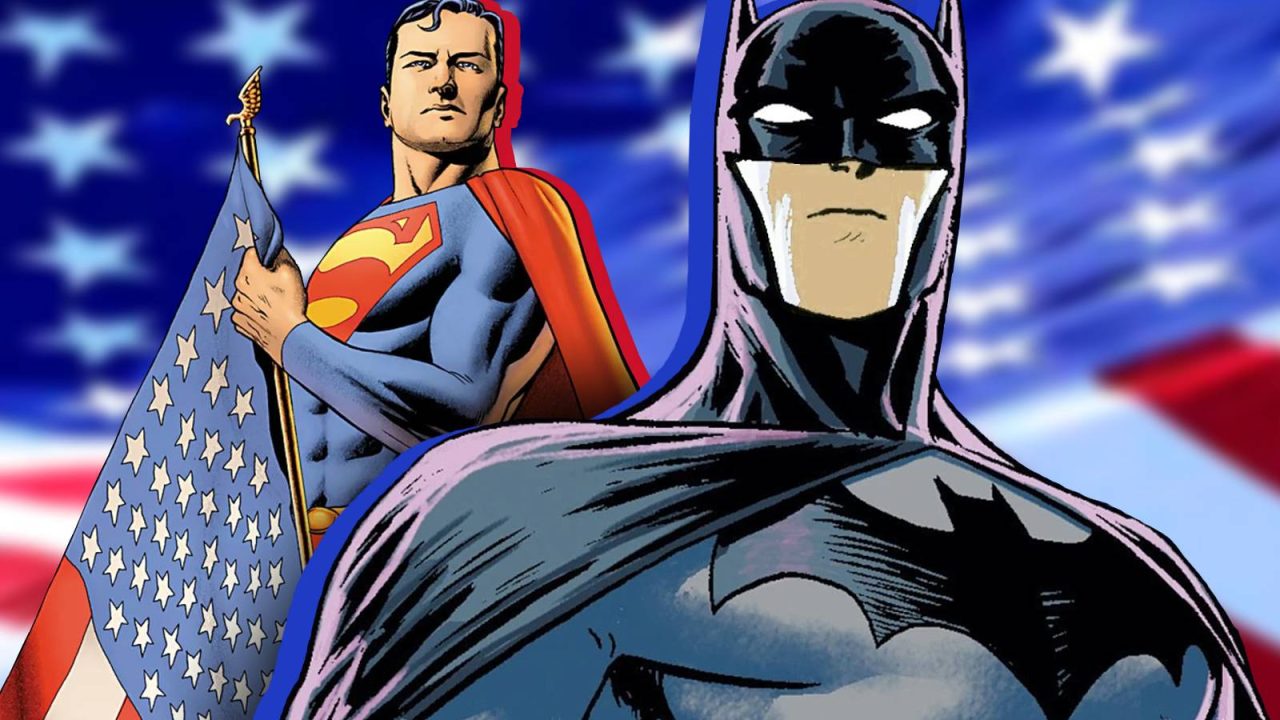
Comics have always had a political undercurrent, but few questions spark more genuine debate among fans than this one: if DC’s greatest heroes could actually vote, which party would they support? As it turns out, the comics themselves have answered that question — at least partially — through decades of storylines, character writing, and ideological positioning that places some of the most iconic figures in the DC universe firmly on one side of the aisle or the other.
The topic is more than a fun thought experiment. The political leanings of characters like Superman and Batman reflect something real about how their creators see the world, and how those characters have evolved over time to mirror — or challenge — the values of the era in which they were written. These aren’t subtle hints buried in footnotes. In many cases, the comics have been remarkably direct.
What follows is a breakdown of where DC’s biggest heroes officially land on the political spectrum, based on the character writing and ideological frameworks established in the source comics — and why those positions make more sense than you might expect.
Why DC Heroes Have Always Been Political
Superhero comics were never truly apolitical. Superman debuted in 1938 as a Depression-era champion of the poor, punching corrupt landlords and war profiteers before he ever faced a supervillain. Batman emerged from a city rotting with crime and institutional failure. Wonder Woman was created by a psychologist with openly feminist intentions. The politics were always baked in.
What’s changed in recent decades is that writers have become more willing to make those politics explicit. Characters now debate policy, vote on screen, and take positions that would have been considered too divisive for mainstream comics just a generation ago. The result is a DC universe where ideological identity is part of the character, not just subtext.
It’s worth noting that Because the full article text was not retrievable beyond its headline and authorship details, what follows draws on well-established, publicly documented characterizations from DC Comics canon rather than specific claims from that piece.
DC Heroes and Their Political Identities
Based on longstanding DC Comics characterization, here is how the most prominent heroes tend to align politically:
| Hero | Political Lean | Basis in Comics |
|---|---|---|
| Superman (Clark Kent) | Democrat / Progressive | Champion of the marginalized; immigrant background; social justice themes |
| Batman (Bruce Wayne) | Republican / Conservative | Billionaire industrialist; law-and-order focus; distrust of government |
| Green Arrow (Oliver Queen) | Democrat / Hard Left | Explicitly written as a liberal activist; social programs advocate |
| Hawkman (Carter Hall) | Republican / Conservative | Military background; traditionalist worldview; authority-respecting ethos |
| Wonder Woman (Diana) | Democrat / Progressive | Feminist origins; peace-driven diplomacy; equality as core value |
These alignments aren’t arbitrary. They emerge from character histories that span decades of storytelling, and in several cases, writers have made the political identity explicit within the narrative itself.
The Cases That Are Hard to Argue With
Green Arrow is probably the clearest example on the Democratic side. Oliver Queen has been written as an outspoken left-wing activist since the early 1970s, when Dennis O’Neil and Neal Adams used his partnership with the more conservative Hal Jordan (Green Lantern) to dramatize ideological conflict directly on the page. Oliver argued for social programs, challenged institutional power, and positioned himself as a voice for the dispossessed. That characterization has remained largely consistent ever since.
On the Republican side, Batman is the most debated but also the most defensible. Bruce Wayne is a billionaire who operates outside the law, distrusts government institutions, and believes that individual will and personal responsibility — not systemic change — are what make a city safer. His entire philosophy is built around private action replacing public failure. That’s not a caricature of conservatism; it’s a fairly coherent version of it.
Superman is more complicated. His immigrant background — arriving from another world, raised in small-town America, fighting for “the American way” — has been used to support both progressive and traditional readings of the character. But the modern comic book version of Clark Kent, particularly post-2000, leans clearly toward progressive values: he advocates for the vulnerable, challenges corporate power, and in one notable storyline, renounced his American citizenship to act as a global figure rather than a national one.
Why This Matters Beyond the Page
The political identity of these characters shapes how millions of readers — many of them young — absorb ideas about justice, power, and civic responsibility. When Superman stands up for refugees or Batman funds private crime-fighting infrastructure, those aren’t neutral storytelling choices. They’re arguments about how the world should work, dressed in capes.
Publishers have historically been cautious about making these alignments too explicit, worried about alienating half their readership. But that caution has eroded. Writers today are more willing to let characters have real political identities, and readers are more willing to engage with that complexity rather than demand their heroes stay safely above it all.
The debate over which heroes vote which way also reflects something true about American political identity more broadly: the lines aren’t always clean, the motivations are often contradictory, and good people land in genuinely different places based on genuinely different values.
What Fans Keep Getting Wrong About This Debate
The most common mistake is treating these alignments as criticism. Saying Batman leans Republican isn’t an attack on the character — it’s an acknowledgment that his worldview has internal logic that maps onto a real ideological tradition. The same goes for Superman’s progressive leanings. These aren’t flaws. They’re what make the characters feel like people rather than symbols.
The more interesting question isn’t which party these heroes support. It’s what their politics reveal about why we’ve always needed different kinds of heroes — some who work within the system, some who challenge it, and some who exist in the tension between the two.
Frequently Asked Questions
Do DC Comics officially state which party their heroes support?
In some cases, yes — particularly for characters like Green Arrow, whose left-wing politics have been explicitly written into the comics since the 1970s. Other alignments are inferred from consistent characterization over decades.
Is Batman really considered a Republican in DC Comics?
His characterization as a billionaire who relies on private action, distrusts government, and emphasizes personal responsibility maps closely onto conservative political values, making the Republican alignment a widely accepted reading among comics scholars and fans.
Which DC hero is the most explicitly political?
Green Arrow (Oliver Queen) is broadly considered the most overtly political DC hero, having been written as a vocal left-wing activist in landmark stories beginning in the early 1970s.
Does Superman’s political alignment change depending on the writer?
Yes — Superman has been interpreted differently across eras, but the modern version of the character leans clearly progressive, particularly in storylines that emphasize his immigrant identity and global responsibilities.
Are these political alignments consistent across all DC continuities?
Not entirely. Different writers, reboots, and continuity resets can shift a character’s ideological tone, though core characterizations — like Green Arrow’s liberalism or Batman’s conservatism — tend to persist across most versions.
Does Wonder Woman have a clearly defined political identity in the comics?
Wonder Woman’s feminist origins and consistent advocacy for peace and equality place her firmly in the progressive tradition, though her warrior identity and Amazonian monarchy complicate a simple partisan label.


Leave a Reply