
▶ Read transcript
Here’s what you need to know about Bermuda and why Canadian travelers are starting to pay attention. First, Bermuda is actually closer to Toronto than Jamaica, coming in at roughly two and a half hours of flight time. That’s over an hour and a half shorter than most Caribbean alternatives, which makes a real difference for a long weekend trip. Second, BermudAir has been expanding direct routes from Toronto, removing the old hassle of connecting through American cities. Canadian arrivals are up 30 percent year over year, making Canada the fastest-growing source market on the island. Third, those famously pink beaches are real — the color comes from crushed red coral mixing into the sand along the South Shore. And fourth, the Fairmont Southampton, one of the island’s most iconic resorts, is reopening in 2026 after a major renovation. If you’ve been on the fence about Bermuda, start looking at 2026 dates now before that Fairmont reopening drives prices up.
Most people assume the Caribbean is the obvious tropical escape for Canadians. Warm, cheap, close enough. Bermuda, by contrast, gets filed under “American luxury vacation” and quietly ignored by travelers north of the border.
That assumption is increasingly wrong, and Bermuda is betting big on proving it.
The tiny British Overseas Territory in the North Atlantic is running one of the most focused destination marketing campaigns targeting Canadian travelers in its history. It involves a new airline, a landmark Toronto event, and a luxury resort comeback that could reshape how Canadians think about island travel entirely.
Why Bermuda Is Not the Caribbean (and That’s the Point)
Bermuda sits roughly 1,070 kilometers off the coast of North Carolina. It is not technically in the Caribbean at all. Yet for decades it has competed for the same vacation dollars, often losing out to cheaper, sunnier alternatives in Jamaica, Cuba, or the Dominican Republic.
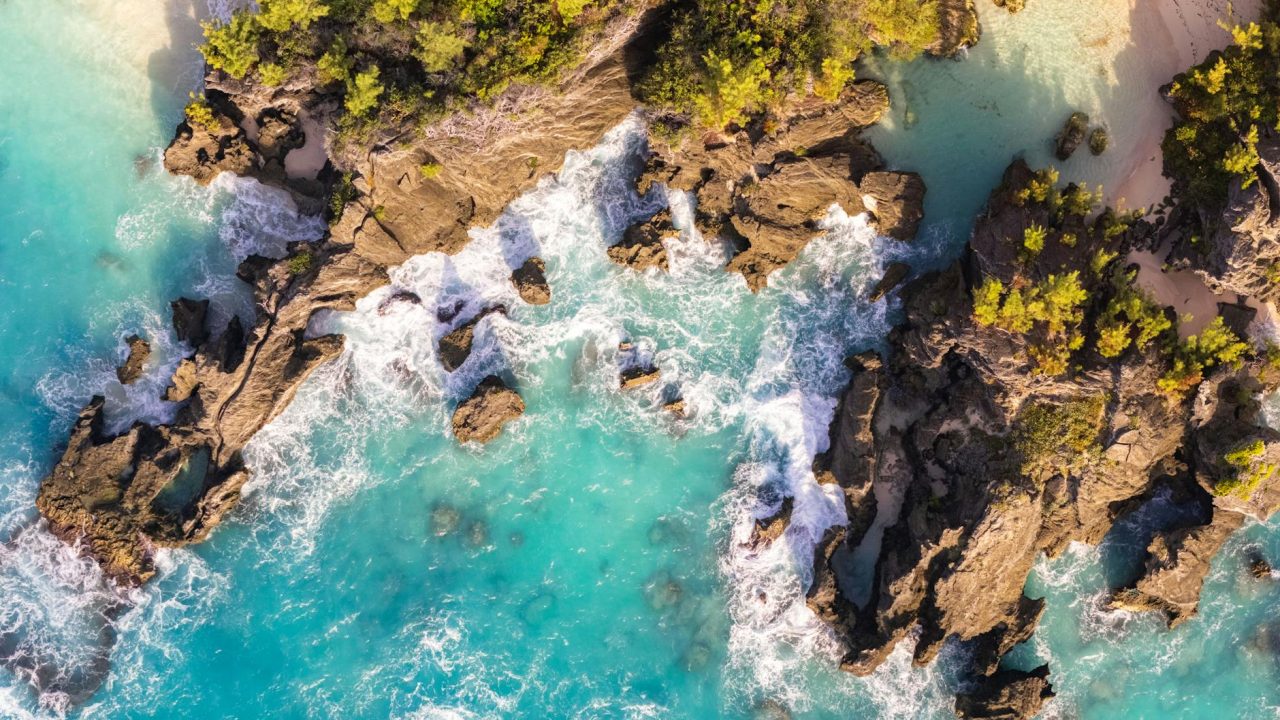
The island’s pitch has always been different: pastel-painted cottages, British colonial charm, scooter-filled roads, and beaches that genuinely look pink. That last detail is not a marketing exaggeration. The blush color comes from crushed red coral, shells, and calcium carbonate mixing into the sand along the South Shore.
| Destination | Flight Time from Toronto | Direct Flights Available | Known For |
|---|---|---|---|
| Bermuda | ~2.5 hours | Yes (BermudAir, expanding) | Pink-sand beaches, colonial architecture |
| Jamaica | ~4 hours | Yes | All-inclusive resorts, reggae culture |
| Dominican Republic | ~4.5 hours | Yes | Budget resorts, Punta Cana beaches |
| Barbados | ~5 hours | Yes | Rum, coral reefs, British heritage |
That flight time comparison matters more than most travelers realize. Bermuda is closer to Toronto than virtually any warm-weather beach destination Canadians typically consider. At roughly two and a half hours, it beats Jamaica by over an hour and a half.
For a long weekend escape, that difference is significant. Less time in the air means more time on the beach, and Bermuda’s tourism board has started making exactly that argument in its Canadian outreach.
BermudAir’s Canadian Expansion and the CN Tower Moment
The airline side of this story is where things get genuinely interesting. BermudAir, the island’s homegrown carrier, has been steadily expanding its routes to Canadian cities. Direct flight options from Toronto are now a central part of Bermuda’s pitch to Canadian travelers, removing the traditional friction of connections through New York or Boston.
That 30 percent growth figure, reported by the Caribbean Journal, is not a rounding error. It reflects a real shift in travel patterns, driven partly by easier access and partly by a post-pandemic appetite for destinations that feel both exotic and manageable.
To accelerate that momentum, Bermuda’s tourism authorities organized a showcase event at the CN Tower in Toronto. The choice of venue was deliberate. The CN Tower is one of Canada’s most recognizable landmarks, and hosting a Bermuda promotion there sent a clear signal: this island is serious about the Canadian market, and it wants to be seen as a peer destination, not a niche luxury escape.
“Crystal clear water, pink-sand beaches and island vibes are all within easy reach with direct flight options from Toronto.”
— Bermuda Tourism Authority, official social media
The messaging is direct and deliberately accessible. Bermuda is not positioning itself as an aspirational fantasy. It is positioning itself as a practical choice for Canadians who want beach travel without a transatlantic commitment.
The Fairmont Southampton Reopening Changes Everything
If expanding air links are the engine of Bermuda’s Canadian push, the Fairmont Southampton is the flagship. The iconic resort, which has dominated the island’s South Shore for decades, is reopening after an extensive renovation.
The timing is not accidental. A major luxury property coming back online in 2026 gives Bermuda a concrete news hook and a tangible reason for travelers who have been waiting to finally book the trip. The Fairmont brand carries significant recognition among Canadian travelers, particularly those in Toronto and Vancouver who associate it with high-end domestic and international travel.
The resort sits along the South Shore, where the pink-sand beaches are most concentrated. Guests traveling west along the scenic coastal road pass some of the island’s most photographed stretches of blush-colored shoreline. It is the kind of visual that travels well on social media, which Bermuda’s tourism board has clearly understood.
What 2026 Looks Like for Bermuda Tourism
Bermuda’s tourism authorities have publicly projected 2026 as a record year. That projection rests on several converging factors: the Fairmont reopening, expanded air connectivity, the post-CN Tower awareness boost in Canada, and broader travel recovery trends across the North Atlantic region.
Canadian travelers are a particularly attractive demographic for Bermuda. They tend to spend more per trip than budget-focused Caribbean visitors. They are accustomed to British-influenced culture, which makes Bermuda’s colonial aesthetic feel familiar rather than foreign. And they are increasingly looking for destinations that combine beach access with a sense of place, not just an all-inclusive compound.
The island’s infrastructure is also genuinely compact. Bermuda is only about 34 square kilometers in total area. You can scooter from one end to the other in under an hour. That intimacy is either a selling point or a limitation depending on the traveler, but for Canadians used to vast distances, the idea of a destination where everything is within easy reach has real appeal.
The Pink Sand Effect and Why It Keeps Working
There is a reason Bermuda’s marketing consistently leads with the beaches. The pink sand is genuinely unusual, and it photographs in a way that stops scrolling. Horseshoe Bay on the South Shore is the most famous example, but the blush coloring appears along much of the coastline.
The science behind it is straightforward. A single-celled organism called Homotrema rubrum produces a red pigment. When these creatures die, their red shells mix with white sand, coral fragments, and shells from other marine life. The result is a spectrum ranging from pale rose to deep salmon depending on the beach and the light conditions.
For Canadian travelers who have spent years defaulting to Cancun or Montego Bay, Bermuda represents something different: a destination that requires slightly more planning and slightly more budget, but delivers an experience that is genuinely hard to replicate elsewhere.
The CN Tower showcase, the BermudAir expansion, the Fairmont comeback, and the 30 percent Canadian arrival surge are not separate stories. They are chapters in the same campaign, and 2026 is when Bermuda intends to close the sale.
The only real question is whether Canadian travelers will realize the pink-sand beaches they have been saving for a special occasion were always just two and a half hours away.
Frequently Asked Questions

You Might Also Like

Why the UK Now Leads Portugal’s $21B Wellness Tourism Boom
The UK has overtaken Spain, Germany, France, Italy and more to lead Portugal's $21B wellness…

The AI Booking War: 5 Fronts Where OTAs Are Fighting for Your Trip
OTAs in China, the US, and Europe are racing to control AI-powered travel booking in…

22 Years of Tables: Why Diners Stopped Cleaning Up
A 22-year server documents how diners stopped cleaning up after themselves — and what behavioral…
Leave a Reply