
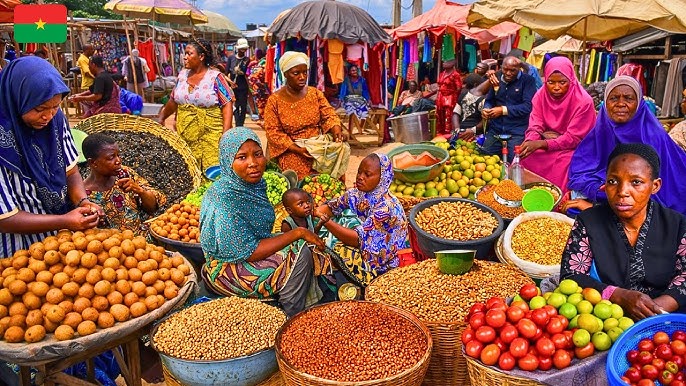
The standard playbook for tourism in a conflict zone is simple: write it off. Issue the advisories, cancel the flights, and wait for stability before investing a single dollar in hospitality or cultural programming. Burkina Faso in 2025 ignored that playbook entirely, and the result was $165 million in tourism revenue, the sector’s most significant performance on record.
The U.S. State Department still carries its most serious warning level for the country: avoid all travel due to terrorism threats, kidnapping risks, and an unstable political situation. That warning didn’t move. What moved was something else entirely.
The story of Burkina Faso’s 2025 tourism performance is not about brave foreign travelers ignoring danger warnings. It is about a country that, pushed by circumstance, discovered its own citizens as its most reliable economic engine. That discovery may prove more durable than any international marketing campaign.
The Numbers That Shouldn’t Exist
In 2019, Burkina Faso welcomed 143,000 international tourists. By 2020, that number had collapsed to 67,000. Security deteriorated sharply across the Sahel from 2021 onward, with jihadist insurgencies controlling significant territory in the country’s north and east. The international arrival trajectory pointed firmly downward.
Yet total tourism revenue reached a record high. The gap between those two facts is where the real story lives. Domestic travelers, Burkinabé citizens exploring their own country, moved into the space that foreign visitors vacated. They booked rooms in Ouagadougou, traveled to cultural festivals, visited religious sites, and spent money at locally owned restaurants and guesthouses.
| Year | International Arrivals | Primary Growth Driver | Notable Context |
|---|---|---|---|
| 2019 | 143,000 | International visitors | Pre-insurgency peak |
| 2020 | 67,000 | Sharp decline | Security deterioration, COVID-19 |
| 2025 | Data limited | Domestic travel surge | $165M historic revenue record |
This inversion of the traditional tourism model is striking. Most countries build their hospitality infrastructure around the assumption that foreign currency, foreign visitors, and foreign demand drive growth. Burkina Faso in 2025 proved that assumption is a choice, not a necessity.
Why Domestic Tourism Is Quietly Revolutionary
For decades, African nations shaped their tourism infrastructure almost entirely around the foreign gaze. Safari lodges priced in euros. Heritage sites marketed primarily to diaspora visitors or European package tours. The value chain pointed outward by design. Burkina Faso’s 2025 performance suggests a reorientation is not just possible but economically viable.
Burkina Faso has a high population density and a predominantly young population. When even a fraction of that population becomes an active domestic traveler, spending on accommodation, transport, and food, the economic multiplier is real. The World Bank’s research on African tourism documented 255 million jobs supported by the global sector and $743 billion in investments, with tourism representing 9 percent of global GDP as far back as 2011. Domestic demand, properly channeled, captures a meaningful share of that value without waiting for foreign visitors to arrive.
Burkinabé travelers have been exploring the country’s genuine cultural assets. Ouagadougou hosts FESPACO, the largest African cinema festival on the continent, drawing participants from across West Africa. The Sindou Peaks, extraordinary sandstone formations in the southwest, have attracted domestic visitors increasingly aware of their own national landscape. The Ruins of Loropéni, a UNESCO World Heritage Site, has seen growing interest from Burkinabé school groups and curious citizens. Religious tourism tied to Islamic pilgrimage sites contributes substantially to hospitality revenues throughout the year.
The absence of international hotel chains and foreign tour operators created an unexpected benefit. Local entrepreneurs and Burkinabé-owned businesses dominate the sector. Revenue stays inside the country. That is not an argument for continued instability; it is an observation about who captures the economic value when the field is cleared of multinational operators.
The Security Paradox No One Wants to Discuss
The $165 million figure deserves honest context. Burkina Faso’s security situation remained severe throughout 2025. Large portions of the country’s north and east stayed inaccessible. The military junta that seized power in September 2022 imposed restrictions on foreign journalists and international NGO workers. Travel advisories from Western governments showed no meaningful softening.
“Tourism growth concentrated in specific corridors and urban centers is not the same as national recovery. But it is evidence that economic resilience can coexist with political instability when local actors take ownership of the sector.”
— Tourism in Africa, World Bank Research Framework
The tourism growth concentrated in areas that remained stable and accessible. Ouagadougou and Bobo-Dioulasso, the country’s two major cities, anchored the domestic travel circuit. Regional provinces with reliable road access and functioning services saw investment in guest houses and local dining. The geography of growth was selective.
That selectivity is both a limitation and a model. Communities that maintained security attracted the domestic travel dividend. Communities that did not lost access to that economic lifeline entirely. The uneven distribution of tourism revenue in a conflict-affected country creates its own pressures, but it also demonstrates that tourism investment can survive and even grow in partial stability.
Africa’s Tourism Tide and Where Burkina Faso Fits
Africa recorded the strongest expansion in international tourist arrivals globally in the most recent measured period. The continent is translating extraordinary natural and cultural assets into economic returns at meaningful scale. Rwanda, Ethiopia, and Morocco have invested heavily in aviation infrastructure, streamlined digital visa systems, and aggressive international marketing campaigns. The results have been visible.
Burkina Faso watches this continental wave from a complicated position. Its cultural assets are not small. The country sits at a crossroads of West African artistic traditions, with music, textile arts, bronze casting, and cuisine that rival any neighboring nation. Bobo-Dioulasso, frequently described by West African travelers as one of the most beautiful cities in the region, carries real magnetism for regional visitors.
The 2026 target centers on regional African visitors, particularly from Côte d’Ivoire and Ghana, where travel to specific Burkina Faso destinations carries less diplomatic friction than it does for Western nationals. Regional African tourism remains dramatically undercounted in standard tourism statistics that prioritize long-haul arrivals. If Burkina Faso positions itself effectively for West African regional visitors while maintaining domestic momentum, the record target becomes achievable.
What a Record-Breaking 2026 Would Actually Require
Reaching a new revenue record in 2026 requires conditions that the tourism ministry does not fully control. Security must hold in accessible corridors. Infrastructure, particularly road quality connecting secondary cities to cultural sites, needs consistent maintenance. Reliable electricity for hospitality operations remains a genuine challenge across the country.
The marketing challenge is equally significant. Communicating to Burkinabé citizens and regional West African visitors that specific destinations are safe and worthwhile requires targeted, credible messaging. Generic national tourism campaigns fail when the country itself carries a severe international security designation. Zone-specific marketing, highlighting particular cities and sites with demonstrated stability, offers a more honest and effective approach.
Broader economic investment matters too. Moroccan and South African financial institutions have been expanding into Burkina Faso as part of a West African financial services push. That capital movement signals some institutional confidence in the country’s economic trajectory. Tourism fits into a diversification strategy that the government has been pushing alongside the country’s dominant gold and cotton sectors.
A Country That Refuses the Easy Narrative
Burkina Faso in 2025 does not fit the story the world expects it to tell. It is not a cautionary tale about tourism collapsing under sustained pressure. It is not a triumphant international comeback narrative. It is something more instructive: evidence that a country’s own people, given the right conditions and accessible destinations, can sustain a meaningful tourism economy through circumstances that would paralyze sectors built entirely on foreign demand.
The $165 million result carries lessons that extend well beyond West Africa. As climate disruption, geopolitical instability, and shifting global travel patterns continue to interrupt international tourism flows, the ability to build domestic demand becomes a strategic priority, not a fallback. Countries that have invested in making themselves legible and appealing to their own citizens hold a structural advantage that purely export-oriented tourism models do not.
Burkina Faso didn’t choose this path deliberately. Circumstances imposed it. But the economic result in 2025 suggests that what began as a crisis adaptation has the potential to become the foundation of something more resilient than what came before. Whether the 2026 target arrives depends on factors well outside any minister’s control. But the harder question worth sitting with is whether a tourism sector built primarily by and for its own people is actually more stable than one that requires the world’s permission to function.

Leave a Reply