
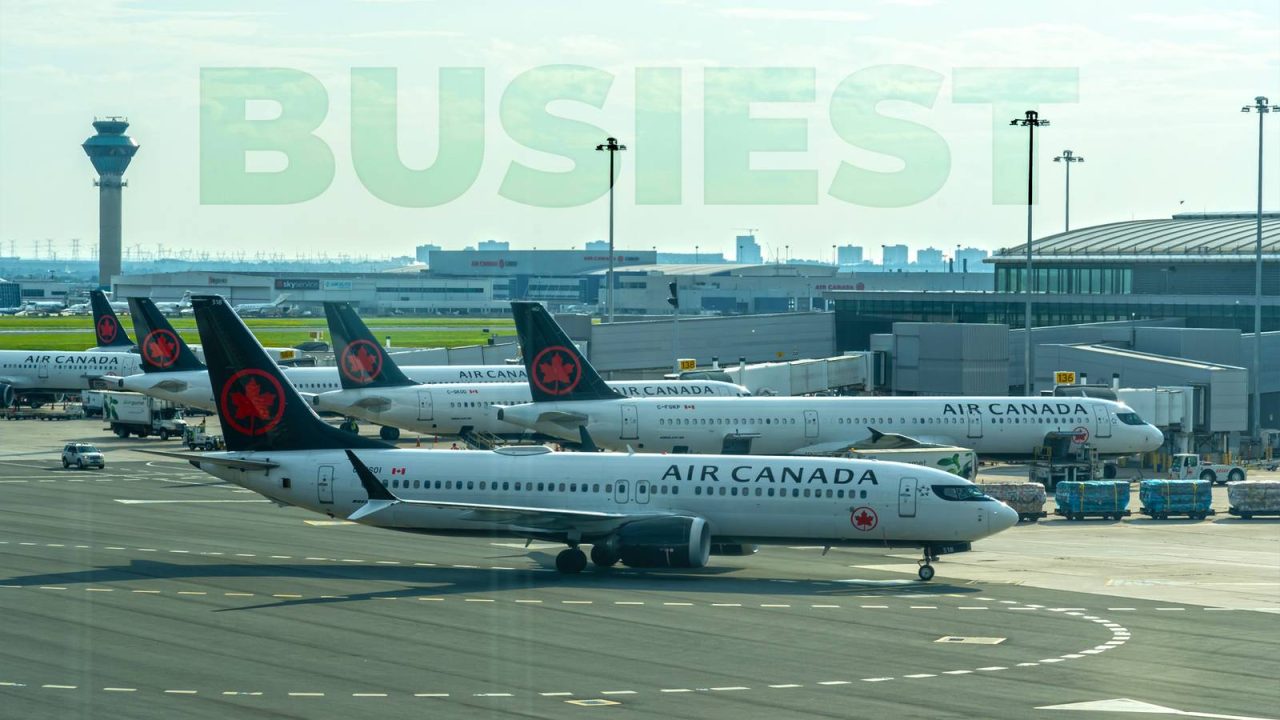
Seventy-six flights cancelled and 773 more delayed in a single day — that is the scale of disruption that hit Canadian air travel on March 21, 2026, leaving thousands of passengers stranded at airports from Halifax to Vancouver.
The chaos rippled across the country’s busiest hubs, touching virtually every major airline operating in Canada. Whether you were trying to catch a connection in Toronto, board a regional flight out of Ottawa, or start a vacation from Calgary, the odds were not in your favor on Saturday.
Here is what happened, which airlines took the hardest hits, and what passengers caught in the middle of this mess need to know.
A Day That Grounded Canada’s Skies
The disruptions were not isolated to one region or one carrier. From coast to coast, Canadian airports reported a combination of outright cancellations and significant delays that cascaded through the system throughout the day.
Toronto bore the worst of it by a wide margin. The city logged 43 cancellations and 433 delays — more than half of the national total in a single airport. Montreal followed with 7 cancellations and 123 delays, while Vancouver recorded 9 cancellations and 79 delays. Ottawa and Calgary also saw meaningful disruption, and even Halifax, typically a quieter market, was not spared.
The sheer concentration of problems in Toronto underscores how central Pearson International is to the entire Canadian network. When Toronto struggles, the effects fan out to nearly every other destination in the country.
Which Airlines Were Hit the Hardest
Air Canada absorbed the largest share of the damage, recording 36 cancellations and 266 delays — numbers that reflect both the airline’s dominant market position and the scale of Saturday’s problems. Jazz, which operates as a regional feeder for Air Canada under the ACA banner, added another 14 cancellations and 99 delays on top of that.
WestJet, Canada’s second-largest carrier, reported 8 cancellations and 96 delays. Porter Airlines — which has been aggressively expanding its network in recent years — saw 4 cancellations and 91 delays, a particularly high delay-to-cancellation ratio suggesting significant schedule slippage rather than outright grounding of flights. PAL Airlines recorded 4 cancellations and 13 delays.
Other carriers including Air Transat, Pacific Coastal Airlines, Flair Airlines, and Icelandair were also caught up in the disruptions, though the source data does not break out their individual totals.
The Numbers Behind the Disruption
| Airport | Cancellations | Delays |
|---|---|---|
| Toronto | 43 | 433 |
| Montreal | 7 | 123 |
| Vancouver | 9 | 79 |
| Calgary | 5 | 57 |
| Ottawa | 9 | 51 |
| Halifax | 3 | 30 |
| Airline | Cancellations | Delays |
|---|---|---|
| Air Canada | 36 | 266 |
| Jazz (ACA) | 14 | 99 |
| WestJet | 8 | 96 |
| Porter Airlines | 4 | 91 |
| PAL Airlines | 4 | 13 |
What This Means for Passengers Caught in the Middle
If your flight was among the 76 cancelled on Saturday, Canadian air passenger protection regulations generally entitle you to rebooking or, in some cases, compensation — depending on whether the disruption falls within the airline’s control. Weather-related cancellations typically carry fewer obligations for airlines than those caused by operational or scheduling failures.
For the 773 flights that were delayed rather than cancelled, the situation is more complicated. Passengers stuck in terminals for hours face a different set of entitlements depending on delay length and cause. Advocates for travellers consistently point out that many passengers do not know their rights and do not file for compensation they are legally owed.
The practical reality for anyone caught at Toronto Pearson on Saturday was particularly grim. With 433 delays logged at a single airport, gate changes, missed connections, and hours-long waits would have been the norm rather than the exception. Passengers travelling onward to smaller cities via connecting flights through Toronto would have felt the knock-on effects well into the evening.
Those affected are advised to contact their airline directly to understand rebooking options, retain all documentation including boarding passes and receipts for any additional expenses, and file a complaint with the Canadian Transportation Agency if they believe their rights were not respected.
The Broader Pattern of Canadian Flight Disruptions
Saturday’s numbers are a reminder that large-scale flight disruptions in Canada are not rare events. The country’s geography, dependence on hub-and-spoke routing through Toronto and Vancouver, and the dominance of a small number of carriers means that when the system is stressed — by weather, operational issues, or staffing — the effects spread quickly and widely.
Toronto’s outsized numbers in Saturday’s disruption reflect its role as the country’s primary aviation hub. A problem at Pearson does not stay at Pearson. It moves outward through every regional and international connection tied to the airport, which on any given day represents a substantial portion of all Canadian air traffic.
For frequent flyers, travel insurance that covers trip interruption and delay is increasingly worth considering — particularly for itineraries that route through Toronto during periods of uncertain weather or high travel demand.
Frequently Asked Questions
How many flights were cancelled across Canada on March 21, 2026?
A total of 76 flights were cancelled nationwide, with an additional 773 flights delayed on the same day.
Which airport saw the most disruptions?
Toronto recorded the worst disruptions by far, with 43 cancellations and 433 delays — more than half of the national totals.
Which airline had the most cancellations?
Air Canada led all carriers with 36 cancellations and 266 delays, followed by Jazz (ACA) with 14 cancellations and 99 delays.
Was Porter Airlines affected?
Yes. Porter Airlines recorded 4 cancellations and 91 delays, giving it one of the higher delay counts relative to its cancellation numbers among the affected carriers.
What other airlines were disrupted beyond the top five?
Air Transat, Pacific Coastal Airlines, Flair Airlines, and Icelandair were also reported as affected, though individual breakdowns for those carriers were not confirmed in available data.
What should passengers do if their flight was cancelled or significantly delayed?
Passengers should contact their airline to explore rebooking options, keep all receipts for additional expenses, and consider filing a complaint with the Canadian Transportation Agency if they believe their passenger rights were not upheld.


Leave a Reply