
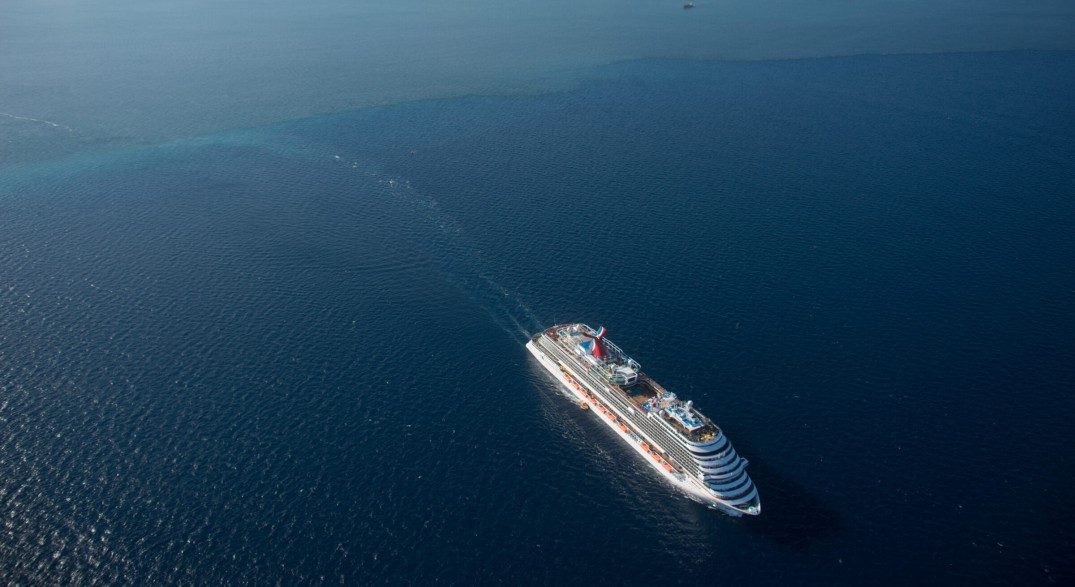
Carnival Corporation just posted the strongest first-quarter financial results in its history — and the numbers are striking enough to turn heads well beyond Wall Street.
The world’s largest cruise company reported record revenues of $6.2 billion for Q1 2026, alongside a 50% increase in earnings compared to the same period last year. That kind of year-over-year jump in a single quarter signals something more than a good run — it suggests a fundamental shift in how the cruise industry is performing coming out of its post-pandemic rebuild.
And despite headwinds from elevated fuel costs, Carnival raised its full-year financial outlook by approximately $150 million. That confidence isn’t just spin — it’s backed by record bookings, record margins, and a new long-term growth strategy the company is calling PROPEL.
(function(){var wrp=document.getElementById(“paap_stat_69c95832315037.45138449”);if(!wrp)return;var ids=[“paap_stat_69c95832315037.45138449_c0″,”paap_stat_69c95832315037.45138449_c1”];var dur=1800;function ease(t){return 1-Math.pow(1-t,3);}function anim(){ids.forEach(function(id){var el=document.getElementById(id);if(!el)return;var tgt=parseFloat(el.getAttribute(“data-target”))||0;var pfx=el.getAttribute(“data-prefix”)||””;var sfx=el.getAttribute(“data-suffix”)||””;var dec=parseInt(el.getAttribute(“data-decimals”))||0;var st=null;function step(ts){if(!st)st=ts;var p=Math.min((ts-st)/dur,1);var v=ease(p)*tgt;el.textContent=pfx+v.toFixed(dec)+sfx;if(p<1)requestAnimationFrame(step);}requestAnimationFrame(step);});}if("IntersectionObserver" in window){var obs=new IntersectionObserver(function(e){e.forEach(function(en){if(en.isIntersecting){anim();obs.disconnect();}});},{threshold:0.2});obs.observe(wrp);}else{anim();}})();
What Is Driving Carnival’s Record-Breaking Quarter
The headline numbers tell a clear story, but the underlying metrics are just as impressive. Carnival reported record gross margin yields — up nearly 10% compared to last year. Net yields in constant currency came in ahead of expectations, rising 2.7%. These aren’t vanity figures; yield growth is one of the most closely watched indicators of a cruise company’s pricing power and operational efficiency.
Bookings for 2026 are tracking at a double-digit percentage increase, pushing Carnival into what the company describes as a record booked position at historically high prices. That means more passengers are locking in trips further in advance, and they’re paying more to do it.
Diluted earnings per share came in at $0.19, with adjusted EPS at $0.20. Both figures reflect the scale of the earnings improvement the company has achieved over the past twelve months.
Fuel costs remain a genuine challenge, and the company acknowledged their impact. But the decision to raise the annual outlook by $150 million despite that pressure suggests management believes the underlying demand environment is strong enough to absorb it.
The Key Numbers at a Glance
| Metric | Q1 2026 Result | Year-Over-Year Change |
|---|---|---|
| Total Revenue | $6.2 billion | Record high |
| Diluted EPS | $0.19 | +50% vs. prior year |
| Adjusted EPS | $0.20 | +50% vs. prior year |
| Gross Margin Yields | Record high | ~10% above prior year |
| Net Yields (Constant Currency) | Above expectations | +2.7% |
| Full-Year Outlook Revision | Raised by ~$150 million | Despite higher fuel costs |
| 2026 Bookings Growth | Double-digit increase | At historically high prices |
(function(){function loadChartJs(cb){if(window.Chart){cb();return;}var s=document.createElement(“script”);s.src=”https://cdn.jsdelivr.net/npm/chart.js@4.4.0/dist/chart.umd.min.js”;s.onload=cb;document.head.appendChild(s);}function initChart(){var cv=document.getElementById(“paap_chart_69c95832315be4.14602470”);if(!cv)return;var dv=[“~10% above prior year”,”+2.7%”,”+50% vs. prior year”];new Chart(cv,{type:”bar”,data:{labels:[“Gross Margin Yields”,”Net Yields (Constant Currency)”,”Earnings Growth”],datasets:[{data:[10,2.7,50],backgroundColor:[“#3b82f6″,”#10b981″,”#f59e0b”],borderRadius:6,borderSkipped:false}]},options:{indexAxis:”y”,responsive:true,maintainAspectRatio:false,animation:{duration:1200,easing:”easeOutQuart”},plugins:{legend:{display:false},tooltip:{callbacks:{label:function(ctx){return dv[ctx.dataIndex]||ctx.formattedValue;}}}},scales:{x:{grid:{color:”#e5e7eb”},ticks:{color:”#6b7280″}},y:{grid:{display:false},ticks:{color:”#1a1a1a”,font:{weight:600}}}}}});}var cv=document.getElementById(“paap_chart_69c95832315be4.14602470”);if(!cv)return;if(“IntersectionObserver” in window){var obs=new IntersectionObserver(function(e){e.forEach(function(en){if(en.isIntersecting){loadChartJs(initChart);obs.disconnect();}});},{threshold:0.1});obs.observe(cv);}else{loadChartJs(initChart);}})();
What PROPEL Means for the Future of Cruise Tourism
Alongside the quarterly results, Carnival unveiled a new long-term growth framework it has branded as PROPEL. The strategy is designed to chart the company’s path forward and articulate how it plans to sustain — and accelerate — the growth it is currently experiencing.
While the specific pillars of PROPEL were not detailed in full in the company’s announcement, the strategy is explicitly tied to Carnival’s long-term targets and their projected impact on cruise tourism growth more broadly. The company is positioning PROPEL not just as an internal operational plan, but as a vision for how cruise travel develops as a global category.
The framing matters. Carnival is the largest player in the cruise industry by a significant margin, and when it sets long-term targets, those targets tend to shape how ports, travel agencies, hospitality partners, and destination economies plan their own futures around cruise arrivals.
What This Means for Travelers and the Cruise Industry
For anyone who has been considering a cruise — or who cruises regularly — the picture Carnival is painting has real practical implications.
Record bookings at historically high prices suggest that demand is outpacing the growth in available cabins. That dynamic typically means prices will remain elevated, and passengers who want the best pricing will need to book earlier than they might have in previous years.
The strength of the booked position heading into the rest of 2026 also signals that Carnival’s ships are unlikely to be sailing with significant empty inventory — which has historically been a source of last-minute discount deals. Travelers who have relied on those deals may find the market less accommodating than it was a few years ago.
For the wider travel industry — tour operators, port cities, hotel companies near embarkation points — Carnival’s record performance is a signal that cruise tourism is in a sustained growth phase, not a temporary rebound.
What Happens Next for Carnival Corporation
The company will continue executing against its PROPEL strategy through the remainder of 2026, with long-term targets now forming the backbone of how it communicates its growth ambitions to investors, partners, and the broader travel industry.
The revised full-year financial outlook — lifted by approximately $150 million — sets a higher performance bar for the quarters ahead. With double-digit booking growth already locked in and gross margin yields at record levels, Carnival enters the peak summer cruise season from a position of considerable strength.
Fuel costs will remain a variable to watch. If energy prices stabilize or decline, the company’s already-raised outlook could prove conservative. If they climb further, Carnival will be tested on how effectively its pricing power and yield management can offset the pressure.
The launch of PROPEL also sets up what will likely be a series of investor and industry briefings where the company fleshes out the specific targets and timelines embedded in the strategy. Those details, when they arrive, will give a clearer picture of how aggressively Carnival plans to grow its fleet, its passenger volumes, and its presence in emerging cruise markets around the world.
Frequently Asked Questions
What revenue did Carnival Corporation report for Q1 2026?
Carnival reported record revenues of $6.2 billion for the first quarter of 2026, the highest in the company’s history.
How much did Carnival’s earnings grow compared to last year?
Carnival reported a 50% increase in earnings compared to the same quarter in the prior year, with diluted EPS of $0.19 and adjusted EPS of $0.20.
What is Carnival’s PROPEL strategy?
PROPEL is Carnival’s newly launched long-term growth framework, designed to guide the company’s future development and its impact on cruise tourism growth globally. Specific details of the strategy’s individual pillars have not yet been fully disclosed.
Did Carnival raise its financial outlook for 2026?
Yes — Carnival raised its full-year 2026 financial outlook by approximately $150 million, even while acknowledging ongoing pressure from elevated fuel prices.
Are cruise bookings for 2026 up?
Bookings for 2026 are tracking at a double-digit percentage increase, with Carnival reporting a record booked position at historically high prices.
How did gross margin yields perform in Q1 2026?
Carnival posted record gross margin yields for the quarter, approximately 10% above the prior year, with net yields in constant currency rising 2.7% and exceeding expectations.



Leave a Reply