
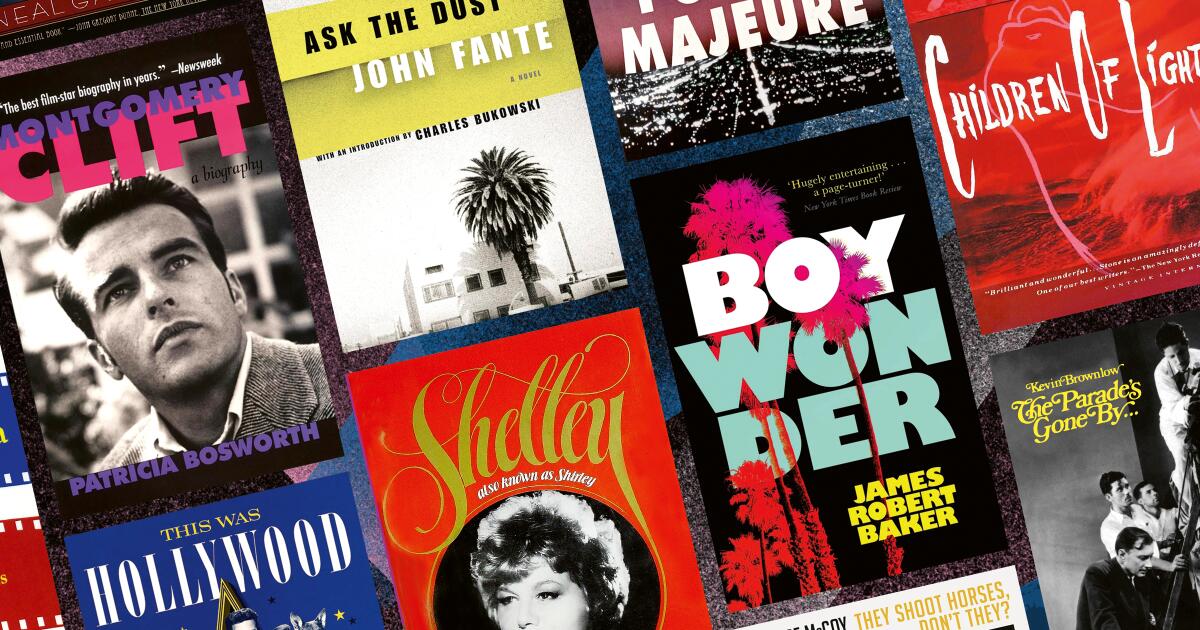
Hollywood has a long and complicated relationship with American literature. Some adaptations become classics in their own right. Others — even when backed by major studios, famous directors, and celebrated casts — manage to drain every ounce of life from
The novels on this list aren’t obscure. They’re taught in classrooms, debated in graduate seminars, and shelved in the canon of great American fiction. Which makes the films adapted from them all the more baffling. When a story this good produces a film this disappointing, it raises a genuine question: what went so wrong?
Because
When Great Books Become Bad Movies
Adapting a novel for the screen is one of the hardest jobs in entertainment. A book can live inside a reader’s head for 400 pages, building mood, interiority, and complexity that no two-hour film can fully replicate. The failures on this list aren’t just box office disappointments — they’re cases where something essential about the original work was lost, misunderstood, or simply ignored.
The pattern tends to repeat itself. A studio acquires the rights to a beloved novel, assumes The result is often a film that satisfies neither fans of the book nor general audiences.
The Novels That Deserved Better
These are some of the most frequently cited cases where a great American novel was let down by its film adaptation — drawn from documented critical consensus and cultural record:
- The Bonfire of the Vanities (1990) — Tom Wolfe’s savage satire of 1980s New York excess was handed to director Brian De Palma and emerged as one of the most notorious box office disasters of its era. Critics and audiences alike found the film tone-deaf to the novel’s sharp social commentary.
- The Great Gatsby (1974 and 2013) — F. Scott Fitzgerald’s masterpiece has been adapted multiple times, with neither the Robert Redford-led 1974 version nor Baz Luhrmann’s 2013 spectacle fully capturing the novel’s melancholy and moral weight. Both were criticized for prioritizing surface glamour over emotional depth.
- Invisible Man — Ralph Ellison’s landmark novel about race and identity in America has never received a faithful major studio adaptation, a gap many critics consider a significant failure of Hollywood’s relationship with essential Black American literature.
- The Scarlet Letter (1995) — Demi Moore starred in a version of Nathaniel Hawthorne’s classic that rewrote the ending entirely, prompting widespread derision from critics and literature scholars alike.
- Beloved (1998) — Toni Morrison’s Pulitzer Prize-winning novel was adapted with Oprah Winfrey producing and starring. Despite good intentions and a committed cast, the film struggled to translate the novel’s fractured, haunting narrative structure and was a significant commercial disappointment.
- A Farewell to Arms (1957) — Ernest Hemingway’s spare, devastating World War I novel received a glossy Hollywood treatment that critics felt fundamentally misread the book’s emotional restraint.
- On the Road (2012) — Jack Kerouac’s defining Beat Generation novel was in development for decades before Walter Salles finally brought it to screen. The resulting film was considered competent but lifeless — unable to bottle the spontaneous energy that makes the book endure.
A Pattern Worth Noticing
Looking at these adaptations together, a few patterns emerge that help explain why so many fail.
| Novel | Author | Film Year | Primary Criticism |
|---|---|---|---|
| The Bonfire of the Vanities | Tom Wolfe | 1990 | Lost satirical edge; major box office failure |
| The Great Gatsby | F. Scott Fitzgerald | 1974 / 2013 | Style over substance; emotional flatness |
| The Scarlet Letter | Nathaniel Hawthorne | 1995 | Rewrote the ending; dismissed by critics |
| Beloved | Toni Morrison | 1998 | Failed to capture narrative structure; poor box office |
| A Farewell to Arms | Ernest Hemingway | 1957 | Glossy tone misread Hemingway’s restraint |
| On the Road | Jack Kerouac | 2012 | Competent but failed to capture the book’s spirit |
The common thread isn’t budget or talent. Many of these films had both. The failure tends to be interpretive — filmmakers who understood the plot but missed the point.
Why This Still Matters for Readers and Viewers
These failures aren’t just cinematic footnotes. They shape how millions of people encounter — or don’t encounter — important works of American literature. A bad adaptation can actually suppress interest in the source novel, convincing audiences that a book isn’t worth their time based on a film that fundamentally misrepresented it.
There’s also a cultural cost. Novels like Ellison’s Invisible Man or Morrison’s Beloved carry stories and perspectives that deserve the widest possible audience. When Hollywood stumbles on that responsibility, the loss extends beyond the box office.
The good news is that the conversation around adaptation has matured. Streaming platforms have shown more willingness to give complex literary works the time and space they need — serialized formats, in particular, allow for the kind of depth that a single feature film rarely can.
What a Good Adaptation Actually Requires
The adaptations that do work — and there are many — tend to share a common quality: the filmmakers understood what the book was about, not just what happened in it. They made deliberate choices about what to keep, what to cut, and how to translate interior experience into visual storytelling.
The worst adaptations treat the source novel as a brand rather than a blueprint. They rely on name recognition to do the work that creative interpretation should be doing. And the audience — especially readers who love the original — always notices.
Frequently Asked Questions
Which American novel adaptation is most often cited as a failure?
The Bonfire of the Vanities (1990) is among the most frequently cited, having been both a critical and commercial disaster despite the prestige of its source material and filmmakers involved.
Has The Great Gatsby ever been successfully adapted for film?
Critical opinion remains divided. Both the 1974 and 2013 versions have defenders, but neither is widely considered to have fully captured the depth of Fitzgerald’s novel.
Why is it so difficult to adapt literary novels for film?
Novels can sustain interiority, ambiguity, and slow-building mood across hundreds of pages — qualities that are genuinely difficult to translate into the compressed, visual format of a feature film.
Did the 1998 adaptation of Beloved perform well at the box office?
No. Despite significant attention and Oprah Winfrey’s involvement as both producer and star, the film was a notable commercial disappointment.
Are there any successful adaptations of great American novels?
Yes — many. Films like To Kill a Mockingbird (1962) and The Godfather (1972, adapted from Mario Puzo’s novel) are considered examples where the adaptation honored and even elevated
Is On the Road considered a total failure as a film?
Not universally. The 2012 Walter Salles adaptation received mixed rather than purely negative reviews, but most critics agreed it failed to capture the spontaneous energy that defines Kerouac’s novel.

Leave a Reply