
Some television shows age like milk. Others age like fine wine — getting richer, more complex, and more rewarding the longer they sit. War dramas, perhaps more than any other genre, tend to fall into one of those two camps with very little middle ground.
The classics that have genuinely held up over the decades share something in common: they were never really about the battles. They were about the people caught inside them. That human core is exactly what keeps certain war TV shows feeling as urgent and emotionally true today as they did when they first aired.
With streaming making it easier than ever to revisit older television, there has been a renewed wave of interest in the war dramas that defined the genre. The shows listed here are widely considered among the best the genre has ever produced — and each one still earns that reputation.
Why Classic War TV Shows Still Hit Differently
There is a reason people keep returning to these series long after their original runs ended. War, as a dramatic setting, strips away everything comfortable and forces characters — and audiences — to confront questions about duty, survival, morality, and loss that never really go out of style.
The best classic war shows also benefited from something modern prestige television sometimes loses in its pursuit of spectacle: restraint. Limited budgets forced writers to prioritize character over action, dialogue over explosions. The result was television that trusted its audience to feel the weight of war without always showing it directly.
That approach has proven remarkably durable. Younger viewers discovering these shows for the first time often report being surprised by how modern they feel — how psychologically sophisticated, how morally complicated, how genuinely funny or heartbreaking the storytelling remains.
The Classic War TV Shows That Have Stood the Test of Time
These are the series most consistently celebrated by critics, historians, and fans as genuine classics of the war drama genre — shows that reward both first-time viewers and those returning for another watch.
- M*A*S*H — The Korean War surgical comedy-drama that ran from 1972 to 1983 and remains one of the most-watched television finales in American history. Its ability to balance sharp comedy with genuine grief set a standard the genre has chased ever since.
- Combat! — The long-running World War II drama that aired from 1962 to 1967, following a U.S. Army rifle squad through Europe. It was notable for its grounded, unglamorous portrayal of infantry warfare at a time when most war content was far more heroic in tone.
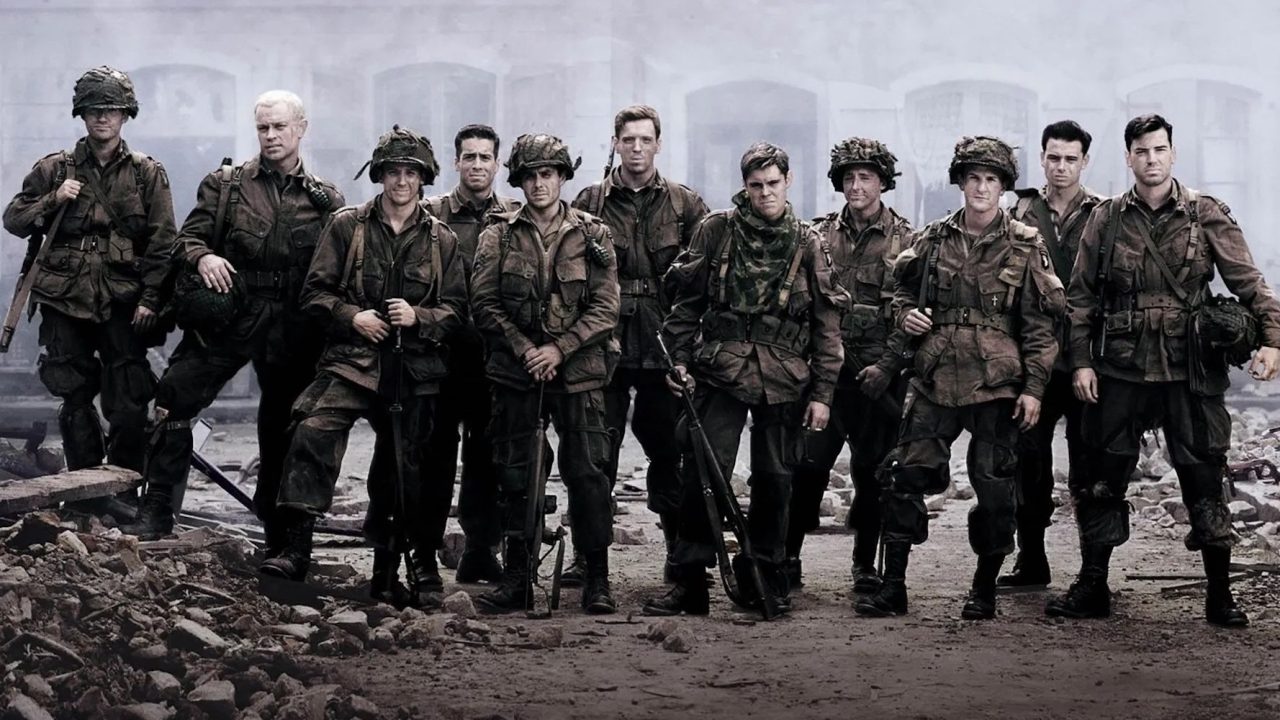
- Band of Brothers — The HBO miniseries produced by Steven Spielberg and Tom Hanks that aired in 2001, following the men of Easy Company, 506th Regiment, 101st Airborne Division from D-Day through the end of World War II in Europe. It set a new benchmark for production quality in war television.
- The Pacific — The follow-up HBO miniseries from the same producing team, airing in 2010, shifting focus to the Pacific Theater of World War II and offering a notably darker, more psychologically brutal perspective on the same conflict.
- Hogan’s Heroes — The long-running comedy set in a German POW camp that aired from 1965 to 1971. Controversial in concept but genuinely beloved in execution, it used absurdist humor to undercut the mythology of wartime enemies in ways that still feel surprisingly subversive.
- Tour of Duty — The Vietnam War drama that aired from 1987 to 1990, one of the first American network series to take the Vietnam conflict seriously as dramatic subject matter, arriving in the cultural wake of films like Platoon and Full Metal Jacket.
What Makes These Shows Hold Up — A Closer Look
| Show | Era Depicted | Original Run | Why It Still Works |
|---|---|---|---|
| M*A*S*H | Korean War | 1972–1983 | Balances comedy and grief in a way that feels genuinely human |
| Combat! | World War II (Europe) | 1962–1967 | Unglamorous infantry realism decades ahead of its time |
| Band of Brothers | World War II (Europe) | 2001 | Production scale and emotional depth that still hasn’t been matched |
| The Pacific | World War II (Pacific) | 2010 | Unflinching psychological honesty about what combat does to people |
| Hogan’s Heroes | World War II (POW Camp) | 1965–1971 | Subversive absurdist humor that still catches viewers off guard |
| Tour of Duty | Vietnam War | 1987–1990 | Took Vietnam seriously on network TV before it was common to do so |
The Element Most People Overlook in These Shows
What often gets lost in discussions of classic war television is how politically daring many of these series were for their time. M*A*S*H was a barely disguised critique of the Vietnam War broadcasting on prime-time network television during the conflict itself. Tour of Duty arrived when Vietnam was still a raw cultural wound. Combat! portrayed war as grinding, exhausting, and morally ambiguous at a moment when American pop culture preferred its war stories clean and triumphant.
That willingness to complicate the dominant narrative is a big part of why these shows still feel relevant. They were not simply entertainment products built around the spectacle of war — they were using the genre to ask harder questions about what war costs and who pays that cost.
Band of Brothers and The Pacific, despite their much larger budgets and later production dates, carry that same DNA. The scale is bigger, but the core impulse — to honor the people who served by being honest about what they experienced — remains consistent with the best of what came before them.
Why Now Is a Good Time to Watch Them
Streaming has made access easier, but it has also made the sheer volume of available content overwhelming. Classic war shows offer something genuinely valuable in that environment: they are finite, they are complete, and they have already been vetted by decades of audience response.
There is no guessing whether M*A*S*H sticks the landing. There is no uncertainty about whether Band of Brothers is worth eleven hours of your time. These shows have already made their case to millions of viewers across multiple generations. That is a kind of guarantee that no new prestige drama can offer.
For anyone who has not revisited these series recently — or has never seen them at all — the case for starting now is straightforward. They are, by almost any measure, some of the best television ever made about the worst things human beings do to each other.
Frequently Asked Questions
What makes a war TV show age well?
The classic war shows that hold up best tend to prioritize character, moral complexity, and emotional honesty over spectacle — qualities that remain compelling regardless of when a show was made.
Is Band of Brothers still considered one of the best war TV shows ever made?
Band of Brothers, the 2001 HBO miniseries produced by Steven Spielberg and Tom Hanks, is widely regarded as one of the definitive war dramas in television history and continues to be cited as a benchmark for the genre.
How many seasons did M*A*S*H run?
M*A*S*H ran for eleven seasons, from 1972 to 1983, making it one of the longest-running war dramas in American television history.
Where can I watch classic war TV shows like Band of Brothers or The Pacific?
Availability varies by region and platform and changes over time — checking current streaming services directly is the most reliable way to find where these shows are currently licensed.
Is The Pacific as good as Band of Brothers?
The Pacific is generally considered darker and more psychologically intense than Band of Brothers, with both miniseries sharing the same producing team and similar production quality — though audience preferences between the two tend to vary.
Was Combat! realistic for its era?
Combat!, which aired from 1962 to 1967, was notably unglamorous in its portrayal of infantry warfare compared to most war content of the period, and is often credited as a forerunner of the grittier war storytelling that became more common decades later.

Leave a Reply