
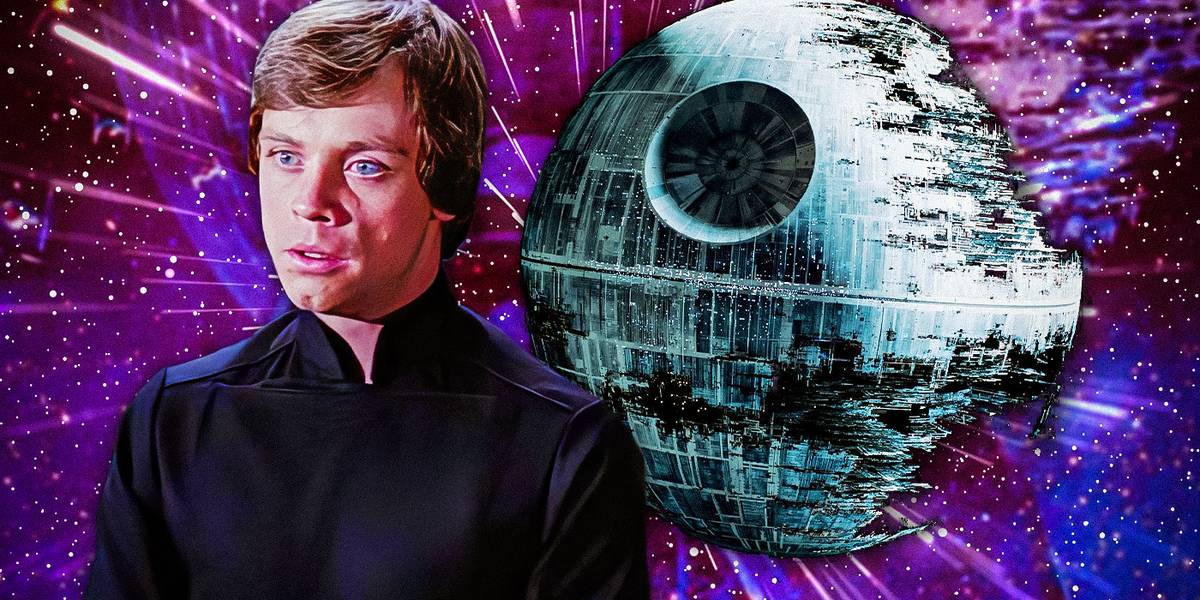
The Death Star gets all the attention. Two movies, countless toys, one very memorable trench run — it has become the defining symbol of overwhelming destructive power in science fiction. But here’s the thing: within the vast Star Wars universe, it isn’t even close to the most dangerous weapon ever built.
Across films, television series, novels, comics, and video games, the Star Wars galaxy has produced superweapons that make the Death Star look like a warning shot. Some destroy fleets. Some collapse stars. Some threaten the fabric of reality itself. If you’ve only been paying attention to the movies, you’ve missed most of the horror.
Here’s a look at the Star Wars superweapons that genuinely outclass the Empire’s most famous moon-sized battle station — ranked by what they can actually do.
Why the Death Star Isn’t the Scariest Thing in the Galaxy
The original Death Star could destroy a planet. That’s not a small thing. Alderaan was gone in seconds, billions of lives erased in a single pulse of superlaser fire. The second Death Star was more powerful still, capable of firing while still under construction.
But the Death Star had a fundamental limitation: it could only destroy one planet at a time, it required enormous resources to build and maintain, and — as the Rebel Alliance proved twice — it had exploitable weaknesses. For a weapon designed to inspire absolute terror, it turned out to be surprisingly mortal.
The weapons below don’t share those limitations. Several can destroy multiple targets simultaneously, operate across star systems, or cause damage that no engineering team can ever repair.
Star Wars Superweapons That Go Further Than the Death Star
The Star Wars expanded universe — now known as Legends, along with the current canon in books, comics, and shows — has introduced a remarkable number of planet-killers, star-killers, and worse. Here are ten that deserve recognition for sheer destructive scale.
- Starkiller Base — The First Order’s planet-converted superweapon from The Force Awakens drained an entire star to fire a beam capable of destroying multiple planets in a single shot across the galaxy. It didn’t just kill one world — it wiped out the entire Hosnian system simultaneously.
- The Star Forge — From Knights of the Old Republic, this ancient Rakatan space station drew energy from a star to produce an essentially unlimited supply of warships and weapons. Less a weapon itself, more an engine of infinite war.
- The Galaxy Gun — A Legends-era superweapon capable of firing projectiles through hyperspace, allowing it to strike any target in the galaxy without warning. No defense, no interception, no escape.
- The Sun Crusher — Also from Legends, this small fighter-sized craft could launch resonance torpedoes into a star, triggering a supernova. One pilot, one ship, one torpedo — and an entire star system is gone. Its size made it nearly impossible to destroy.
- The Darksaber (Mandalorian superweapon, not the blade) — A device designed to drain a star’s energy entirely, collapsing it and destroying every planet in that system.
- The Thought Bomb — A Sith ritual weapon from Legends that destroys all Force-sensitive beings in range, trapping their souls in an eternal void. It kills selectively and permanently, with no physical explosion required.
- Centerpoint Station — A massive ancient space station capable of pulling objects out of hyperspace, generating planetary repulsors, and firing blasts powerful enough to destroy stars across interstellar distances.
- The Cosmic Turbine — An ancient device capable of rerouting stellar energy on a massive scale, with destructive potential that operates at a cosmic rather than planetary level.
- The Maw Installation Weapons — The research facility hidden inside the Maw black hole cluster produced multiple prototype superweapons, including early Death Star designs and the Sun Crusher, essentially serving as a factory for planet-ending technology.
- The Sith Eternal Fleet’s Xyston-class Star Destroyers — Featured in The Rise of Skywalker, each ship in the Final Order’s fleet carried its own axial superlaser capable of destroying a planet. Not one Death Star — thousands of them, scattered across the galaxy.
Comparing the Destruction: How These Weapons Stack Up
| Weapon | Source | Capability | Scale of Destruction |
|---|---|---|---|
| Death Star | A New Hope | Planet destruction | One planet per shot |
| Starkiller Base | The Force Awakens | Multi-planet destruction | Entire star system in one shot |
| Sun Crusher | Legends novels | Supernova trigger | Destroys entire star systems |
| Galaxy Gun | Legends | Hyperspace projectiles | Any target, anywhere, undetectable |
| Centerpoint Station | Legends | Stellar energy manipulation | Star destruction at range |
| Xyston-class Fleet | The Rise of Skywalker | Distributed planet-killers | Thousands of planet-killing ships |
| Thought Bomb | Legends | Force-user annihilation | Eternal soul destruction, no physical limit |
What Makes These Weapons More Terrifying Than the Death Star
The Death Star required years of construction, enormous Imperial resources, and a crew of hundreds of thousands. It was a statement of power as much as a functional weapon — something meant to be seen and feared.
Several weapons on this list are more terrifying precisely because they don’t announce themselves. The Galaxy Gun fires through hyperspace. The Sun Crusher fits inside a hangar bay. The Thought Bomb leaves no physical trace. The Xyston-class fleet distributes the Death Star’s capability across thousands of ships, making it impossible to destroy with a single Rebel attack run.
Starkiller Base arguably represents the most direct escalation in canon — it took the Death Star concept and multiplied it, requiring an entire star’s worth of energy but delivering destruction across multiple planets at once. The Hosnian system didn’t get a warning. There was no time to evacuate.
And then there’s the Xyston-class fleet from The Rise of Skywalker. Thousands of Star Destroyers, each one carrying a planet-killing weapon. That’s not a superweapon. That’s a superweapon multiplied by thousands, hidden on a planet at the edge of the known galaxy.
The Death Star’s Legacy — and Its Limits
None of this diminishes what the Death Star represents culturally or narratively. It remains one of cinema’s most iconic images of tyranny and overreach. The moment it destroyed Alderaan changed Star Wars forever.
But from a purely functional standpoint, the galaxy far, far away has produced far more dangerous things. The Death Star was a beginning, not a ceiling — a proof of concept that the Star Wars universe has spent decades building beyond, in increasingly terrifying directions.
Whether in current canon or the vast Legends library, the message is consistent: wherever there is power in the Star Wars galaxy, someone has already figured out how to make it worse.
Frequently Asked Questions
What is the most powerful superweapon in Star Wars?
Within current canon, the Xyston-class Star Destroyer fleet from The Rise of Skywalker is among the most dangerous, as each ship carries a planet-killing weapon — meaning thousands of Death Star-level threats deployed simultaneously.
Is Starkiller Base more powerful than the Death Star?
Yes. Starkiller Base could destroy multiple planets in a single shot by firing across the galaxy, whereas the Death Star could only destroy one planet per shot.
What is the Sun Crusher in Star Wars?
The Sun Crusher is a Legends-era superweapon — a small, nearly indestructible ship that could trigger supernovas by firing resonance torpedoes into stars, destroying entire star systems.
Are Legends weapons considered canon?
No. Legends material was reclassified as non-canon in 2014, meaning weapons like the Sun Crusher and Galaxy Gun exist outside the official Star Wars timeline, though they remain part of the broader franchise history.
Could any Star Wars weapon destroy the entire galaxy?
Some Legends weapons, like Centerpoint Station, operated at stellar scales, but no confirmed weapon in either canon or Legends is described as capable of destroying the entire galaxy.
Why does Star Wars keep creating bigger superweapons?
It’s a recurring narrative pattern in the franchise — each new threat needs to feel more dangerous than the last, pushing writers to escalate the scale of destruction across films, books, and games.



Leave a Reply