
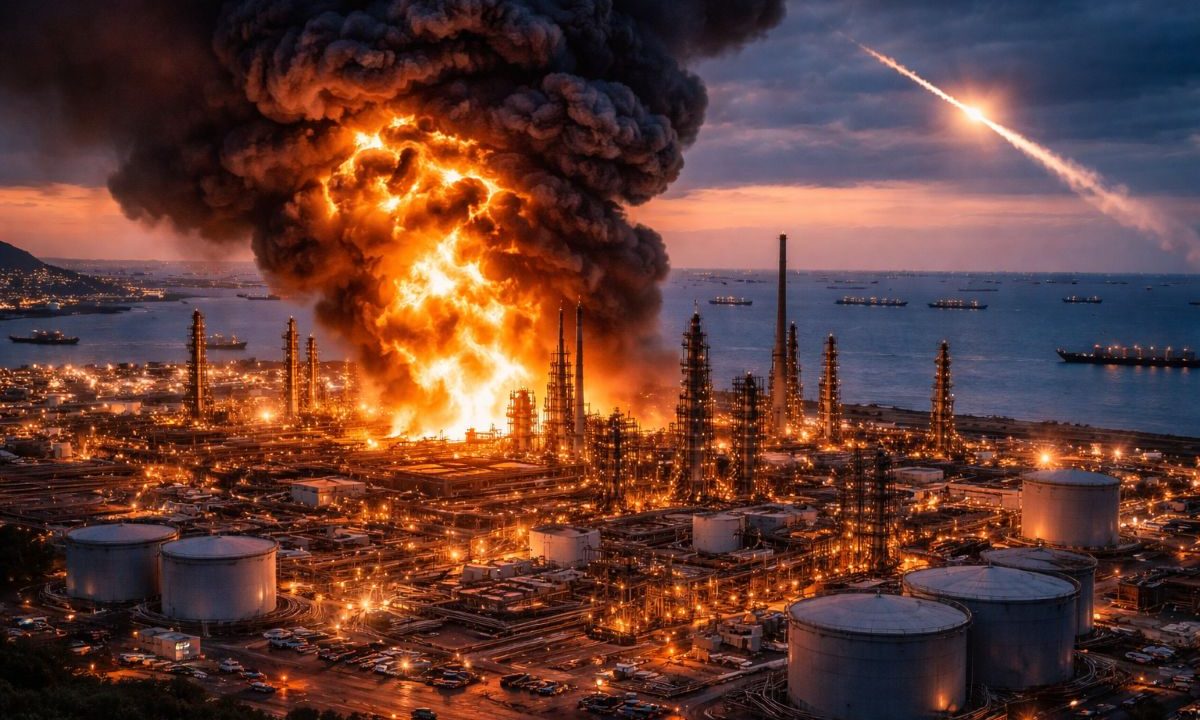
A drone punched through the security perimeter of one of Saudi Arabia’s most strategically important oil refineries on March 19, 2026 — and the ripple effects stretch far beyond the facility’s walls, touching global energy markets, shipping routes, and the daily cost of fuel for millions of people worldwide.
The target was the SAMREF refinery in Yanbu, a joint venture between Saudi Aramco and ExxonMobil situated on Saudi Arabia’s western coast along the Red Sea. The facility processes hundreds of thousands of barrels of crude oil every single day. This was not a strike on a peripheral installation. It was a direct hit on a node in the global energy supply chain.
Emergency teams managed to contain the fire that broke out following the drone impact. But the physical damage, serious as it was, turned out to be the smaller part of the story.
Why the SAMREF Refinery Attack Matters Beyond Saudi Arabia
Yanbu’s importance to global energy flows is difficult to overstate. The city sits at the western terminus of Saudi Arabia’s East-West pipeline — a critical artery specifically designed to move oil to export terminals without passing through the Strait of Hormuz, one of the most congested and geopolitically volatile waterways on the planet.
The Strait of Hormuz has long been considered a chokepoint vulnerability in global oil supply. The East-West pipeline was built precisely to offer an alternative. Yanbu, therefore, represents a backup route that the entire global market depends on when tensions flare in the Persian Gulf. Striking Yanbu is, in effect, striking at that backup plan.
The attack immediately raised questions about how secure any energy export infrastructure truly is in the current geopolitical environment — and what happens to oil prices, shipping costs, and fuel availability if that infrastructure is disrupted more severely in the future.
A Second Threat Intercepted: The Missile Strike on Yanbu Port
The drone strike was not the only threat that day. According to the source reporting, a secondary missile attack targeting the Yanbu port was intercepted by Saudi Arabia’s air defense systems. The interception prevented what could have been a significantly more damaging strike on port infrastructure that handles a substantial share of the region’s energy exports.
The combination of a drone breaching refinery security and a ballistic missile being launched at the port in the same event signals a level of coordinated attack planning that has alarmed security analysts and energy market observers alike.
| Event | Date | Target | Outcome |
|---|---|---|---|
| Drone Strike | March 19, 2026 | SAMREF Refinery, Yanbu | Fire started; contained by emergency teams |
| Missile Attack | March 19, 2026 | Yanbu Port | Intercepted by Saudi air defense systems |
Key Facts About the SAMREF Refinery and Yanbu’s Strategic Role
- Ownership: SAMREF is a joint venture between Saudi Aramco and ExxonMobil, two of the largest energy companies in the world.
- Location: Yanbu, on Saudi Arabia’s western coast along the Red Sea.
- Capacity: The refinery processes hundreds of thousands of barrels of crude oil per day.
- Pipeline connection: Yanbu sits at the western end of the East-West pipeline, which bypasses the Strait of Hormuz entirely.
- Strategic value: The facility is a critical export point for Saudi crude, making it a high-value target with outsized global consequences if seriously damaged.
The East-West pipeline bypass is particularly significant. When tensions in the Persian Gulf rise — as they periodically do — global oil markets look to Yanbu as the safety valve. Any sustained disruption there removes one of the few redundancies built into the global energy supply system.
How This Affects Energy Prices, Shipping, and Travel Routes
For travelers and industries that depend on stable fuel costs, the implications of this kind of attack extend well beyond the Middle East. Aviation fuel, shipping costs, and ground transportation are all priced in relation to global crude oil benchmarks. When a facility of SAMREF’s scale is struck — even if damage is contained — markets react to the uncertainty, not just the immediate physical impact.
Shipping routes through the Red Sea have already faced disruption in recent years due to regional tensions. An attack on Yanbu, which sits directly on the Red Sea coast, adds another layer of risk to a corridor that handles a significant share of global maritime trade. Cargo carriers, cruise operators, and logistics companies all factor Red Sea stability into their route planning and pricing.
For the average traveler, the most direct consequence is the potential for higher airfares and fuel surcharges if oil prices spike in response to sustained instability. For businesses that rely on imported goods moving through the region, supply chain delays become a real operational concern.
What This Signals About the Vulnerability of Global Oil Infrastructure
The March 19 attack is part of a broader pattern of drone and missile strikes on energy infrastructure across the Middle East that has intensified in recent years. What makes this particular incident notable is the combination of factors: the precision of the drone breach, the simultaneous missile threat, and the specific choice of Yanbu as a target — a location chosen almost certainly because of its role as the alternative to the Strait of Hormuz.
Security experts and energy market observers have consistently noted that modern drone technology has fundamentally changed the threat calculus for critical infrastructure. Facilities that were once considered difficult to reach are now within range of relatively low-cost, commercially available drone systems modified for offensive use.
Saudi Arabia’s air defense systems demonstrated their capability by intercepting the missile aimed at Yanbu port. But the drone that struck the refinery itself got through — a reminder that even sophisticated defense networks have limits, and that the global energy system carries more fragility than oil prices in stable periods might suggest.
Frequently Asked Questions
What is the SAMREF refinery and who owns it?
SAMREF is a major oil refinery located in Yanbu, Saudi Arabia, operated as a joint venture between Saudi Aramco and ExxonMobil. It processes hundreds of thousands of barrels of crude oil daily.
Was anyone hurt in the drone strike on March 19, 2026?
Emergency teams responded quickly and contained the fire that broke out following the drone impact.
Why is Yanbu considered strategically important to global energy supply?
Yanbu sits at the western end of Saudi Arabia’s East-West pipeline, which routes oil exports to the Red Sea, bypassing the congested and contested Strait of Hormuz entirely.
Was the missile attack on Yanbu port successful?
No. According to the source reporting, Saudi Arabia’s air defense systems intercepted the missile before it could strike the port.
How could this attack affect oil prices and travel costs?
Strikes on major refinery and port infrastructure in the region create market uncertainty that can push oil prices higher, which in turn raises aviation fuel costs and can lead to increased airfares and shipping surcharges.
Is the Red Sea shipping route affected by this incident?
The attack highlights ongoing vulnerability in the Red Sea corridor, which is already under scrutiny due to regional tensions. Sustained instability in Yanbu could influence shipping route decisions and associated costs for cargo and travel operators.




Leave a Reply