
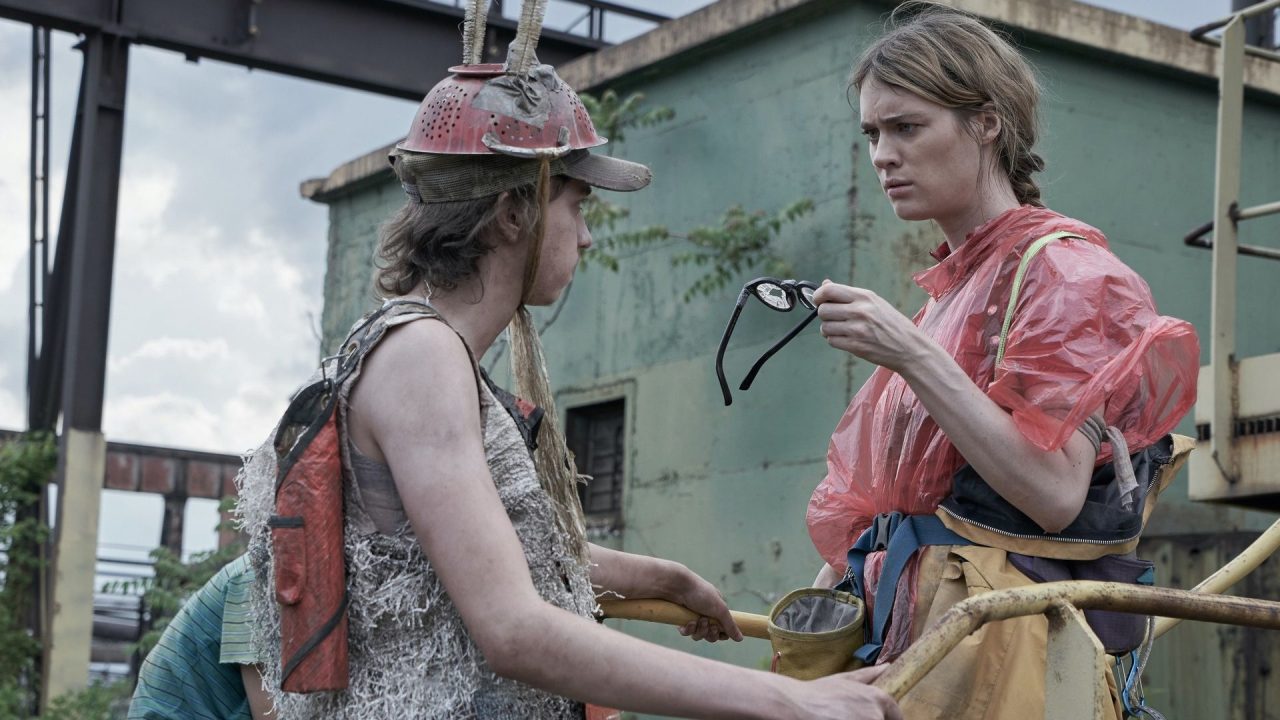
If you finished Station Eleven and immediately felt that specific, hollow ache of not knowing what to watch next — you’re not alone. The HBO Max miniseries carved out something genuinely rare in television: a post-apocalyptic story that was more interested in beauty, memory, and human connection than in violence or despair. That combination is hard to find, but it does exist elsewhere.
The shows that scratch the same itch tend to share a few qualities. They take the end of the world — or something close to it — seriously without wallowing in it. They center character over chaos. And they ask questions about what makes life worth living, even when civilization itself is crumbling. The list below focuses on exactly that kind of television.
Because
What Makes a Show Feel Like Station Eleven
Station Eleven, based on Emily St. John Mandel’s 2014 novel, is set twenty years after a flu pandemic wipes out most of humanity. But it isn’t really about the pandemic. It’s about theater, art, grief, and the way people carry each other across time. That’s the template worth chasing.
Shows that feel similar tend to share several traits:
- Non-linear storytelling that rewards patient viewers
- A focus on emotional and philosophical questions, not just survival mechanics
- Strong ensemble casts with layered, morally complex characters
- A tone that balances darkness with genuine warmth or wonder
- World-building that feels lived-in rather than purely decorative
With those qualities in mind, here are seven shows worth your time — and the first one on most critics’ lists is genuinely difficult to argue with.
The Shows Most Worth Watching After Station Eleven
The Leftovers is the title that appears at the top of almost every list like this one, and the reputation is earned. The HBO drama, which ran from 2014 to 2017, follows a small town in the years after two percent of the world’s population simply vanishes without explanation. There is no resolution to that mystery — the show is explicit about that from early on. What it offers instead is an unflinching examination of grief, faith, and how people construct meaning in the absence of answers. It is widely considered one of the finest dramas of the 2010s.
The Handmaid’s Tale, streaming on Hulu, takes a different approach — a theocratic totalitarian society rather than a post-collapse one — but it shares Station Eleven’s interest in what happens to women, art, and resistance when power structures collapse and rebuild in terrifying new forms. Based on Margaret Atwood’s novel, it earned significant critical acclaim in its early seasons.
The 100, which ran on The CW for seven seasons, is rougher around the edges but deeply committed to its core question: what moral compromises are acceptable when survival is at stake? It begins with a group of juvenile delinquents sent to a post-nuclear Earth and grows into something much more complex over time.
Manifest plays with similar themes of mystery, time, and community — a plane lands after five years during which the passengers have not aged, and the show explores what it means to return to a world that has moved on without you. It was eventually picked up by Netflix after NBC cancelled it, suggesting a passionate audience that connected with its emotional core.
The Strain, based on Guillermo del Toro’s novel series, leans harder into horror than Station Eleven does, but it shares a preoccupation with how quickly civilization can fracture and what people are willing to do to protect the ones they love.
Black Mirror operates in shorter, anthology form, but several episodes capture the same unsettling meditation on technology, humanity, and consequence that runs beneath Station Eleven’s surface. Episodes like “San Junipero” in particular share that show’s interest in love and memory persisting through catastrophe.
Sweet Tooth, a Netflix series based on the DC Comics series, follows a hybrid deer-boy navigating a post-pandemic world. It is gentler and more fable-like than most entries on this list, which makes it one of the closest tonal matches to Station Eleven’s blend of wonder and sadness.
How These Shows Compare at a Glance
| Show | Network/Platform | Tone | Closest Station Eleven Quality |
|---|---|---|---|
| The Leftovers | HBO | Dark, philosophical | Grief, meaning-making, non-linear structure |
| The Handmaid’s Tale | Hulu | Bleak, urgent | Resistance, women’s experience, dystopian world-building |
| Sweet Tooth | Netflix | Warm, fable-like | Post-pandemic wonder, emotional core |
| Black Mirror | Netflix | Varied, often dark | Philosophical stakes, memory, love |
| The 100 | The CW | Intense, moral | Survival ethics, ensemble character work |
| Manifest | Netflix | Mysterious, emotional | Time, community, displacement |
| The Strain | FX | Dark, horror-adjacent | Civilizational collapse, protective love |
Why The Leftovers Keeps Coming Out on Top
It’s worth pausing on The Leftovers specifically, because its reputation has only grown since it ended. Created by Damon Lindelof and Tom Perrotta — who also wrote the source novel — the show resisted every easy answer its premise seemed to promise. Characters broke down, rebuilt themselves, and broke down again. The finale remains one of the most discussed and debated in recent television history.
For viewers who loved Station Eleven because it trusted them to sit with ambiguity and feeling, The Leftovers offers the same respect. It does not explain things away. It asks you to feel them instead.
That quality — trusting the audience — is what separates these shows from the broader landscape of dystopian television. Anyone can show you the end of the world. Very few shows make you feel why it matters that the world existed at all.
Frequently Asked Questions
What is Station Eleven about?
Station Eleven is an HBO Max miniseries set twenty years after a flu pandemic devastates humanity, focusing on a traveling theater company and the interconnected lives of its members across time.
Is The Leftovers really the best show to watch after Station Eleven?
It consistently appears at the top of critical recommendations for fans of Station Eleven, primarily because of its shared interest in grief, meaning, and non-linear storytelling rather than action-driven survival plots.
Is Sweet Tooth appropriate for all ages?
Sweet Tooth has a gentler, more fable-like tone than most dystopian shows and is generally considered more family-accessible, though it does deal with post-pandemic themes that may be heavy for younger viewers.
Where can I watch these shows?
The Leftovers and The Handmaid’s Tale are on HBO and Hulu respectively; Sweet Tooth, Black Mirror, and Manifest are available on Netflix; The 100 streams on Netflix as well; The Strain originally aired on FX.
Is Station Eleven based on a book?
Yes — it is adapted from Emily St. John Mandel’s 2014 novel of the same name, which was widely praised for its literary approach to post-apocalyptic storytelling.
Do any of these shows have similar non-linear storytelling to Station Eleven?
The Leftovers uses non-linear structure most prominently, and Black Mirror’s anthology format similarly resists conventional narrative timelines. Both reward viewers who are comfortable with ambiguity.

Leave a Reply