
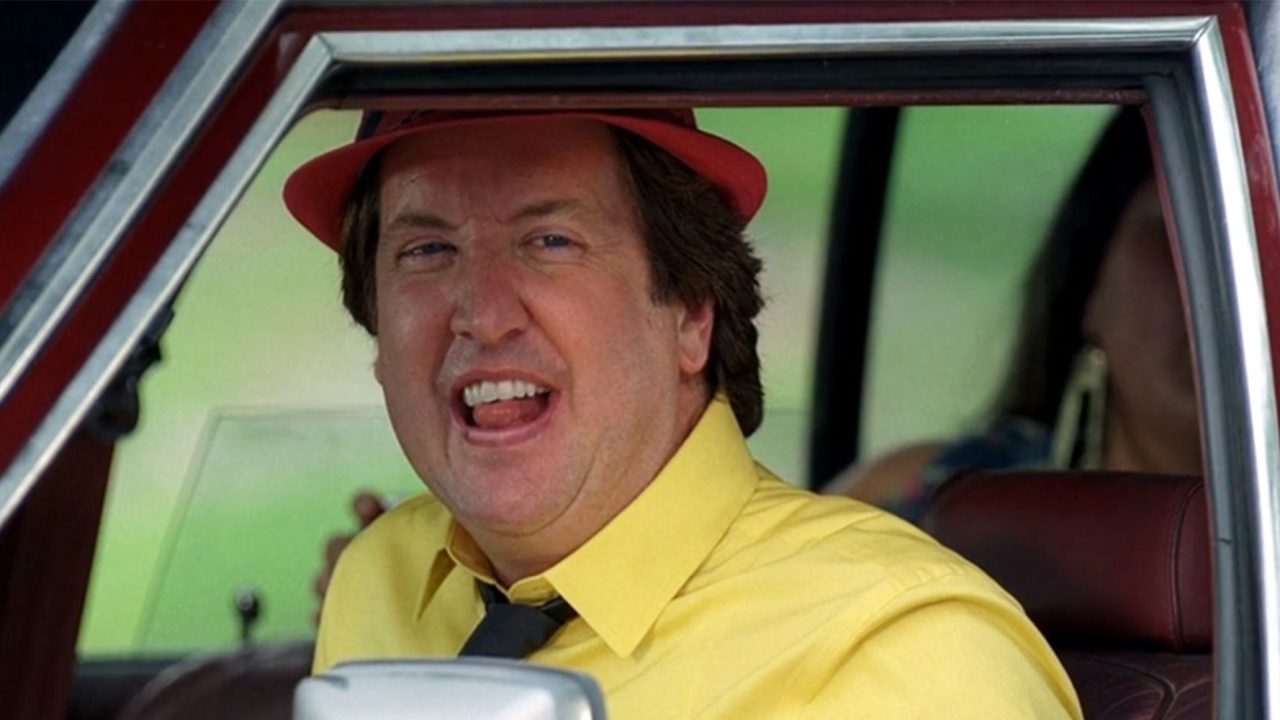
Some shows take a while to find their audience. Eastbound & Down, the HBO comedy starring Danny McBride, was exactly that kind of show — a four-episode first season that quietly laid the groundwork for one of the most aggressively funny, morally unhinged sitcoms the network has ever produced.
Seventeen years on from its debut, the series still holds up as a singular piece of television — and its legacy is worth revisiting, especially for anyone who hasn’t yet spent time with Kenny Powers, the mullet-sporting, foul-mouthed former MLB pitcher who refuses, at every possible turn, to accept that his best days are behind him.
What makes Eastbound & Down worth talking about now isn’t just nostalgia. It’s the way the show established a creative template — one built around deeply flawed protagonists, Southern Gothic absurdity, and a refusal to let the audience off the hook — that continued to define HBO’s appetite for relentless, uncomfortable comedy long after Kenny Powers rode off into whatever sunset he’d convinced himself he deserved.
What Made Eastbound & Down Different From Everything Else on TV
When the show premiered, the prestige TV landscape was dominated by antiheroes of a very specific kind — brooding, violent, morally complex men doing terrible things in expensive settings. Eastbound & Down took that archetype and played it for pure, uncut comedy.
Kenny Powers isn’t a tragic figure in the traditional sense. He’s a disaster of a human being who genuinely believes he’s the greatest person in any room he walks into. The joke isn’t that he’s fallen from grace — it’s that he has no idea how far he’s fallen, and the show never lets him fully reckon with it in any satisfying way.
That’s a hard tonal line to walk. Too far in one direction and the character becomes unwatchable. Too far the other way and the show becomes a redemption arc, which would have gutted everything that made it sharp. The creative team, led by Danny McBride and Jody Hill, managed to keep that balance across multiple seasons — and it started with those first four episodes.
The Four-Episode First Season That Quietly Changed the Game
The structure of Season 1 was unusual by any standard. Four episodes is barely enough time to establish a premise, let alone a world. But the compressed format worked in the show’s favor — it moved fast, it committed fully to its tone, and it left viewers wanting more before they’d even processed what they’d watched.
The setup is deceptively simple: Kenny Powers, once a celebrated major league pitcher, has flamed out spectacularly and is forced to return to his small North Carolina hometown, where he takes a job as a physical education teacher at his old middle school. The indignity of that situation — a man of his self-assessed stature, reduced to teaching dodgeball — is the engine that drives everything.
What the show understood from the beginning is that comedy about failure hits hardest when the failing character refuses to acknowledge the failure. Kenny Powers isn’t sad. He’s furious. He’s convinced the world owes him a second act, and he’s going to collect whether the world cooperates or not.
Danny McBride and the HBO Comedy DNA
It’s difficult to overstate how much McBride’s performance shaped what followed. The character required someone willing to be genuinely unlikable — not in a winking, self-aware way, but with total commitment. McBride delivered that, and the show’s creators built a world around him that matched his energy at every turn.
The creative partnership between McBride and Jody Hill, who had previously collaborated on the film The Foot Fist Way, translated naturally to the long-form television format. Their sensibility — regional, specific, deeply uncomfortable in the best possible way — found a home at HBO that allowed it to expand without softening.
The show ran for four seasons and ended on its own terms, which is rarer than it should be. By the time it wrapped, it had established McBride as one of the defining comic voices of his generation and set the stage for subsequent projects that carried the same DNA.
Why the Show Still Resonates Seventeen Years Later
Part of what keeps Eastbound & Down in the conversation is how precisely it captured a particular kind of American delusion — the belief that talent and confidence are interchangeable, and that the universe is obligated to reward both equally.
Kenny Powers is a specific character, but the type he represents is universal. The washed-up athlete who can’t move on. The person so convinced of their own legend that they’ve become genuinely incapable of self-reflection. The show treats that psychology with a kind of dark affection — it’s not mean-spirited, but it doesn’t flinch either.
That combination of warmth and brutality is what separates great character comedy from the kind that just makes you feel bad. Eastbound & Down walked that line better than almost anything else on television at the time.
| Season | Episode Count | Setting |
|---|---|---|
| Season 1 | 4 episodes | North Carolina |
| Season 2 | 6 episodes | Mexico |
| Season 3 | 8 episodes | North Carolina (return) |
| Season 4 | 8 episodes | Various |
What Eastbound & Down Left Behind
The show’s influence on HBO’s comedy output is hard to measure precisely, but it’s clearly visible in the network’s continued willingness to back comedies built around genuinely difficult protagonists. It proved that you didn’t need a likable lead to build an audience — you needed a compelling one.
For viewers coming to it fresh, the four-episode first season remains the ideal entry point. It’s tight, it’s confident, and it tells you everything you need to know about what the show is and isn’t willing to do. That’s a rare thing in television, and it’s worth appreciating.
Frequently Asked Questions
What is Eastbound & Down about?
It’s an HBO comedy series starring Danny McBride as Kenny Powers, a former MLB pitcher who returns to his small North Carolina hometown and takes a job as a middle school PE teacher after his career collapses.
How many episodes were in the first season?
The first season consisted of only four episodes, an unusually compact run that nonetheless established the show’s tone and premise effectively.
Who created Eastbound & Down?
The series was created by Danny McBride and Jody Hill, who had previously worked together on the film The Foot Fist Way.
How many seasons did the show run?
Eastbound & Down ran for four seasons on HBO before ending on its own terms.
Where can I watch Eastbound & Down now?
This has not been confirmed in
Is the show worth watching if you haven’t seen it?
Based on its critical legacy and the creative team behind it, the show is widely regarded as one of the stronger HBO comedies of its era, with the four-episode first season serving as a natural starting point.



Leave a Reply