
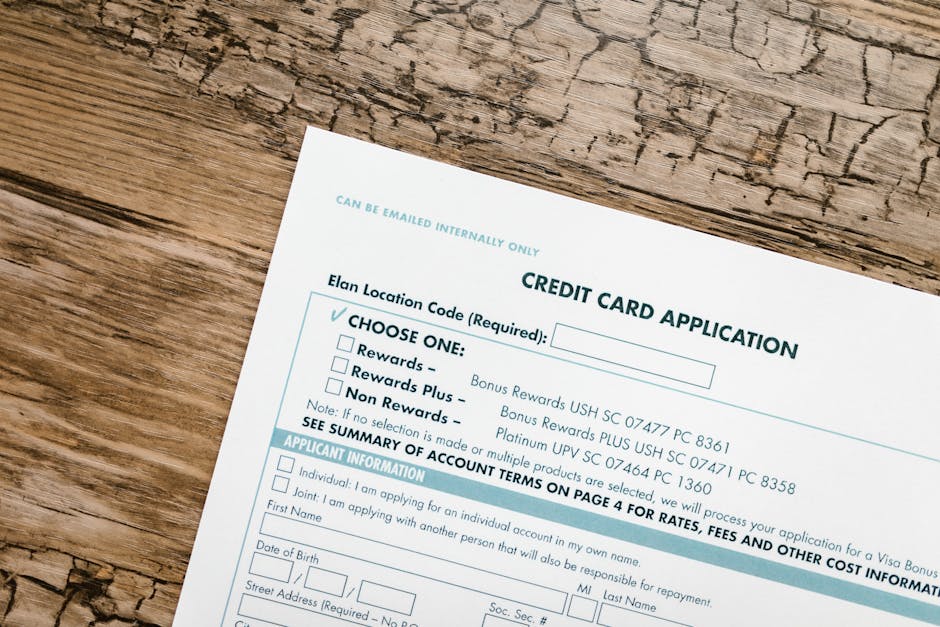
The IRS issues Employer Identification Numbers at no cost, and the online application at IRS.gov EIN assistant delivers your number immediately upon completion—no waiting, no fee, no third-party service required. For the 2026 tax year, with the April 15, 2026 filing deadline for 2025 returns already here, getting your EIN locked in before you file a business return, open a SEP-IRA, or bring on a first employee is a hard prerequisite, not a formality.
What an EIN Is and Who Must Have One in 2026
An EIN—formally an Employer Identification Number, also called a Federal Employer Identification Number (FEIN) or Federal Tax Identification Number—is a nine-digit number formatted as XX-XXXXXXX. The IRS uses it to identify a business entity the same way a Social Security number identifies an individual.
You are required to obtain an EIN if you: have employees (even one); operate as a corporation or partnership; file employment, excise, or alcohol/tobacco/firearms tax returns; withhold taxes on non-wage income paid to a nonresident alien; or have a Keogh plan. You also need one to open most business bank accounts, apply for business licenses, and establish a solo 401(k)—which in 2026 lets you defer up to $24,500 as an employee, plus a 25% employer contribution on net self-employment income.
Sole proprietors without employees and with no plans to open a retirement plan can legally use their Social Security number as their tax ID. However, most tax professionals recommend getting an EIN anyway to keep personal and business finances cleanly separated and to avoid putting your SSN on vendor W-9 forms.
The 4 Official IRS Methods to Apply for an EIN in 2026
The IRS offers four application methods. Only one delivers an instant EIN.
Method 1: Online — Instant EIN, Available Monday–Friday 7 a.m.–10 p.m. ET
The IRS online EIN application is an interview-style tool that takes roughly 15 minutes. At the end, the IRS validates your information and issues the EIN immediately. You can download and print the confirmation notice (CP 575) on the spot. The session must be completed in one sitting—there is no save-and-return function—and the system allows only one EIN per responsible party per day.
Method 2: Fax — EIN in 4 Business Days
Complete Form SS-4 and fax it to the IRS. If you include a return fax number, the IRS faxes back your EIN within four business days. Domestic filers use the fax number on the IRS SS-4 instructions page. This method is useful when the online system is unavailable or when a third party (such as an attorney forming an entity) is submitting on behalf of the responsible party.
Method 3: Mail — EIN in 4 Weeks
Mail a completed SS-4 to the IRS address listed in the form instructions based on your principal business location. Processing takes approximately four weeks. Given that the April 15, 2026 filing deadline for 2025 returns is today, mail applications for entities that need to file immediately are not viable—use online or fax.
Method 4: Phone (International Applicants Only) — Same Day
Applicants located outside the United States can call the IRS at 267-941-1099 (not a toll-free number) Monday through Friday, 6 a.m. to 11 p.m. ET. A representative will take information from your completed SS-4 and issue the EIN during the call.
| Method | Who Can Use It | Processing Time | Cost |
|---|---|---|---|
| Online | US entities, US responsible party with SSN/ITIN | Instant | $0 |
| Fax (SS-4) | All domestic entities | 4 business days | $0 |
| Mail (SS-4) | All domestic entities | ~4 weeks | $0 |
| Phone | International applicants only | Same day | $0 |
Form SS-4: Every Line That Trips People Up
Form SS-4 is the underlying document for all EIN applications, even the online interview. Understanding its key fields prevents rejections and ensures the IRS records the correct entity structure from day one.
Line 1 — Legal name: Use the exact legal name of the entity as registered with the state (for LLCs and corporations) or as it appears on the owner’s Social Security card (for sole proprietors). Mismatches cause CP 575 discrepancies that require a correction letter to fix.
Line 8a — Type of entity: This is the most consequential field. Selecting the wrong entity type—say, “sole proprietor” instead of “single-member LLC”—can affect how the IRS treats your filings. A single-member LLC is a disregarded entity by default and files on Schedule C, but it still needs its own EIN if it has employees or an excise tax obligation.
Line 9a — Reason for applying: Common reasons include “Started new business,” “Hired employees,” “Banking purpose,” and “Created a trust.” Estates use “Estate” and must include the decedent’s SSN on line 7b. Trusts must specify whether the trust is revocable (grantor trust, which may not need its own EIN during the grantor’s lifetime) or irrevocable.
Line 10 — Date business started or acquired: This date triggers when the IRS expects you to start filing employment tax returns (Form 941 or 944) and making federal tax deposits. Enter the actual start date, not a projected future date.
EIN Rules for Specific Entity Types in 2026
LLCs: Single-Member vs. Multi-Member
A single-member LLC is disregarded for federal income tax purposes by default—its income flows to the owner’s Form 1040 on Schedule C, E, or F. However, it needs an EIN if it has employees, files excise returns, or elects to be taxed as a corporation. A multi-member LLC is treated as a partnership by default and must have an EIN to file Form 1065.
S-Corporations and C-Corporations
Every corporation needs an EIN. An S-corp files Form 1120-S; a C-corp files Form 1120. Both require the EIN on every return. If you’re forming a new S-corp in 2026 and want to maximize the $24,500 employee 401(k) deferral plus the $8,000 catch-up (age 50+) through a W-2 salary, you need the EIN before you can run payroll.
Trusts and Estates
A revocable living trust generally uses the grantor’s SSN during the grantor’s lifetime. Upon the grantor’s death, the trust becomes irrevocable and needs its own EIN immediately—before filing Form 1041. Estates also need an EIN as soon as they are opened, regardless of size. With the 2026 estate tax exclusion at $13.99 million, most estates won’t owe federal estate tax, but they still need an EIN to file an estate income tax return if the estate generates more than $600 in income during administration.
Sole Proprietors Hiring Their First Employee in 2026
A sole proprietor who has been filing Schedule C with their SSN must obtain an EIN before hiring the first employee. Once you have employees, you must withhold federal income tax, Social Security tax (6.2% on wages up to the $176,100 wage base), and Medicare tax (1.45% on all wages, plus 0.9% Additional Medicare Tax on wages above $200,000 for single filers). You must also deposit these taxes on a schedule the IRS assigns based on your lookback period.
Why the $19,000 Gift Tax Exclusion and $13.99 Million Estate Exemption Make EINs Urgent for Trusts
Irrevocable trusts created in 2026 to shift assets—using the $19,000 annual gift tax exclusion per recipient or larger gifts against the $13.99 million lifetime exclusion—need EINs before the trust can open a brokerage account, receive transferred assets, or file Form 1041. The IRS issues the EIN for a trust on Form SS-4, line 8a, under “Trust.”
You launched a freelance consulting LLC in January 2026, have been filing under your SSN, and just landed a contract requiring you to submit a W-9 with a business EIN. You’re also considering opening a solo 401(k) to shelter income under the 2026 $24,500 deferral limit. You need an EIN today—April 15, 2026, the filing deadline.
Estate planners are moving quickly in 2026 because the Tax Cuts and Jobs Act’s doubled exemption is scheduled to sunset after December 31, 2025 under current law—though Congress may act to extend it. The $13.99 million exclusion reflects 2026 inflation indexing. Trusts formed now to lock in transfers at today’s exemption level all require EINs as a first administrative step.
Third-Party EIN Services: What They Cost and What They Actually Do
Dozens of websites charge $50–$300 to “obtain your EIN.” What they do is fill out the same free IRS online form on your behalf and charge for the convenience. The IRS does not authorize, endorse, or partner with any of these services. You receive the same EIN you would get in 15 minutes for free at IRS.gov.
The only legitimate reason to use a third party is if you are an international applicant without an ITIN or SSN and cannot use the online system—in which case a U.S.-based attorney or registered agent can apply by fax or phone on your behalf. Even then, the IRS fee is zero; you are paying only for the professional’s time.
What Happens After You Get Your EIN: First-Year Employer Obligations
Receiving an EIN triggers IRS expectations. If you indicated on your SS-4 that you have or expect to have employees, the IRS will automatically enroll you in the Electronic Federal Tax Payment System (EFTPS) and send login credentials. You must use EFTPS to make federal payroll tax deposits—there is no check-in-the-mail option for most employers.
For new employers, the IRS assigns a monthly deposit schedule for the first year. Once you have a full lookback period (the 12 months ending June 30 of the prior year), your deposit schedule shifts to semiweekly or monthly based on that period’s tax liability. Missing a deposit triggers a failure-to-deposit penalty starting at 2% and escalating to 15% for deposits more than 10 days late after an IRS notice.
HSA, FSA, and Retirement Accounts That Require an EIN in 2026
Self-employed individuals and small business owners need an EIN to establish several tax-advantaged accounts. A solo 401(k) plan document must name the plan sponsor’s EIN. SEP-IRA contributions for employees—up to 25% of compensation—require the employer’s EIN on Form 5498. SIMPLE IRAs, defined benefit plans, and profit-sharing plans all require Form 5500 or 5500-EZ filings that carry the plan sponsor’s EIN.
Confirm you have a valid SSN, ITIN, or existing EIN to serve as the responsible party’s taxpayer identification number — the IRS requires this before your application can be submitted *
Verify your business is legally formed (LLC filed, corporation chartered, partnership agreement signed) before applying, as the IRS issues EINs to existing legal entities only *
Apply only through the official IRS website (irs.gov) at no cost — third-party sites charge $50–$300 for a service the IRS provides free in under 15 minutes
Identify the correct entity type (sole proprietor, LLC, S-corp, partnership, etc.) before starting, as this selection cannot be changed once the online session is submitted *
Have your business’s legal name, mailing address, start date, and principal activity description ready to avoid session timeouts — the IRS online tool expires after 15 minutes of inactivity
Check whether your state requires a separate state tax ID or business registration number in addition to your federal EIN, as many states impose their own registration deadlines and fees
HSA contributions in 2026 are capped at $4,400 for self-only coverage and $8,750 for family coverage, with a $1,000 catch-up for those 55 and older. HSAs are individual accounts and do not require a business EIN—but employer contributions to employee HSAs flow through payroll, which requires the employer’s EIN. FSA contributions are capped at $3,400 in 2026 and are employer-plan accounts that also require the employer’s EIN on plan documents.
| Account Type | 2025 Limit | 2026 Limit | EIN Required? |
|---|---|---|---|
| Solo 401(k) employee deferral | $23,500 | $24,500 | Yes — plan sponsor EIN |
| IRA (all types) | $7,000 | $7,500 | No (individual account) |
| HSA self-only | $4,300 | $4,400 | Only if employer-funded |
| HSA family | $8,550 | $8,750 | Only if employer-funded |
| FSA | $3,300 | $3,400 | Yes — employer plan |
The IRS announces the 2027 contribution limits and inflation adjustments in late October or November 2026, following the same Rev. Proc. schedule used for Rev. Proc. 2025-32 that set the 2026 figures above.



Leave a Reply