
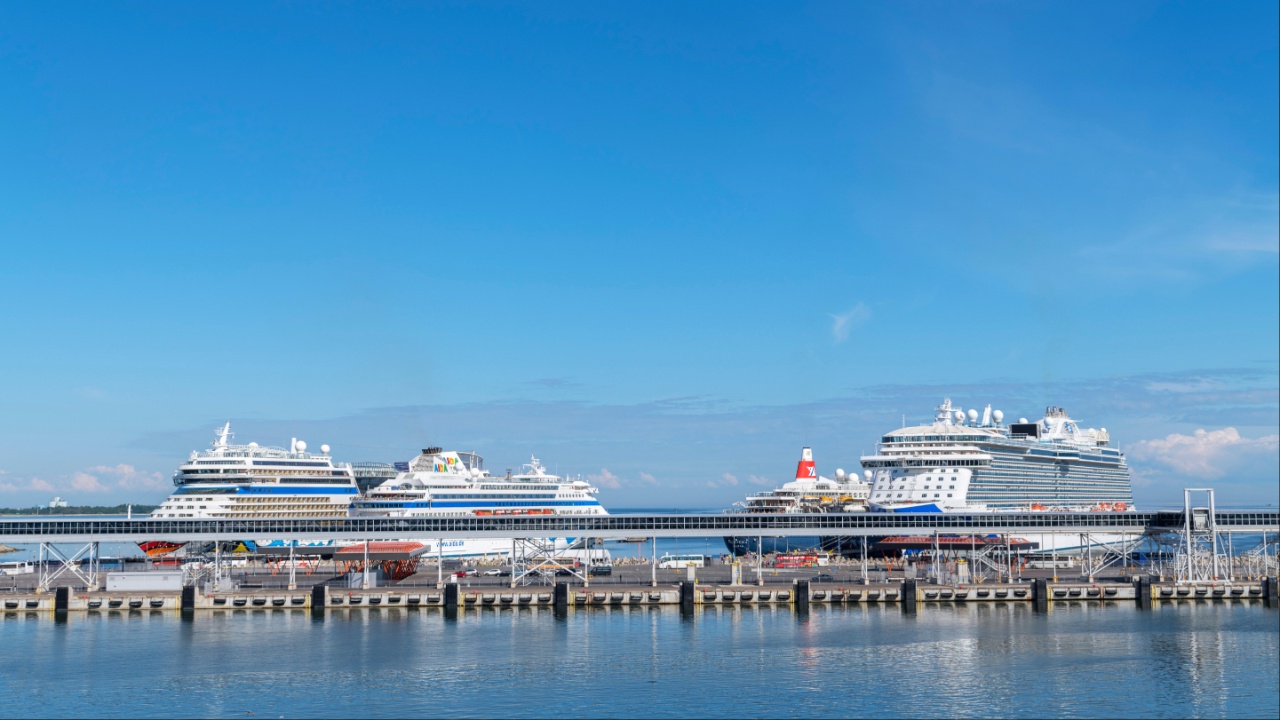
The AIDAnova was supposed to be a symbol of progress. When it launched in 2018 as the world’s first cruise ship fully powered by liquefied natural gas, the industry celebrated. Then came the fine print: LNG still emits methane, a greenhouse gas 80 times more potent than CO₂ over a 20-year period. The cruise industry’s green story, it turned out, needed a serious rewrite.
That rewrite is now being drafted, in part, in the engineering offices and shipyards of a country most cruise passengers couldn’t locate on a map. Estonia, a nation of 1.3 million people tucked between the Baltic Sea and the Gulf of Finland, is emerging as one of the most consequential players in maritime sustainability. Its firms are not making headlines. They are making solutions.
Why 2026 Marks a Turning Point for Cruise Emissions Compliance
The cruise industry is under pressure it cannot ignore. The International Maritime Organization has mandated a 40% reduction in carbon intensity by 2030, with net-zero ambitions by 2050. The European Union’s Fit for 55 package now includes shipping in its emissions trading system. For cruise operators running fleets of aging vessels, the math is brutal.
Cruise ships generate enormous environmental footprints. They discharge sewage and grey water into oceans, consume vast quantities of heavy fuel oil, and emit nitrogen oxides and sulfur oxides at levels that rival entire cities. The industry has taken some steps: banning heavy fuel oil in certain zones, eliminating single-use plastics, launching battery-hybrid vessels. But retrofitting existing ships remains the central challenge.
That is precisely where Estonia has positioned itself. At Seatrade Cruise Global 2026, Estonia presented a full-chain maritime transition approach, covering everything from vessel modernization to port electrification. It was not a pitch deck. It was a portfolio of deployed technologies.
| Solution Area | Estonian Capability | Environmental Impact |
|---|---|---|
| Vessel Retrofitting | Marine engineering firms with dry-dock expertise | Reduces CO₂ and sulfur oxide emissions |
| Port Electrification | Shore power systems and smart grid integration | Eliminates idling engine emissions in port |
| Smart Port Technology | Digital logistics and energy management platforms | Improves operational efficiency by 15–30% |
| Waste Management Systems | Onboard processing and circular economy tech | Reduces marine pollution from discharge |
The $28 Million Grant That Opened a New Retrofit Corridor
In early 2026, Estonia secured a $28 million grant for green ship retrofitting, creating a direct financial pathway for cruise lines seeking to modernize aging vessels. The grant is significant not just for its size, but for what it signals: European institutions are betting on Estonia as a maritime sustainability hub.
Retrofitting a cruise ship is not a weekend project. It involves replacing propulsion systems, installing exhaust gas cleaning units, upgrading energy management software, and sometimes redesigning entire engine rooms. The costs can run into the tens of millions per vessel. For smaller cruise operators, those numbers are prohibitive without external support.
The Estonian grant changes that calculus. Estonian companies are developing practical solutions for modernizing vessels, reducing emissions, and improving efficiency across the cruise sector. The grant essentially subsidizes access to those services, making Estonia a cost-competitive destination for retrofit work that might otherwise go to larger shipbuilding nations.
Estonia’s shipyards are not the largest in Europe. But they are nimble, digitally integrated, and increasingly specialized in the kinds of mid-life vessel upgrades that define the current retrofit wave. That specialization is a deliberate strategic choice, not an accident of geography.
Smart Ports and the Shore Power Revolution Reshaping Baltic Terminals
One of the least-discussed sources of cruise ship emissions happens when vessels are docked. A large cruise ship idling in port can burn through 20 to 150 tons of fuel per day, depending on its size and energy needs. Multiply that across dozens of port calls per season, and the numbers become staggering.
“From retrofit support to port electrification: Estonia brings a full-chain maritime transition approach to Seatrade Cruise Global 2026.”
— Trade with Estonia, April 2026
Shore power, also called cold ironing, allows docked ships to plug into the local electrical grid and shut down their engines entirely. It is one of the most effective emission-reduction tools available to ports today. Estonia’s technology firms have been building the infrastructure and software systems that make this possible at scale.
The smart port dimension goes further than power cables. Estonian digital platforms now manage berth scheduling, energy load balancing, waste logistics, and real-time emissions monitoring across port operations. These systems reduce not just pollution but operational costs, which gives port authorities a financial incentive to adopt them alongside the environmental one.
Estonian firms are helping cruise operators meet stricter environmental regulations through cutting-edge technologies and innovative services that span the entire port-to-sea operational chain. That full-chain thinking is what distinguishes Estonia’s approach from single-solution vendors.
Estonia’s Digital DNA and Why It Matters for Maritime Innovation
Estonia is the country that invented digital voting, launched the world’s first data embassy, and built an e-residency program that attracted over 100,000 global entrepreneurs. Its relationship with technology is not aspirational. It is structural.
That digital culture permeates its maritime sector. Estonian engineering firms do not just build hardware; they build integrated systems where sensors, software, and operational data work together. In the context of cruise sustainability, this means vessels equipped with Estonian technology can monitor their own emissions in real time, adjust propulsion efficiency automatically, and generate the compliance documentation regulators now require.
This systems-level thinking is increasingly rare in the maritime supply chain, where vendors typically specialize in narrow product categories. Estonia’s integrated approach means a cruise operator can engage a single ecosystem of Estonian partners to address propulsion, port operations, waste management, and regulatory reporting simultaneously.
What the Cruise Industry’s Green Future Looks Like Beyond 2030
The CLIA’s 2025 State of the Cruise Industry Report paints a picture of robust growth: 37.7 million passengers projected for 2025, 310 ocean-going vessels in operation. That growth trajectory makes the sustainability challenge more urgent, not less. More passengers mean more ships, more fuel, more waste, more regulatory scrutiny.
The industry has already demonstrated it can move when it chooses to. Hurtigruten banned heavy fuel oil, launched battery-hybrid ships including the MS Fridtjof Nansen, and committed to cutting CO₂ by 25% through a major upgrade program. These are real commitments with real engineering behind them. But they represent a fraction of the global fleet.
Estonia’s role in the broader transition is to make green retrofitting accessible, affordable, and technically rigorous for the operators who have not yet made those moves. The $28 million grant is a start. The smart port infrastructure being deployed across Baltic terminals is another layer. The digital monitoring systems that generate compliance data are a third.
Together, these form something the cruise industry has been missing: a coherent, scalable pathway from dirty to clean that does not require building new ships from scratch. Most of the world’s cruise fleet will still be sailing in 2035. The question is whether those ships will be retrofitted or fined out of existence.
Estonia is betting on retrofitted. And it is building the tools to make that bet pay off for everyone involved, from the engineers in Tallinn to the passengers boarding in Miami who assume someone, somewhere, has already solved the problem of what happens to the smoke coming out of the funnel above their balcony.
They may not be wrong. They just might not know who to thank.
Frequently Asked Questions

You Might Also Like

Singapore Quietly Pushed Its SAF Levy to 2027 — And Middle East Tensions Explain Why
Singapore has made a deliberate choice to put its aviation decarbonisation timeline on hold —…
Newark Airport Near Miss — What Air Traffic Control Did in Seconds
Two commercial aircraft came within a few hundred feet of each other at one of…
Princess Cruises Is Extending Its Antarctica Voyages and South America Is the Reason
Six voyages. Up to 37 days at sea. And a route that takes travelers from…
Leave a Reply