
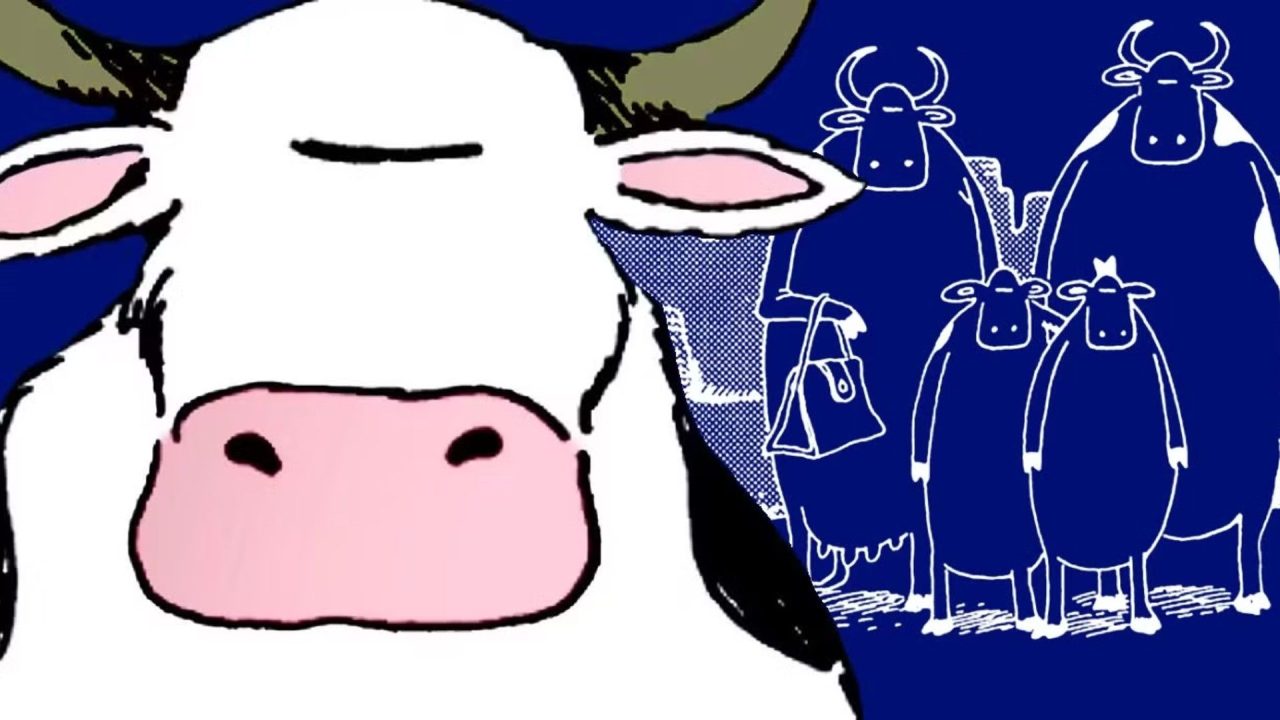
Few comic strips have left a mark on American humor quite like The Far Side. Created by Gary Larson, the single-panel cartoon ran in newspapers across the country and built a devoted following through its absurdist wit, bizarre animal logic, and jokes that rewarded readers who were paying close attention. What’s easy to forget, decades later, is just how fully formed that sensibility was right from the beginning.
The strip’s first year established nearly everything that would make it iconic — the deadpan captions, the anthropomorphized creatures, the scientists in peril, the cows with secret inner lives. Looking back at those early comics offers a kind of archaeology of one of the strangest and most beloved creative voices in the history of the medium.
Because the detailed panel-by-panel descriptions and full rankings from that article were not available in the extracted
What Made The Far Side’s First Year So Unusual
Gary Larson launched The Far Side in 1980, initially under the title Nature’s Way, before it was syndicated nationally by Chronicle Features and later Universal Press Syndicate. From the very first strips, Larson’s humor operated differently from anything else on the comics page.
Where most newspaper strips relied on recurring characters, ongoing storylines, or familiar domestic setups, The Far Side gave readers a new world every single day — usually populated by cows, cavemen, scientists, or hapless humans caught in situations that defied all reasonable expectation. There were no running jokes in the traditional sense. Each panel had to earn its laugh completely on its own.
That constraint turned out to be a creative superpower. Larson couldn’t coast on character familiarity. Every strip had to be a complete idea, fully realized in a single image and a single caption — or sometimes no caption at all.
The Signature Elements That Appeared Almost Immediately
Fans and scholars of the strip have consistently noted that Larson’s core themes and visual vocabulary were present almost from day one. The first year established several recurring preoccupations that would define the strip for its entire fifteen-year run:
- Animals with human awareness: Cows, dogs, and insects who understood their situation far better than the humans around them suspected.
- Science gone wrong: Laboratories, experiments, and researchers placed in absurd or dangerous scenarios.
- The reversal of predator and prey: Strips where the expected power dynamic was flipped, often with darkly comic results.
- Caveman domesticity: Prehistoric settings used to satirize modern suburban life.
- The lone figure in an impossible situation: A single character confronting something enormous, strange, or inexplicable — usually with complete calm.
These weren’t themes Larson developed over time. They were baked in from the start, which is part of what makes the first year such a compelling object of study for anyone interested in how creative voices mature — or, in Larson’s case, arrive nearly complete.
Why the Early Far Side Still Holds Up
A lot of humor from the early 1980s hasn’t aged well. Cultural references date. Social attitudes shift. But The Far Side’s first-year comics remain genuinely funny to readers encountering them today, and the reason is structural.
Larson’s jokes weren’t built on topical references or shared cultural knowledge. They were built on logic — specifically, on the comedy that emerges when you apply one set of rules to a situation that operates under a completely different set of rules. A cow acting like a suburban housewife is funny not because of anything happening in 1980, but because the gap between those two realities is timeless.
That’s a harder kind of joke to write than it looks. And the fact that Larson was executing it consistently in his first year — before he had a large audience, before the strip had cultural momentum — speaks to how unusual his talent was.
The Far Side’s Place in Comics History
| Detail | Information |
|---|---|
| Creator | Gary Larson |
| Original launch year | 1980 |
| Original title | Nature’s Way |
| Original syndication | Chronicle Features |
| Strip format | Single panel, daily |
| Run length | Approximately 15 years (ended 1995) |
| Digital return | Larson launched a Far Side website in 2020 |
The strip ran until January 1, 1995, when Larson retired it voluntarily — one of the few cartoonists of his stature to walk away entirely at the height of his popularity. He later returned in a limited digital capacity, launching an official Far Side website in 2020 that brought new and archival content to a new generation of readers.
What Revisiting Year One Reveals
There’s something genuinely instructive about going back to the earliest Far Side strips, beyond simple nostalgia. It’s a reminder that great creative work doesn’t always need time to find itself. Some voices arrive knowing exactly what they want to say and exactly how they want to say it.
Larson’s first year wasn’t a warm-up. It was a declaration. The weirdness, the precision, the refusal to explain the joke — all of it was there. Ranking the best strips from that period isn’t just a fan exercise. It’s a way of tracing the DNA of one of the most original comic minds the medium has ever produced.
For anyone who grew up tearing Far Side calendars off the wall every morning, or who discovered the strip later through collections, going back to where it all started is worth the trip.
Frequently Asked Questions
When did The Far Side first appear in newspapers?
The Far Side launched in 1980, originally under the title Nature’s Way, before being syndicated more widely under its now-famous name.
Who created The Far Side?
The strip was created by Gary Larson, who wrote and drew every panel throughout the comic’s run.
When did The Far Side end?
Gary Larson retired the strip on January 1, 1995, choosing to end it voluntarily while it was still enormously popular.
Is The Far Side still available anywhere today?
Yes — Larson launched an official Far Side website in 2020, bringing archival strips and some new content to readers online.
What made The Far Side’s humor distinctive from other comic strips?
Unlike most newspaper comics, The Far Side was a single-panel format with no recurring storylines, relying entirely on absurdist logic, animal humor, and unexpected reversals to land its jokes.
Were the themes in The Far Side’s first year different from its later work?
By most accounts, Larson’s signature style — animals with secret awareness, scientists in peril, caveman satire — was present almost from the very beginning of the strip’s run.



Leave a Reply