
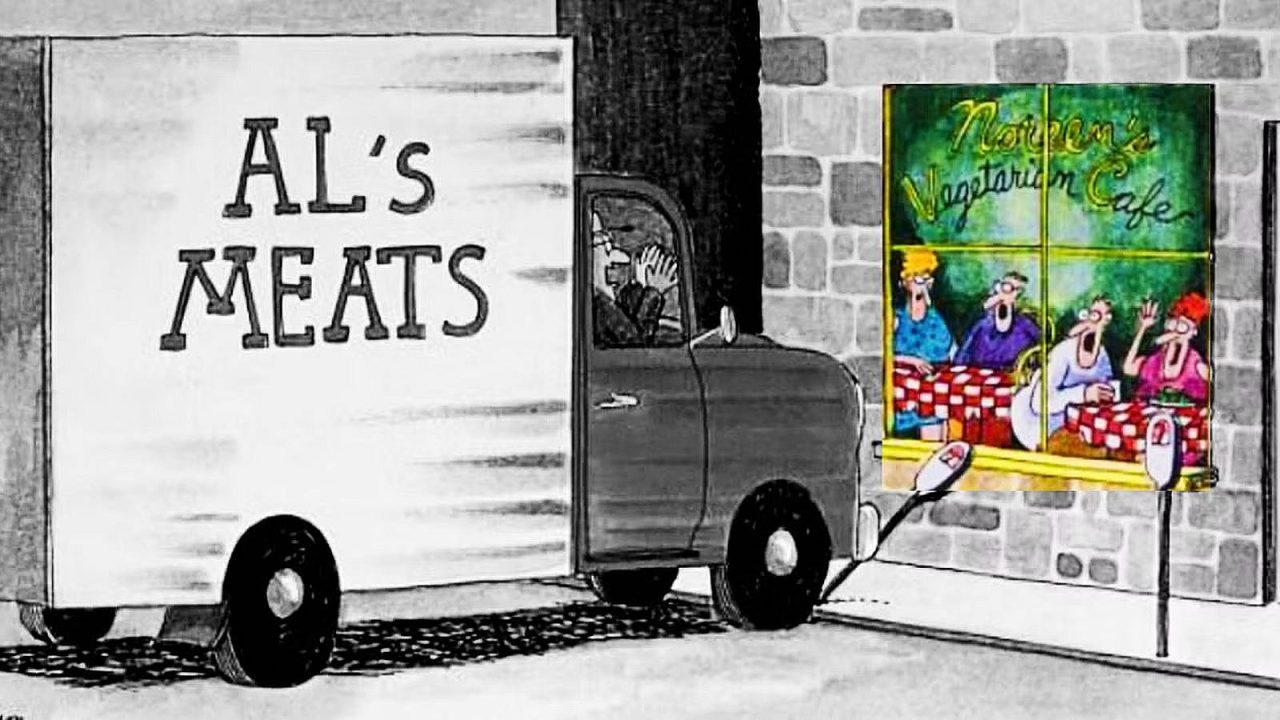
Some comic strips take a few years to find their voice. Gary Larson’s The Far Side apparently didn’t need that time. Forty-six years after its very first panel was published, that debut strip still lands with surprising force — a reminder that great comedy, when it’s built on something true about human nature, doesn’t really have an expiration date.
The strip launched in 1980, and what makes its longevity genuinely interesting isn’t just that people still laugh at it. It’s that the first comic — the one that started everything — holds up as well as anything Larson produced in his prime. That’s a rarer achievement than it sounds. Most creative works show their seams when you go back to the beginning.
For fans rediscovering the strip through Larson’s official website or through decades of collected anthologies, returning to that first panel feels less like an archaeology project and more like confirmation of something they already suspected: Larson arrived fully formed.
What Made The Far Side Different From the Start
The Far Side was never a conventional newspaper comic. Where strips like Peanuts or Garfield built their humor around recurring characters and slow-burn relationships, Larson operated in a completely different mode. Each panel was a standalone joke — a single frozen moment, usually absurd, often dark, and almost always built around a premise that no reasonable editor should have approved.
That format meant every strip had to earn its laughs on its own. There was no goodwill carried over from yesterday’s punchline. No character you already loved softening the weirdness. Every panel was a cold open, and Larson made it work thousands of times across a fifteen-year run.
The first strip set that template immediately. The humor was dry, the drawing style was already distinctively odd — those thick-lined, wide-eyed figures that somehow managed to look both simple and deeply unsettling — and the joke operated on the kind of sideways logic that would define the entire run.
Why the First Far Side Comic Still Hits Hard in 2026
There’s a specific reason debut works so often disappoint on revisit: the creator is still figuring out what they’re doing. The voice is inconsistent, the instincts aren’t fully developed, and you can feel the uncertainty underneath the jokes. Larson’s first panel doesn’t have that problem.
What critics and longtime fans consistently point to is the fact that the comic’s core sensibility — its willingness to treat the absurd as completely mundane, and the mundane as quietly horrifying — was present from day one. Larson didn’t ease readers into his worldview. He just opened the door and assumed you’d follow.
That confidence is part of what makes it hold up. The strip doesn’t feel like a trial run. It feels like someone who already knew exactly what kind of comic they were making, and simply started making it.
The Strip’s Run: A Timeline Worth Knowing
For readers who came to The Far Side through reruns, collected books, or the internet, the actual history of the strip’s publication is worth having in one place.
| Milestone | Year |
|---|---|
| First Far Side comic published | 1980 |
| Strip ends its original newspaper run | 1995 |
| Official Far Side website launches with new content | 2019 |
| 46th anniversary of the first comic | 2026 |
The fifteen-year original run produced thousands of panels. Larson retired from daily syndication in 1995, citing exhaustion and a desire to leave before the work declined in quality — a decision that, in retrospect, probably contributed to the strip’s enduring reputation. He didn’t run it into the ground. He stopped when it was still good.
What Larson’s Return Meant for a New Generation
When Larson launched the official Far Side website in 2019 and began sharing new material for the first time in decades, it reintroduced the strip to an audience that had grown up knowing it only through books and internet reposts. That reintroduction brought a new wave of readers back to the beginning — and many of them found the first comic waiting there, unchanged, still working exactly as intended.
That kind of rediscovery tends to sharpen appreciation. When you already know the full arc of something — you know it ran for fifteen years, you know it influenced a generation of cartoonists, you know Larson is considered one of the great comic minds of the twentieth century — going back to the first strip carries a different weight. You’re not just reading a joke. You’re watching a sensibility announce itself.
- The strip debuted in 1980 and ran continuously for fifteen years
- Larson’s single-panel format was unconventional for newspaper comics of the era
- The humor relied on absurdist logic, dark undercurrents, and a deadpan visual style
- Larson retired voluntarily in 1995, before any notable decline in quality
- A 2019 website relaunch brought the strip back to public attention with new material
Why This Anniversary Moment Matters Beyond Nostalgia
Forty-six years is an odd anniversary to celebrate — it’s not a round number, not a milestone most publications would flag. But the renewed attention on that first comic says something real about how The Far Side has aged compared to its contemporaries.
Many strips from the same era feel dated now. The cultural references don’t land, the gender dynamics haven’t aged well, the humor relies on assumptions that no longer hold. Larson’s work largely sidesteps that problem because it was never really about the present moment to begin with. It was about something stranger and more permanent — the fundamental weirdness of being alive, of having a brain that produces thoughts, of existing in a world that doesn’t make much sense if you look at it sideways.
That subject matter doesn’t date. And so the first comic, like most of the run, keeps landing just as hard as it ever did.
Frequently Asked Questions
When was the first Far Side comic published?
The first Far Side comic was published in 1980, marking the beginning of Gary Larson’s fifteen-year run in newspaper syndication.
When did The Far Side end its original newspaper run?
Larson retired the strip from daily syndication in 1995, a decision he made voluntarily to step away before the quality of the work declined.
Did Gary Larson ever bring The Far Side back?
Yes. Larson launched an official Far Side website in 2019 and began sharing new material for the first time since the strip’s retirement.
Why does the first Far Side comic still resonate today?
Observers note that Larson’s core sensibility — absurdist logic, dark humor, and a deadpan visual style — was fully present from the very first panel, giving it a timeless quality that many comics from the same era lack.
How long did The Far Side run in total?
The strip ran for approximately fifteen years, from its 1980 debut through Larson’s retirement in 1995.
Where can readers find the original Far Side comics today?
The comics are available through decades of published anthologies and through Larson’s official Far Side website, which launched in 2019.




Leave a Reply