
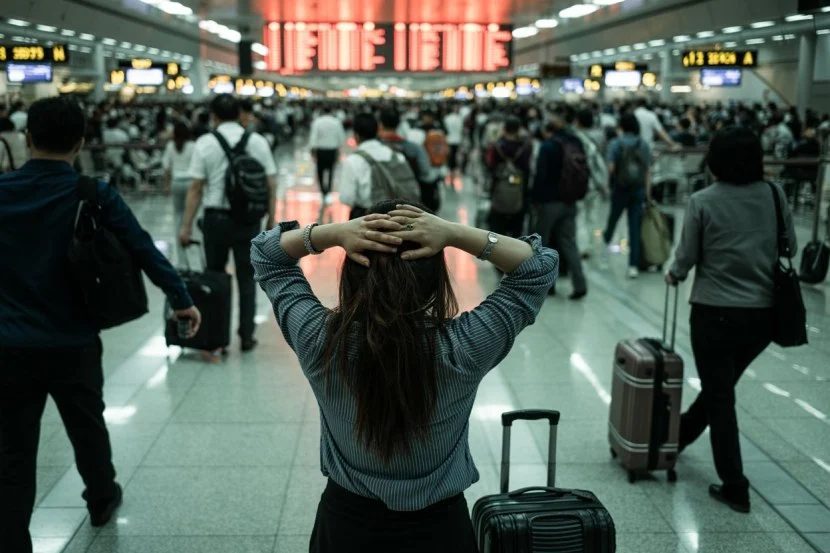
More than 6,400 flights were either cancelled or delayed across the United States on March 18, 2026 — stranding thousands of passengers at some of the country’s busiest airports and turning what should have been routine travel days into hours of uncertainty and frustration.
The numbers are hard to ignore: 1,102 cancellations and 5,372 delays recorded nationwide in a single day. For anyone with a flight booked through Atlanta, Chicago, Orlando, Newark, Detroit, Fort Lauderdale, New York’s JFK, or Tampa, the disruption was immediate and widespread.
Major carriers including Delta Air Lines, United Airlines, SkyWest, and JetBlue were among the airlines most significantly affected, with operations ground to a halt or severely slowed across multiple key hubs simultaneously.
Where the Worst of the Disruption Hit
The scale of Tuesday’s travel breakdown was not evenly spread. Certain airports absorbed a disproportionate share of the chaos, and for passengers at those locations, the situation deteriorated quickly.
Hartsfield-Jackson Atlanta International Airport — the world’s busiest airport by passenger volume — took the heaviest blow. With 571 delays and 229 cancellations, Atlanta accounted for a significant chunk of the national total on its own. Delta Air Lines, which uses Atlanta as its primary hub, recorded more than 500 delays and over 200 cancellations across the key hubs mentioned.
Chicago O’Hare was not far behind, logging 454 delays and 94 cancellations. Orlando International, a major gateway for leisure travel and family vacations, recorded 350 delays and 90 cancellations — a particularly painful figure for travelers mid-trip or heading home after spring break plans.
Fort Lauderdale-Hollywood International, another heavily used Florida airport, saw 255 delays and 96 cancellations. Detroit Metro Wayne County reported 279 delays and 69 cancellations, while Newark Liberty International — one of the three main New York-area airports — recorded 274 delays and 48 cancellations.
JFK in New York saw 213 delays and 71 cancellations, and Tampa International added 158 delays and 46 cancellations to the national tally.
Flight Cancellations and Delays by Airport — March 18, 2026
| Airport | Delays | Cancellations |
|---|---|---|
| Hartsfield-Jackson Atlanta Intl (ATL) | 571 | 229 |
| Chicago O’Hare Intl (ORD) | 454 | 94 |
| Orlando Intl (MCO) | 350 | 90 |
| Detroit Metro Wayne County (DTW) | 279 | 69 |
| Newark Liberty Intl (EWR) | 274 | 48 |
| Fort Lauderdale-Hollywood Intl (FLL) | 255 | 96 |
| John F. Kennedy Intl (JFK) | 213 | 71 |
| Tampa Intl (TPA) | 158 | 46 |
Which Airlines Were Hit the Hardest
Delta Air Lines bore the brunt of the airline-specific disruption, with more than 500 delays and over 200 cancellations recorded across the key hubs listed. Given Atlanta’s role as Delta’s primary base of operations, that concentration is not surprising — but the scale is still striking.
SkyWest Airlines, which operates regional routes on behalf of several major carriers, reported more than 300 delays and over 40 cancellations. United Airlines and JetBlue were also named among the significantly affected carriers, with disruptions spanning multiple airports.
When a hub-dominant carrier like Delta encounters severe disruption at its home airport, the ripple effects move fast. Delayed inbound aircraft mean delayed outbound departures. Crews time out. Gate assignments shift. And passengers connecting through Atlanta to smaller cities find themselves stranded far from their final destinations.
What This Means If You Have a Flight Booked
If you’re traveling through any of the airports named above — especially Atlanta, Chicago, Orlando, or Fort Lauderdale — the practical advice is simple: check your flight status before you leave for the airport, and check it again once you’re there.
Passengers affected by cancellations on Delta, United, JetBlue, or SkyWest flights should contact their airline directly to understand rebooking options. Most major carriers activate flexible rebooking policies during periods of widespread operational disruption, though the specifics vary by airline and fare class.
Travelers with connecting itineraries face the highest risk. A cancellation at Atlanta doesn’t just affect people flying to or from Atlanta — it affects everyone whose journey passes through it. With 1,102 cancelled flights nationally, the downstream effects on connecting passengers likely push the real number of affected travelers well beyond what the raw cancellation figure suggests.
Anyone booked on a SkyWest-operated regional flight should pay close attention, as regional routes are often the last to be recovered when an airline begins restoring normal operations after a disruption event.
The Broader Picture for U.S. Air Travel Right Now
A single-day total of more than 6,400 combined cancellations and delays is a significant stress event for the national air travel network. The concentration of disruption across Florida airports — Orlando, Fort Lauderdale, and Tampa all appearing on the list — is notable, particularly given that March typically marks the height of spring break travel season when passenger volumes are already elevated.
The simultaneous disruption at northeastern hubs like Newark and JFK compounds the problem. Those airports serve as critical gateways for transatlantic routes and domestic connections along the East Coast. When they slow down, the effects are felt across the entire network.
What the numbers confirm is that the impact was broad, multi-airline, and concentrated at the country’s highest-traffic airports simultaneously.
Frequently Asked Questions
How many flights were cancelled across the U.S. on March 18, 2026?
A total of 1,102 flights were cancelled nationwide, with an additional 5,372 flights delayed on the same day.
Which airport had the most cancellations and delays?
Hartsfield-Jackson Atlanta International Airport recorded the highest numbers, with 571 delays and 229 cancellations in a single day.
Which airlines were most affected by the disruptions?
Delta Air Lines, SkyWest, United Airlines, and JetBlue were among the carriers most significantly impacted, with Delta reporting more than 500 delays and over 200 cancellations across key hubs.
Were Florida airports particularly affected?
Yes. Orlando International, Fort Lauderdale-Hollywood International, and Tampa International all appeared among the hardest-hit airports, a significant concern during the spring break travel period.
What caused the mass cancellations and delays?
What should travelers do if their flight was cancelled or delayed?
Passengers should contact their airline directly to explore rebooking options and monitor their flight status closely, particularly those with connecting itineraries routed through the affected hubs.




Leave a Reply