
▶ Read transcript
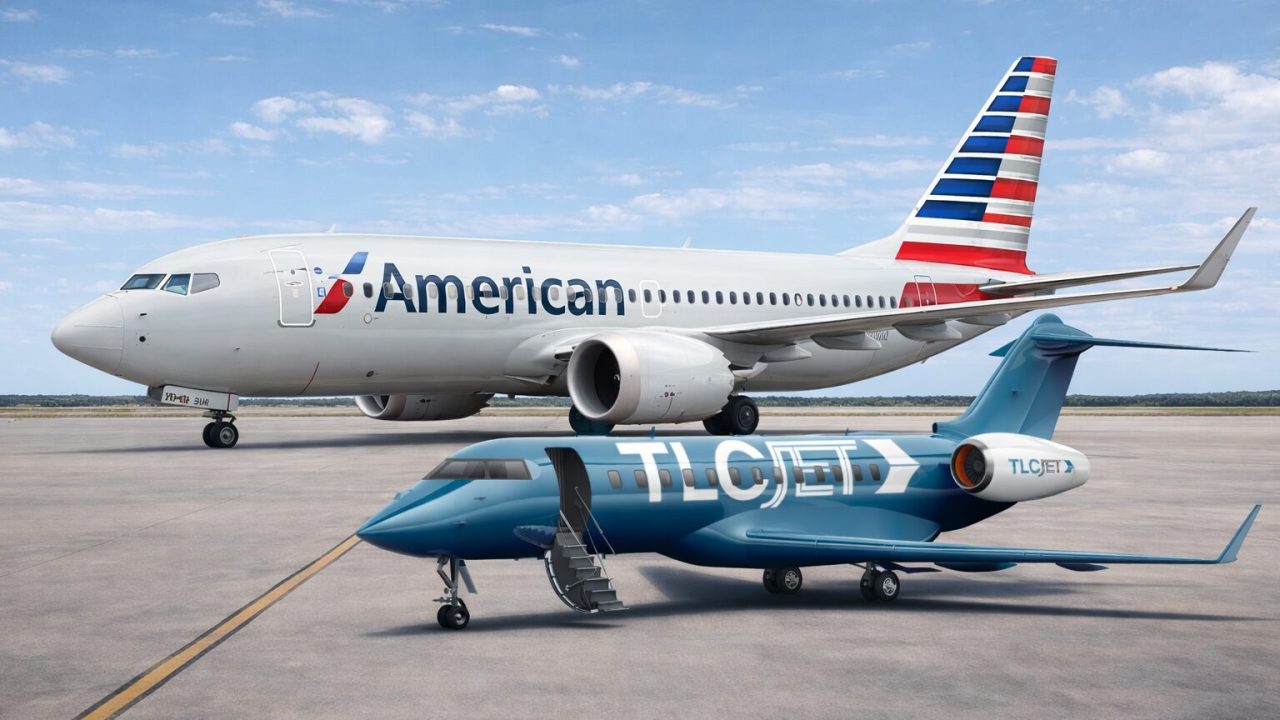
Here’s what you need to know about the new TLC Jet and American Airlines partnership. For the first time, private jet clients can earn AAdvantage miles on charter flights — one mile for every dollar spent. That’s a straightforward one-to-one ratio tied to what you spend, not your route or seat class. On top of raw miles, those flights also generate Loyalty Points, which means private aviation spending can now push you toward elite status tiers like Executive Platinum. This is also a signal that American Airlines is deliberately re-entering the private aviation space after stepping away years ago, recognizing that its highest-value customers are splitting time between commercial and private travel. One important detail — this only works through TLC Jet. No other charter operator offers this AAdvantage integration right now. So if you’re already flying private and want to keep your miles working for you, look into enrolling your AAdvantage number with TLC Jet before your next charter booking.
What if the most exclusive perk in air travel was no longer reserved for first-class cabins and airport lounges, but for the tarmac itself?
That question is no longer hypothetical. A new partnership between TLC Jet and American Airlines has quietly reshaped the relationship between private aviation and commercial loyalty programs. And for frequent flyers who’ve ever dreamed of earning elite status without setting foot in a crowded terminal, this development deserves your full attention.
How the TLC Jet and AAdvantage Mile-Earning Agreement Works
The mechanics are straightforward. TLC Jet clients who are enrolled in American Airlines’ AAdvantage program can now earn one AAdvantage mile for every dollar spent on private charter flights. That’s a 1:1 earning ratio tied directly to spend, not seat class or route distance.
Beyond raw miles, the partnership also unlocks Loyalty Points, the currency that drives AAdvantage elite status tiers. This means private jet spending could, in theory, accelerate a traveler’s path toward Executive Platinum or other coveted status levels.
The deal is exclusive to TLC Jet’s private jet client base. You won’t find this earning opportunity through other charter operators or booking platforms. If you want to stack miles while flying private under this agreement, TLC Jet is the only door.
| Feature | TLC Jet + AAdvantage | Typical Commercial First Class |
|---|---|---|
| Mile Earning Rate | 1 mile per $1 spent | Varies by fare class (up to 11x base) |
| Loyalty Points Eligible | Yes | Yes |
| Exclusivity | TLC Jet clients only | Open to all AAdvantage members |
| Airport Experience | Private terminal (FBO) | Commercial terminal |
| Redemption Options | AAdvantage rewards catalog | AAdvantage rewards catalog |
American Airlines Re-Enters Private Aviation After Years Away
This partnership isn’t just a loyalty program tweak. It signals something larger about where American Airlines sees opportunity in 2026.
American previously had a stake in the private jet world through its now-defunct NetJets partnership, which dissolved years ago. The TLC Jet agreement marks a deliberate re-entry into a market that has grown substantially since the pandemic reshaped how wealthy travelers think about air mobility.
Private jet demand surged during COVID-19 lockdowns and has remained elevated. High-net-worth travelers who discovered private aviation between 2020 and 2022 largely stayed. Charter operators expanded fleets. And loyalty programs, which had been strictly commercial aviation territory, suddenly looked like an untapped frontier.
American Airlines appears to have recognized that its most valuable customers, the ones spending tens of thousands of dollars annually to maintain elite status, were increasingly splitting their travel between commercial and private. By bridging those two worlds through TLC Jet, the airline keeps those travelers inside the AAdvantage ecosystem even when they bypass commercial flights entirely.
“American Airlines re-enters the private jet market via TLC Jet partnership” ��� a move that signals the airline’s intent to compete for ultra-premium traveler loyalty beyond the commercial cabin.
— Aviation Week, April 2026
Who Actually Benefits From Earning Miles on Private Flights
Let’s be honest about who this partnership serves most directly. Private charter flights are not budget travel. A coast-to-coast charter can run anywhere from $15,000 to $60,000 or more depending on aircraft type, routing, and availability.
At 1 mile per dollar, a $20,000 charter flight would yield 20,000 AAdvantage miles. That’s roughly equivalent to a one-way domestic award ticket in economy. The math isn’t spectacular on a per-flight basis, but it compounds meaningfully for travelers who fly private regularly.
The Loyalty Points dimension is where the real value hides. AAdvantage’s elite tiers, from Gold to Executive Platinum, are gated by Loyalty Points earned in a calendar year. Private jet clients who spend heavily with TLC Jet could now use that spending to unlock status benefits that cascade across their commercial travel: upgrades, lounge access, priority boarding, and waived fees.
TLC Jet + AAdvantage
Traditional First Class
Standard Charter (No Partnership)
| Metric | TLC Jet + AAdvantage | Traditional First Class | Standard Charter (No Partnership) |
|---|---|---|---|
| Mile Earning Rate |
85 |
70 |
10 |
| Elite Status Acceleration |
90 |
65 |
5 |
| Exclusivity |
95 |
40 |
70 |
| Booking Flexibility |
80 |
55 |
90 |
| Network Reach |
75 |
95 |
50 |
| Reward Value |
88 |
72 |
45 |
| Partner Integration |
92 |
60 |
8 |
For someone already spending $100,000 or more annually on private aviation, the ability to simultaneously build commercial airline status is a genuine perk. It transforms a cost center into a dual-purpose investment.
You spend $80,000 annually on private charter flights through TLC Jet. You’re currently AAdvantage Platinum status and need 75,000 more Loyalty Points to reach Executive Platinum. Would you redirect all your charter bookings through TLC Jet to stack Loyalty Points toward status, even if it means slightly less scheduling flexibility?
The Broader Shift in Loyalty Program Strategy
The TLC Jet deal fits inside a larger pattern reshaping airline loyalty programs. Over the past decade, major carriers have aggressively expanded the ways members can earn miles beyond flying. Credit card spending, hotel stays, car rentals, dining programs, and retail partnerships all feed into loyalty ecosystems today.
Private aviation is the next logical extension. The travelers most likely to charter private jets are also the travelers most likely to hold premium credit cards, maintain elite status, and spend heavily across travel categories. They are, in loyalty program terms, the most valuable segment imaginable.
By partnering with TLC Jet, American Airlines is essentially saying: we want your loyalty even when you’re not on our planes. That’s a meaningful philosophical shift for a carrier that has historically defined loyalty through seat occupancy.
It also puts pressure on competitors. Delta’s SkyMiles and United’s MileagePlus programs will face questions from their own high-value members about whether similar private aviation partnerships are coming. The TLC Jet deal may be the opening move in a broader industry recalibration.
What This Means for the Future of Private and Commercial Aviation
The partnership between TLC Jet and American Airlines is narrow in scope today. It covers one charter operator, one loyalty program, and a specific earning structure. But its implications extend further than the press release suggests.
Private aviation has long operated as a parallel universe to commercial air travel, with its own pricing, its own terminals, and its own culture of discretion. Loyalty programs were a commercial aviation construct, built around volume, frequency, and the economics of hub-and-spoke networks.
Linking those two worlds creates something new: a traveler whose loyalty is measured not by how often they board a commercial flight, but by how much they spend across an entire travel lifestyle. That traveler is more valuable to an airline than any single frequent flyer, and loyalty programs are beginning to price that reality into their architecture.
For the average traveler, this deal is aspirational rather than immediately actionable. Private jet charters remain far beyond most budgets. But the structural precedent matters: loyalty programs are expanding their definition of what counts as flying.
And once that definition expands, it rarely contracts. The question isn’t whether other airlines will follow American’s lead into private aviation partnerships. The question is how quickly, and which charter operator they’ll choose to do it with.
The tarmac, it turns out, has always been a loyalty battleground. We’re just finally starting to notice.
Frequently Asked Questions
Frequently Asked Questions

You Might Also Like

Air China Now Links Chengdu to Brussels in Just 11 Hours
A flight that once demanded a gruelling 17-plus hours of connections and layovers now takes…

Three Rail Giants Just Agreed to Connect Rome and Munich by 2026
By December 2026, travelers will be able to board a single train in Rome and…

Why Passengers Are Stranded as Eight Nations Ground UAE Flights
Thousands of travelers are stranded at airports across the globe after a growing coalition of…
Leave a Reply