
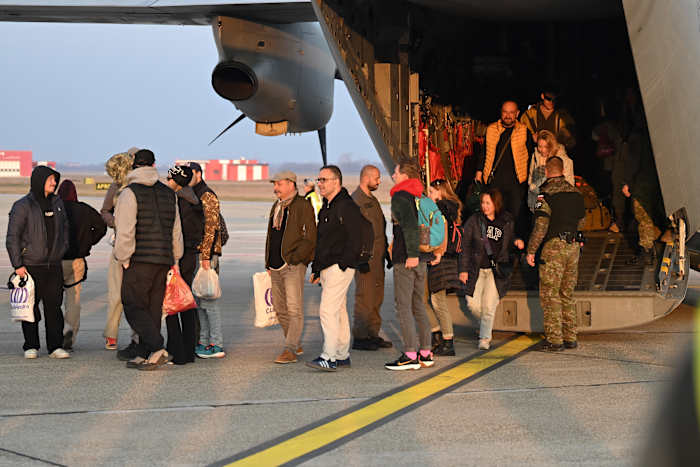
Have you ever been stranded in a foreign country, watching your visa expiry date pass like a slow-moving train you simply could not catch?
For thousands of travelers right now, that scenario is not hypothetical. It is their daily reality. And the global response to this crisis has split governments, aviation experts, and human rights advocates into two very different camps.
Brazil has now officially joined a growing coalition of nations conducting urgent repatriation operations for travelers caught in visa overstay situations. Alongside Germany, the United States, Canada, the United Kingdom, France, Mexico, China, and India, Brazil’s entry into this effort marks a significant expansion of what has become a coordinated, multi-continental response.
Meanwhile, Jordan, the UAE, Oman, Qatar, and Azerbaijan are not just participating. They are leading, posting the lowest flight cancellation rates of any countries involved in these operations.
So here is the real question: Is this a humanitarian triumph or a managed crisis that should never have reached this scale?
The Setup: A Divided Response to a Global Problem
The repatriation operations currently underway involve travelers whose visas have expired, often due to circumstances beyond their control. Conflict zones, natural disasters, airline disruptions, and bureaucratic delays have all contributed to stranded populations across multiple regions.
The controversy is not whether these people need help. Most agree they do. The debate centers on two sharply opposing views: whether urgent repatriation is the right mechanism, or whether blanket visa overstay forgiveness is the more humane and practical solution.
Earlier reporting confirmed that Mexico joined Canada, Brazil, the US, the UK, Germany, China, Japan, India, and more countries in announcing an additional one-month visa overstay grace period without fines for travelers trapped in Middle East crisis situations. That policy sits in direct tension with the repatriation-first approach now being championed by the same coalition.
| Country/Region | Role in Operations | Flight Cancellation Rate | Policy Approach |
|---|---|---|---|
| Jordan | Leading repatriation ops | Among lowest globally | Urgent repatriation missions |
| UAE | Leading repatriation ops | Among lowest globally | Urgent repatriation missions |
| Oman | Leading repatriation ops | Among lowest globally | Urgent repatriation missions |
| Qatar | Leading repatriation ops | Among lowest globally | Urgent repatriation missions |
| Azerbaijan | Leading repatriation ops | Among lowest globally | Urgent repatriation missions |
| Brazil | New addition to coalition | Not yet reported | Repatriation + grace period |
| US, UK, Germany, France | Coalition participants | Variable | Repatriation + overstay forgiveness |
| Mexico, Canada, India, China | Coalition participants | Variable | Repatriation + grace period |
Side A: Repatriation Operations Are the Right Response
Proponents of the urgent repatriation model argue that structured, government-led missions are the only reliable way to manage a crisis of this scale. When visa systems break down, the argument goes, you cannot simply extend grace periods indefinitely and hope travelers find their own way home.
The performance data from Jordan, UAE, Oman, Qatar, and Azerbaijan supports this position in a concrete way. These countries are not just participating in repatriation operations. They are reporting the lowest flight cancellation rates of any nations involved. That is operational efficiency in a sector notorious for disruption.
Azerbaijan’s inclusion is particularly notable. It represents a bridge between Europe and Asia, and its low cancellation rate suggests that smaller aviation markets can outperform larger ones when political will and logistical coordination align.
“Structured repatriation is not just about getting people home. It is about maintaining the integrity of international travel systems under stress.”
— Travel policy analyst perspective on coordinated repatriation missions
Supporters also point to the multi-continental scope of the current effort. South America (Brazil), Europe (Germany, UK, France), North America (US, Canada, Mexico), and Asia (China, India) are all represented. This is not ad hoc crisis management. It resembles the kind of coordinated response seen in G20 frameworks, where Brazil, Canada, China, France, Germany, India, and the US regularly align on global policy.
Side B: Grace Periods Are More Humane and More Practical
Critics of the repatriation-first model argue that urgent missions treat the symptom, not the disease. If travelers are overstaying visas because of external crises, the most direct solution is to remove the penalty, not to organize expensive and logistically complex evacuation flights.
The precedent already exists. Mexico, Canada, Brazil, the US, the UK, Germany, China, Japan, and India have all announced one-month visa overstay extensions without fines for travelers trapped in Middle East crisis situations. That policy costs governments far less than chartered repatriation flights and gives travelers agency over their own movements.
Advocates for the grace period approach also note that repatriation operations can create perverse incentives. When governments announce urgent missions, some travelers delay departure hoping for a free or subsidized flight home. This can actually increase the number of people in overstay situations, not reduce it.
There is also a fairness argument. Repatriation operations tend to prioritize travelers from countries with strong diplomatic relationships with the host nation. Independent travelers from smaller nations, or those without embassy representation in the crisis zone, often fall through the cracks of even the best-organized missions.
The Data: What the Numbers Actually Show
The most striking objective finding in the current situation is the flight cancellation rate disparity. Jordan, UAE, Oman, Qatar, and Azerbaijan are leading repatriation operations while simultaneously maintaining the lowest cancellation rates among all participating countries.
This data point challenges a common assumption: that smaller or less economically dominant nations would struggle to maintain aviation reliability during crisis operations. Qatar and UAE have established aviation infrastructure that supports high-volume repatriation. But Oman and Jordan’s performance is arguably more impressive given their smaller aviation sectors.
Brazil’s entry into the coalition is significant for a different reason. As a BRICS member alongside China, India, Russia, South Africa, Egypt, Ethiopia, Indonesia, and Iran, Brazil’s participation signals that the repatriation effort now has explicit representation from the world’s largest emerging economies. BRICS nations collectively represent a substantial share of the travelers currently in overstay situations.
Germany, aligned with the US, UK, Ireland, Canada, France, and Mexico in earlier visa-free access expansions across Asia, brings European Union diplomatic weight to the coalition. That alignment, previously documented in the context of Thailand, India, Sri Lanka, Indonesia, the Philippines, and the Maldives expanding visa-free access, now extends directly into repatriation logistics.
Verdict: Both Sides Are Right, and That Is the Problem
The honest editorial position here is uncomfortable: repatriation operations and grace period extensions are not competing solutions. They are addressing different populations within the same crisis.
Repatriation missions work for travelers who genuinely cannot leave without government assistance, whether due to financial hardship, medical situations, or complete airline suspension in their corridor. Grace periods work for travelers who can leave independently but need legal cover to do so without accumulating fines or future entry bans.
The countries performing best in this crisis, specifically Jordan, UAE, Oman, Qatar, and Azerbaijan, seem to understand this distinction. Their low cancellation rates suggest they are running targeted, well-scoped operations rather than trying to move every overstaying traveler by government charter.
Brazil’s addition to the coalition is a net positive. Its connections across South America, its BRICS relationships, and its G20 standing give it diplomatic reach that smaller nations lack. But Brazil entering the repatriation space also means more demand for coordination, more potential for bureaucratic overlap, and more risk of the very delays that create overstay situations in the first place.
Implications: What This Debate Means for the Future of Travel
The current repatriation wave is not a one-time event. It is a preview of how international travel will function during the next decade of climate disruptions, regional conflicts, and pandemic-adjacent health emergencies.
The countries that come out of this with their reputations intact will be those that combined operational efficiency with genuine humanitarian flexibility. The UAE and Qatar have aviation infrastructure that can absorb crisis demand. Jordan and Oman have diplomatic relationships across the region that facilitate rapid coordination. Azerbaijan sits at a geographic crossroads that makes it a natural transit hub for repatriation routes.
Brazil’s challenge will be proving it can match that operational standard across a much larger and more dispersed diaspora population. Mexico, Canada, and the US face similar tests, particularly for travelers stranded in regions where their consular presence is thin.
The deeper implication is this: the era of treating visa overstays as purely an enforcement issue is ending. When ten or more nations simultaneously announce grace periods and repatriation missions, the signal is clear. The system itself needs redesign, not just emergency patches.
The question that will define the next phase of global travel policy is not whether to repatriate or forgive. It is whether governments are willing to build the infrastructure that makes neither option necessary in the first place.
Frequently Asked Questions

You Might Also Like

Thailand’s Tourism Miracle Was Never as Safe as It Looked
Thailand hit 7M visitors then faced a 29,000M baht loss threat. How Middle East tensions…

Kenya’s 30% Cruise Discount Is Quietly Reshaping Inland Safari Tourism
A 30% group discount for cruise passengers visiting Kenya’s national parks — that’s the offer…

EgyptAir’s Punjab Push Is Opening Doors Few Travellers Saw Coming
More than 100 travel trade professionals gathered in Jalandhar, Punjab, in April 2026 for an…
Leave a Reply