
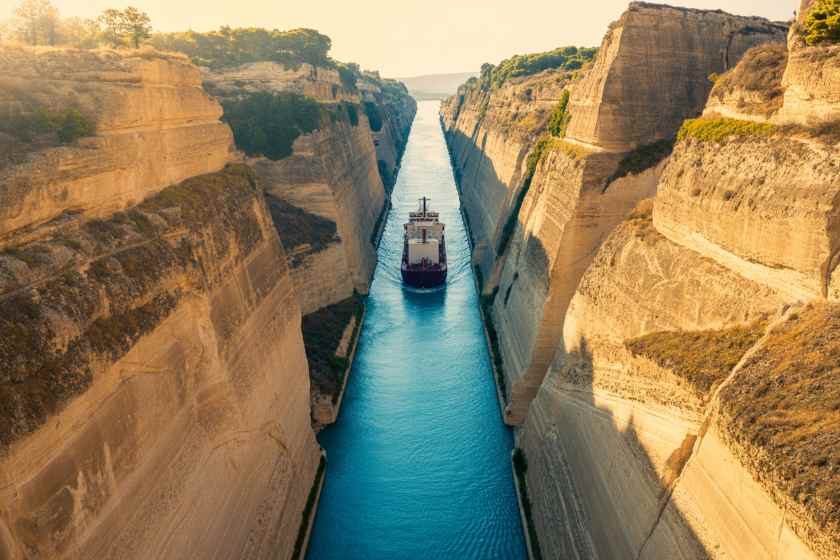
One of Greece’s most iconic waterways has been out of commission for years — and the push to bring it back is now moving faster than ever. The Greek government has announced an accelerated restoration effort for the Corinth Canal, with officials targeting a reopening by July 2027 following a prolonged closure caused by damaging landslides.
For a country where tourism is a cornerstone of the economy, getting the Corinth Canal back open is about far more than maritime logistics. The canal connects the Gulf of Corinth to the Saronic Gulf, carving a narrow path through the Isthmus of Corinth and giving travelers and vessels access to some of the most scenic stretches of the Greek landscape. Its closure has left a visible gap in both trade routes and tourist experiences across the region.
Now, with additional work shifts added to the restoration schedule, Greek authorities are signaling that this project is a genuine priority — not just a plan on paper.
Why the Corinth Canal Matters More Than Most People Realize
The Corinth Canal is one of those places that tends to stop people in their tracks. Cut through solid rock, it stretches across the narrow land bridge connecting mainland Greece to the Peloponnese peninsula. Vessels passing through it travel between two major bodies of water — the Gulf of Corinth to the west and the Saronic Gulf to the east — avoiding a long detour around the southern tip of the Peloponnese.
Beyond its practical value for maritime traffic, the canal has become a significant draw for tourists. Visitors come to stand on the bridges above it, peer down into the dramatic rock walls, and watch boats make the tight passage below. It is the kind of landmark that earns a place on itineraries precisely because there is nothing else quite like it in Europe.
The landslides that forced the closure caused serious structural damage, and the restoration process has been neither quick nor simple. But Greek officials have now committed to accelerating the timeline, adding extra shifts to keep the work moving around the clock where possible.
What the Restoration Effort Actually Involves
The Greek government’s push to reopen the canal by July 2027 involves intensifying the pace of existing restoration work rather than introducing an entirely new project. Officials have responded to the extended timeline by increasing the number of shifts dedicated to the effort — a practical step that signals urgency without overhauling the engineering approach.
The goal, once restoration is complete, is to restore the canal’s dual function: supporting regional maritime trade and welcoming back the tourists and vessels that made it one of Greece’s most visited landmarks.
| Detail | Information |
|---|---|
| Target Reopening Date | July 2027 |
| Cause of Closure | Landslides causing structural damage |
| Waterways Connected | Gulf of Corinth and Saronic Gulf |
| Acceleration Method | Additional work shifts added to restoration schedule |
| Expected Benefits | Boost to regional tourism and maritime trade |
Who Stands to Benefit When the Canal Reopens
The ripple effects of a July 2027 reopening would be felt across multiple sectors. For the maritime industry, restoring access through the canal means shorter routes and reduced transit times for vessels moving between the Ionian and Aegean seas — a practical advantage that affects shipping costs and schedules.
For tourism, the impact could be substantial. The Corinth Canal region sits at a natural crossroads for travelers exploring both central Greece and the Peloponnese. Cruise passengers, private yacht owners, and land-based tourists all interact with the canal in different ways, and its closure has dimmed one of the region’s most distinctive attractions.
- Tourists transiting the region by sea will regain access to the canal passage
- Land-based visitors will be able to experience the canal’s viewing points and surrounding attractions
- Local businesses dependent on tourist foot traffic stand to benefit from renewed visitor interest
- Shipping and maritime operators will recover a shorter, more efficient route between the two gulfs
- The broader Greek tourism economy could see positive effects as the canal reclaims its status as a must-see landmark
Officials have framed the restoration not just as infrastructure repair, but as an investment in the region’s economic future. The canal’s role in drawing visitors to surrounding attractions — historical sites, coastal towns, and scenic routes — makes its reopening a matter of regional significance, not just engineering.
The Corinth Canal Restoration and Greece’s Bigger Tourism Picture
Greece has been working steadily to strengthen its tourism infrastructure in recent years, and the Corinth Canal fits into that broader story. A landmark that has been inaccessible for an extended period creates a gap in what the country can offer — both to first-time visitors and to repeat travelers who expect to see it.
Supporters of the accelerated timeline argue that completing the restoration before the height of the 2027 summer travel season would maximize the economic return. July is one of the busiest months for tourism across Greece, and having the canal operational in time for that peak window could translate directly into visitor numbers and revenue for the surrounding region.
The decision to add more shifts to the restoration work reflects that awareness. Getting the project finished on schedule — or ahead of it — carries real financial stakes for the communities and industries that depend on the canal’s presence.
What Happens Between Now and July 2027
With the target date set and the pace of work increasing, the coming months will be critical. The Greek government has committed to the July 2027 milestone, and the addition of extra work shifts suggests a genuine effort to hold that timeline even if challenges arise.
Observers will be watching to see whether the accelerated schedule holds and whether the restored canal can quickly recapture its role as both a functional maritime corridor and a tourism magnet. For Greece, the stakes are clear: the Corinth Canal is too valuable — economically and symbolically — to remain closed any longer than necessary.
Frequently Asked Questions
When is the Corinth Canal expected to reopen?
The Greek government is targeting a reopening by July 2027, following an accelerated restoration effort.
Why was the Corinth Canal closed?
The canal was closed due to landslides that caused significant structural damage, requiring extensive restoration work.
What waterways does the Corinth Canal connect?
The canal connects the Gulf of Corinth to the Saronic Gulf, cutting through the Isthmus of Corinth in Greece.
How is the Greek government speeding up the restoration?
Officials have added extra work shifts to the restoration schedule in order to accelerate progress toward the July 2027 deadline.
What are the expected benefits of reopening the canal?
The reopening is expected to boost regional tourism and support maritime trade by restoring a key navigational shortcut between two major bodies of water.
Will the canal reopening affect cruise and yacht tourism?
Based on available information, the restoration is expected to benefit tourists transiting the region by sea as well as land-based visitors, though specific cruise arrangements have not been confirmed in current reports.



Leave a Reply