
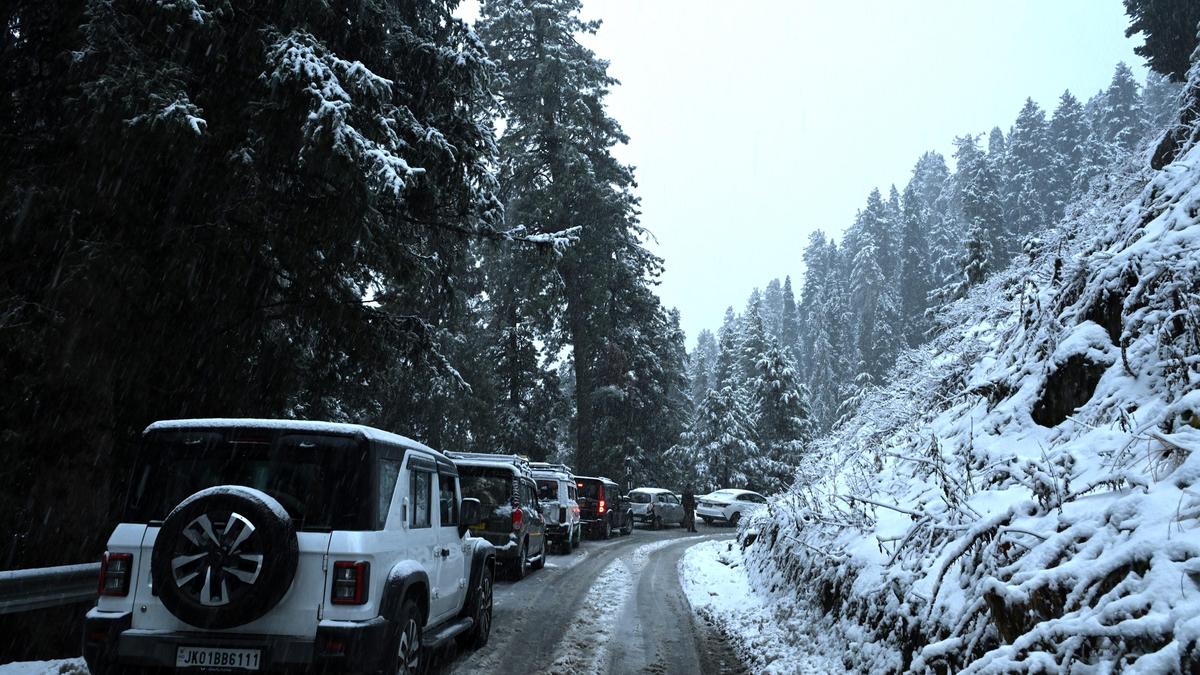
After an unusually dry February left Kashmir’s famous slopes thin and tourist footfall uncertain, a powerful western disturbance swept through the region this week — dropping five to six inches of fresh snow on Gulmarg and breathing new life into what had been a struggling ski season.
The timing matters. Gulmarg, located in the Baramulla district of Jammu and Kashmir, is one of India’s premier ski destinations. When snowfall disappears in peak winter months, the economic and recreational consequences ripple far beyond the slopes. This week’s snowfall has reversed that narrative, at least for now.
Snow began falling on Wednesday and continued intermittently through Thursday, coating roads, rooftops, and ski runs with a fresh layer that both locals and visiting tourists had been waiting weeks to see.
What Happened — and Why It Matters for Gulmarg’s Ski Season
The snowfall is directly linked to an active western disturbance moving through the region. These weather systems are the primary drivers of winter precipitation across northern India and Pakistan, and when they track over Jammu and Kashmir, higher-altitude areas like Gulmarg tend to receive the heaviest snowfall.
This particular disturbance delivered meaningful accumulation across several districts simultaneously. While lower-lying areas saw rainfall, the higher-altitude zones got the snow that skiers, resort operators, and the broader tourism economy depend on.
For Gulmarg specifically, the fresh snow arrives at a critical point in the calendar. The ski season in Kashmir typically runs through March, and a dry February had raised real concerns about whether the season would close out with enough snow cover to attract visitors in its final weeks. That concern has now eased considerably.
Where the Snow Fell — Districts and Elevations
The snowfall was not limited to Gulmarg alone. Several higher-altitude districts across Kashmir received fresh snow as part of the same weather system, signaling a broad return of winter-like conditions across the valley’s elevated terrain.
| Location / District | Type of Precipitation | Notable Impact |
|---|---|---|
| Gulmarg (Baramulla District) | 5–6 inches of snow | Ski slopes refreshed, roads and rooftops covered |
| Ganderbal District | Snowfall (higher altitudes) | Return of winter-like conditions |
| Kupwara District | Snowfall (higher altitudes) | Return of winter-like conditions |
| Shopian District | Snowfall (higher altitudes) | Return of winter-like conditions |
| Bandipora District | Snowfall (higher altitudes) | Return of winter-like conditions |
| Lower-lying Kashmir areas | Rainfall | No significant snow accumulation |
The pattern is consistent with how western disturbances typically behave over Kashmir — the higher you go, the more snow you get. That geographic reality is exactly what makes Gulmarg so valuable as a ski destination. Its elevation puts it squarely in the zone where these systems deliver the most.
Who This Affects — Tourists, Locals, and the Broader Tourism Economy
The fresh snowfall has practical consequences for several groups, and the effects extend well beyond the ski runs themselves.
- Tourists already in Gulmarg woke up to freshly covered slopes and ideal conditions for skiing and other winter sports activities.
- Visitors planning late-season trips now have renewed confidence that snow cover will hold through the final weeks of the ski season.
- Resort operators and local businesses — hotels, equipment rental shops, guides, and food vendors — stand to benefit from extended footfall that a dry February had threatened to cut short.
- Residents of higher-altitude areas across Ganderbal, Kupwara, Shopian, and Bandipora are experiencing a return of winter conditions that are a normal and expected part of the seasonal cycle in these zones.
Kashmir’s tourism sector leans heavily on winter conditions to drive visitors to Gulmarg. The resort is one of the few places in India where alpine skiing is genuinely viable, and the combination of altitude, terrain, and snowfall makes it a destination that draws both domestic and international visitors. A season cut short by lack of snow is not just an inconvenience — it represents real lost income for communities whose livelihoods are tied to the winter tourism calendar.
The relief felt this week is therefore both meteorological and economic. A single snowfall event does not erase a dry February, but it does extend the window for tourism activity and gives the season a stronger close than had seemed likely just days ago.
What the Dry February Revealed About Seasonal Vulnerability
The contrast between February’s dry spell and this week’s snowfall highlights how dependent Kashmir’s winter tourism industry is on consistent, timely precipitation. When western disturbances track away from the region or arrive weakened, the snowfall that ski resorts like Gulmarg rely on simply does not materialize.
That vulnerability is not new, but it becomes more visible in years when the dry spells are prolonged or fall during peak tourist months. February is typically one of the busiest periods for Gulmarg — school holidays, winter festival programming, and peak skiing conditions all converge. A dry February therefore carries an outsized impact compared to a dry spell in, say, early December before the season fully opens.
Officials and tourism stakeholders have noted in general terms that weather variability poses ongoing planning challenges for the region’s ski and winter sports economy. This week’s snowfall is welcome, but the broader pattern of an unusually dry February is a reminder of how quickly conditions can shift.
What Comes Next for Gulmarg and Kashmir’s Winter Season
With fresh snow on the ground and more potentially on the way as the western disturbance continues to influence regional weather, the immediate outlook for Gulmarg’s ski season is positive. The snow that fell Wednesday through Thursday has created conditions described as ideal for tourists and locals alike.
The ski season in Kashmir typically winds down as temperatures rise through late March and into April. The fresh accumulation adds buffer to that timeline, potentially extending viable skiing conditions by days or weeks depending on how temperatures trend from here.
For anyone who had been watching the season with concern — or who had delayed a trip waiting for better snow reports — the current conditions represent the window they were hoping for. Whether that window stays open depends, as it always does in mountain tourism, on what the weather does next.
Frequently Asked Questions
How much snow did Gulmarg receive this week?
Gulmarg recorded approximately five to six inches of fresh snow starting Wednesday, with snowfall continuing intermittently through Thursday.
What caused the snowfall in Kashmir?
The snowfall is the result of an active western disturbance that brought significant weather changes across the region’s higher-altitude areas.
Which other districts in Kashmir received snow?
In addition to Gulmarg in Baramulla district, snowfall was reported in higher-altitude areas of Ganderbal, Kupwara, Shopian, and Bandipora districts.
Why was the snowfall particularly significant this year?
Kashmir’s higher-altitude regions had experienced an unusually dry February, making this fresh snowfall especially welcome for the ski season and winter tourism economy.
Did lower-lying areas of Kashmir also receive snow?
No — lower-lying areas saw rainfall rather than snowfall, with the heavier snow accumulation confined to higher-altitude zones.
How long does the Gulmarg ski season typically last?
The ski season in Kashmir generally runs through March, and the fresh snowfall is expected to help extend viable skiing conditions toward the end of the season.



Leave a Reply