
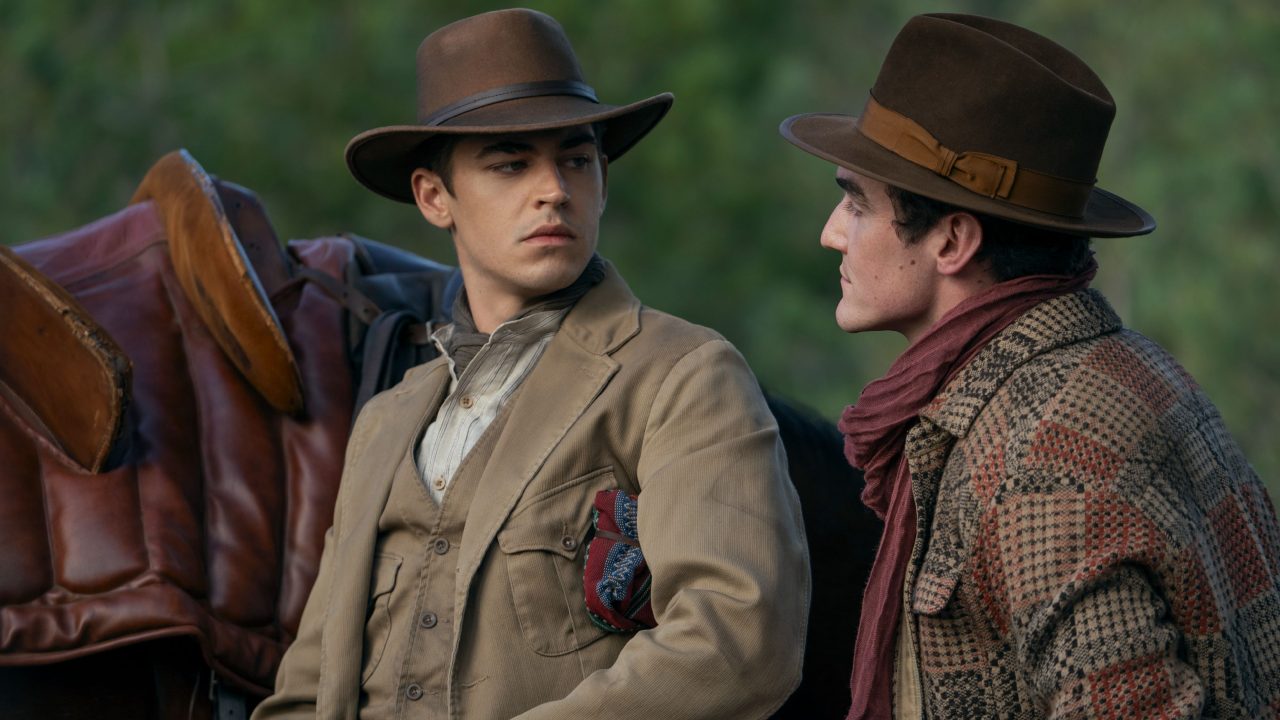
Guy Ritchie has been circling Sherlock Holmes for the better part of two decades — and now, a new 8-part detective series connected to his vision of the character is making a serious case that the television format might suit this world far better than the big screen ever did.
The series in question is Young Sherlock, and the conversation around it has shifted noticeably since it began airing. Where Ritchie’s two Holmes films — Sherlock Holmes (2009) and Sherlock Holmes: A Game of Shadows (2011) — leaned heavily into action spectacle and buddy-comedy energy, a longer episodic format allows the detective’s actual mind to take center stage. Viewers and critics have begun arguing that the show does something the movies, for all their charm, never quite managed: it lets the mystery breathe.
A third Ritchie Holmes film has been discussed for years without ever materializing. That long wait, it turns out, may have quietly made the case for a different approach entirely.
Why the Movies Always Left Something on the Table
The Robert Downey Jr.-led Holmes films were genuine hits. They were fun, kinetic, and stylish in the way Ritchie’s work almost always is. But the demands of a two-hour blockbuster meant the plotting had to move fast, the deductions had to be punchy and visual, and character development had to compete with set pieces.
That’s not a criticism unique to those films — it’s a structural reality of the format. When you only have two hours, you make choices. And the choices Ritchie made prioritized momentum over intricacy.
A serialized detective series doesn’t face that same wall. Eight episodes gives a creative team room to plant clues across multiple hours, develop secondary characters into something more than plot functions, and let the central detective’s personality emerge gradually rather than all at once. It’s the difference between a sprint and a long run — and Holmes, as a character, was always built for the long run.
What Young Sherlock Gets Right That the Films Couldn’t
The premise of focusing on a younger version of Sherlock Holmes is smart for several reasons. It sidesteps the inevitable comparison to Downey Jr.’s established, fully-formed version of the character and gives the story permission to explore how the detective became who he is — the habits, the coldness, the brilliance, and the loneliness.
Origin stories work particularly well in serialized television because the transformation is gradual. You’re not watching someone who already has all the answers. You’re watching someone figure out that they’re different from everyone around them, and slowly learning what to do with that.
That kind of slow-burn character work is exactly what the Ritchie films had to sacrifice in the name of entertainment pacing. A young Holmes navigating his earliest cases across eight hours of television is, structurally, a much better fit for the material.
The Case for TV Over Film When It Comes to Detective Stories
This isn’t an argument unique to Holmes. Detective fiction has long thrived on television in ways it rarely achieves in cinema. The genre’s core pleasure — accumulating information, holding contradictions in your head, waiting for the reveal — is naturally suited to episodic storytelling.
Think about the detective shows that have genuinely gripped audiences over the years. They almost always use the extended format to their advantage, letting suspicion shift, letting red herrings linger long enough to feel real, and letting the audience live inside the mystery rather than sprint through it.
A Holmes story told over eight episodes can do all of that. Each episode can function as its own contained puzzle while contributing to a larger arc. That’s a format Arthur Conan Doyle himself would likely have recognized — after all, Holmes first appeared in serialized form.
Where This Leaves the Long-Awaited Third Movie
The question of a third Ritchie-directed Sherlock Holmes film has been one of Hollywood’s more persistent unanswered questions. Downey Jr. and Jude Law’s chemistry as Holmes and Watson was undeniable, and the second film ended in a way that left room for continuation. But years passed, schedules filled up, and the project never locked into place.
Now, with a serialized Young Sherlock series demonstrating that there’s real appetite for Holmes content in a longer format, the calculus around that third film gets more complicated — not less. If audiences respond strongly to an episodic Holmes story, it raises the question of whether a two-hour film is still the right vehicle for the next chapter, or whether the better move is to keep building in the format that’s clearly working.
| Format | Strengths | Limitations for Holmes |
|---|---|---|
| Feature Film (2 hrs) | High production value, broad audience reach, strong set pieces | Limited time for complex deduction, rushed character arcs |
| 8-Part TV Series | Room for slow-burn mystery, deeper character development, layered plotting | Requires sustained viewer commitment across episodes |
What Comes Next for This Version of Holmes
Whether Young Sherlock leads to a second season, influences the direction of future Holmes projects, or simply stands as a strong piece of television on its own terms remains to be seen. What it has already done is shift the conversation.
The argument that Guy Ritchie’s approach to Holmes is better served by a longer format than a two-hour film is no longer theoretical. There’s now a working example on screen. And if the response continues to be positive, it’s hard to imagine that won’t factor into how the Holmes franchise — in whatever form it takes next — gets developed.
Sometimes the best argument for doing something differently is simply doing it differently and showing people the result.
Frequently Asked Questions
What is Young Sherlock?
Young Sherlock is an 8-part detective series that follows a younger version of the iconic Sherlock Holmes character, giving the story room to explore his origins across multiple episodes.
Is Guy Ritchie directly involved in Young Sherlock?
The series is connected to Ritchie’s vision of the Holmes universe, though the precise nature of his creative involvement has not been fully detailed in available reporting.
Will there still be a third Sherlock Holmes movie with Robert Downey Jr.?
A third film has been discussed for years but has not been confirmed or officially greenlit as of the time of this writing.
Why are people saying the series is better than the films?
Critics and viewers argue that the 8-episode format allows for more complex mystery plotting and deeper character development than a two-hour blockbuster can realistically support.
How many episodes does Young Sherlock have?
The series consists of 8 episodes, giving it significantly more storytelling space than either of Ritchie’s two Holmes feature films.
Is a second season of Young Sherlock confirmed?
This has not yet been confirmed based on currently available information.


Leave a Reply