
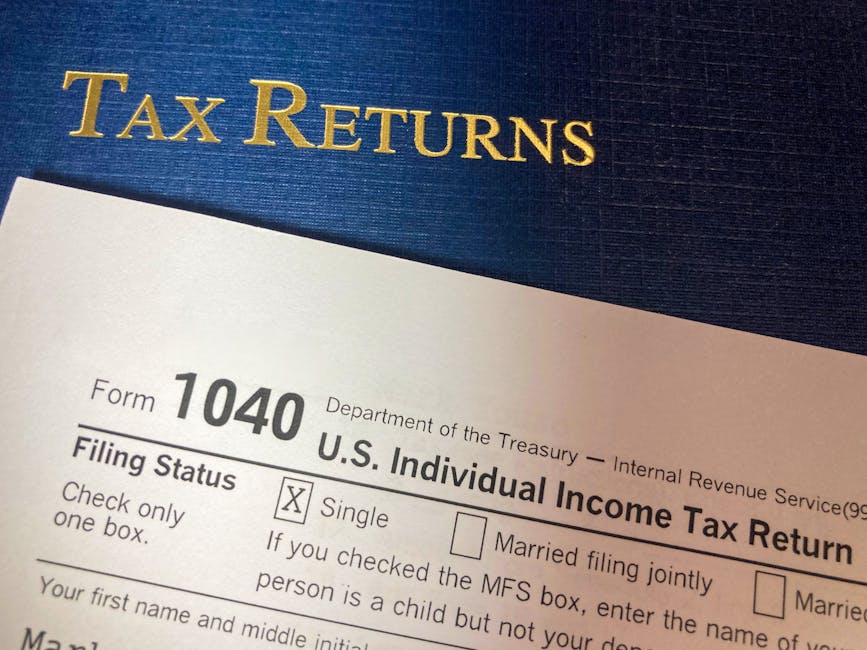
Today is April 15, 2026 — the last day to file your 2025 federal income tax return or request an automatic six-month extension using IRS Form 4868. The standard deduction for 2025 returns filed this year is $15,750 for single filers and $31,500 for married couples filing jointly, up roughly 2.7% from 2024 under Rev. Proc. 2025-32.
An extension is not a payment extension. If you owe money, every dollar unpaid after midnight tonight begins accruing a failure-to-pay penalty of 0.5% per month, plus interest tied to the federal short-term rate plus 3 percentage points. Filing the extension stops only the failure-to-file penalty — 5% per month, up to 25% of unpaid tax.
Form 4868: What You’re Actually Filing and the October 15, 2026 Hard Stop
Form 4868, “Application for Automatic Extension of Time to File U.S. Individual Income Tax Return,” is a one-page document. You enter your name, address, Social Security number, an estimate of your total 2025 tax liability, what you’ve already paid through withholding and estimated payments, and the balance due. The IRS does not require a reason — the extension is automatic if filed on time.
You can file Form 4868 electronically through IRS Free File, any major tax software, or by mailing a paper form postmarked by April 15. If you pay the estimated balance electronically through IRS Direct Pay and select “Extension” as the payment type, the IRS treats that payment as your extension request — you do not need to file a separate Form 4868.
The extended deadline is October 15, 2026. There is no second extension for individual filers. Miss October 15 and the failure-to-file penalty — already paused — restarts and compounds back to the original April 15 due date.
Estimating What You Owe Today Using 2025 Brackets and the $15,750 Standard Deduction
To avoid the failure-to-pay penalty, you need a reasonable estimate of your 2025 tax liability. Start with your gross income, subtract the 2025 standard deduction ($15,750 single, $31,500 married-joint, $23,625 head of household), and apply the 2025 tax brackets — which were indexed upward from 2024 levels under Rev. Proc. 2024-40.
Then subtract credits. The Child Tax Credit for the 2025 tax year is up to $2,200 per qualifying child. If you have two children and qualify for the full credit, that’s $4,400 directly off your tax bill — a meaningful offset when estimating your extension payment.
If your 2025 withholding and quarterly estimated payments already cover 90% of your actual 2025 liability — or 100% of your 2024 liability (110% if your 2024 AGI exceeded $150,000) — you satisfy the safe harbor and owe no underpayment penalty regardless of what you pay today. Confirm these thresholds at IRS Topic 306.
The Penalty Math: Why Filing Late Without an Extension Is Expensive
Skipping both the return and the extension triggers two simultaneous penalties. The failure-to-file penalty is 5% of unpaid tax per month (or partial month), capped at 25%. The failure-to-pay penalty is 0.5% per month, also capped at 25%. When both apply in the same month, the failure-to-file penalty drops to 4.5%, so the combined rate is still 5% — but both clocks run.
On a $5,000 unpaid balance, five months of combined penalties total roughly $1,250 before interest. Filing the extension today eliminates the 4.5% monthly failure-to-file component entirely, leaving only the 0.5% failure-to-pay penalty on any unpaid balance.
| Scenario | Monthly Penalty Rate | 5-Month Cost on $5,000 Owed |
|---|---|---|
| No extension filed, balance unpaid | 5.0% | ~$1,250 |
| Extension filed, balance unpaid | 0.5% | ~$125 |
| Extension filed, balance paid today | 0% | $0 |
Who Should File an Extension in 2026 — and Who Shouldn’t Bother
You should file Form 4868 today if you are missing a K-1 from a partnership or S-corporation (common for small-business owners and investors), if you sold rental property and need time to reconcile depreciation recapture, or if you received a corrected 1099 after January 31. You also need it if your tax preparer’s schedule is backed up — a common problem in April.
You do not need an extension if the IRS already owes you a refund. There is no penalty for filing a return late when no tax is due, though you do forfeit your refund permanently if you wait more than three years (meaning a 2025 refund must be claimed by April 15, 2029). Still, filing the extension costs nothing and protects you if your estimate turns out to be wrong.
State Extensions in 2026: 9 States Require Nothing, Others Have Separate Forms
Nine states impose no income tax — Alaska, Florida, Nevada, New Hampshire, South Dakota, Tennessee, Texas, Washington, and Wyoming — so there is no state return to extend. For the remaining 41 states plus D.C., extension rules vary significantly.
Most states with income taxes automatically grant an extension if you file a federal extension, but several require a separate state form and separate payment. California, for example, automatically extends to October 15 but requires 90% of the state tax owed to be paid by April 15. New York follows the federal extension but requires Form IT-370 if you owe state tax. Check your state revenue department directly — a federal extension does not guarantee a state extension.
How New 2026 Contribution Limits Interact With Your Extension Window
The six months between April 15 and October 15 are not just administrative breathing room — they affect certain tax-advantaged accounts. If you are self-employed and sponsor a SEP-IRA or Solo 401(k), your contribution deadline for the 2025 tax year is the due date of your return including extensions. Filing the extension today gives you until October 15, 2026 to fund those accounts and still deduct the contribution on your 2025 return.
The 2026 Solo 401(k) employee deferral limit is $24,500 — up from $23,500 in 2025 — with a catch-up of $8,000 for those 50 and older, and a “super catch-up” of $11,250 for those aged 60 through 63. Those limits apply to contributions you make in 2026 for the 2026 tax year. For your 2025 return, the relevant limits are the 2025 figures, but the extension window still gives you time to calculate and fund the SEP-IRA employer contribution based on 2025 net self-employment income.
| Account / Limit | 2025 | 2026 |
|---|---|---|
| 401(k) employee deferral | $23,500 | $24,500 |
| 401(k) catch-up (age 50+) | $7,500 | $8,000 |
| 401(k) super catch-up (ages 60–63) | $11,250 | $11,250 |
| IRA contribution limit | $7,000 | $7,500 |
| IRA catch-up (age 50+) | $1,000 | $1,100 |
| HSA self-only | $4,300 | $4,400 |
Social Security Recipients Filing Extensions: The $1,976 Average Benefit and Taxable Thresholds
If you collected Social Security in 2025, up to 85% of your benefit may be taxable depending on your combined income (AGI + nontaxable interest + half of Social Security benefits). The average retired-worker benefit in 2026 is $1,976 per month following the 2.5% COLA that took effect in January — but for your 2025 return, you’re reporting the 2025 benefit amounts shown on your SSA-1099.
You are self-employed, single, and estimate you owe $3,200 in 2025 federal tax after withholding. It’s April 15, 2026, your records are incomplete, and your CPA cannot finish your return until June. You have $3,200 available.
The combined income thresholds that trigger Social Security taxation have not been indexed for inflation since 1984: $25,000 for single filers and $32,000 for married-joint filers. If you’re close to those thresholds, the extension window gives you time to run the worksheet carefully and identify any deductions — such as deductible IRA contributions or self-employed health insurance premiums — that reduce your AGI and potentially your taxable Social Security.
Your 2026 Filing Calendar: April 15 Through October 15
IRS Free File and Electronic Options Available Through October 15, 2026
IRS Free File remains available for taxpayers with 2025 AGI of $84,000 or below — the threshold was raised from $79,000 in prior years. If you qualify, you can file both Form 4868 and your eventual full return at no cost through an IRS-partnered software provider.
Confirm today’s date is on or before April 15, 2026 — Form 4868 must be submitted by midnight of the original filing deadline to be valid *
Estimate your 2025 tax liability and pay any amount owed with your extension request — an extension to file is NOT an extension to pay, and unpaid balances accrue 0.5% monthly penalty plus interest *
Locate your 2024 adjusted gross income (AGI) from last year’s return — you’ll need it to verify your identity if filing Form 4868 electronically through IRS Free File *
Check whether your state requires a separate extension filing — many states do not automatically honor the federal Form 4868 extension and have their own forms and deadlines
Verify your Social Security number or ITIN is current and matches IRS records exactly — a mismatch on Form 4868 can invalidate the extension request
Note the extended deadline of October 15, 2026 on your calendar and gather any missing documents (W-2s, 1099s, K-1s) now to avoid a last-minute scramble six months later
For those above the income threshold, the IRS Free File Fillable Forms option has no income cap and allows electronic filing of Form 4868 directly. The IRS also accepts extensions via commercial tax software, enrolled agents, and CPAs filing on your behalf through the IRS e-file system. A paper Form 4868 mailed to the correct IRS service center (address varies by state — see the form instructions at IRS.gov) is valid if postmarked by April 15.
The IRS standard mileage rate for 2026 is 70 cents per mile for business use — relevant if you’re a self-employed filer who needs the extension window to compile vehicle logs before finalizing Schedule C deductions.
The IRS will announce the 2027 inflation adjustments — new brackets, standard deductions, and contribution limits — via Revenue Procedure in October or November 2026, and SSA announces the 2027 COLA in October 2026.
Frequently Asked Questions

You Might Also Like

No New Stimulus Check in 2026: What the IRS Is Actually Sending You Instead
No stimulus check exists in 2026. Here's what the IRS and SSA are actually delivering:…

My First Enhanced CPP Cheque Was $84 Higher in 2026 — Here’s Why I Almost Missed It
How a Moncton nurse's 2026 CPP cheque hit $84 more per month thanks to the…

Gogo Thandi’s R2,315 SASSA Grant: What a Soweto Grandmother Learned Applying at 60
Gogo Thandi's real 2026 SASSA Older Persons Grant story: R2,315/month, means test rules, application steps…
Leave a Reply