
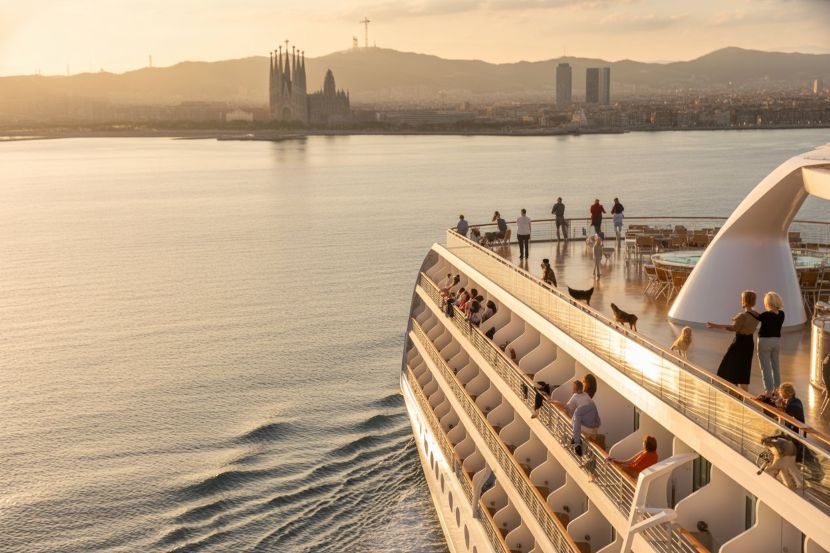
Luxury ocean living — long considered the exclusive domain of wealthy Western retirees — is attracting a fast-growing wave of Indian travellers who are reimagining what it means to see the world. Residential cruise concepts, led by companies like Fabled Voyages, are no longer niche offerings aimed at European or American guests. A new generation of Indian explorers, from retirees to remote workers, is trading in short package holidays for something far more ambitious: unpacking once and letting the ocean do the rest.
The idea is straightforward but quietly radical. Instead of rushing through Barcelona or Dubai on a seven-night cruise, residential cruising lets guests settle into a floating home, maintain daily routines, keep pets on board, and drift slowly from one coastline to another. For many, it feels less like a vacation and more like a lifestyle — one that Indians are now claiming as their own.
This shift matters beyond the travel industry. It signals a deeper change in how Indian consumers approach luxury, long-term travel, and global mobility — and it is reshaping how destinations think about the value of tourism itself.
What Residential Cruising Actually Looks Like
Traditional cruising follows a familiar rhythm: board the ship, tick off ports, disembark. Residential cruising flips that entirely. Guests are not tourists passing through — they are, in a meaningful sense, residents. They have a home onboard, a community of fellow long-stay travellers, and an itinerary designed for depth rather than speed.
Fabled Voyages is among the operators building this model specifically around extended ocean living. The concept targets people who want continuity — the ability to wake up, work, exercise, and socialise in the same environment, even as the view outside the porthole shifts from the Mediterranean to the Arabian Sea.
Pets are welcome. Personal routines survive. And destinations like Barcelona and Dubai, rather than being rushed highlights on a checklist, become familiar stops — places you return to, not places you race through.
Why Indian Travellers Are Driving This Trend
For decades, the image of a luxury cruise passenger skewed heavily Western — older, European or American, travelling in retirement. That picture is changing. Indian travellers, particularly retirees with disposable income, remote professionals untethered from a fixed office, and long-stay explorers seeking more than a fortnight abroad, are finding that residential cruising fits their ambitions in ways that traditional holidays simply cannot.
The appeal cuts across several groups:
- Retirees who want comfort, community, and global access without the disruption of constant packing and unpacking
- Remote workers who can maintain productivity at sea while waking up to a new port every few days
- Long-stay explorers who prefer slow, immersive travel over ticking destinations off a list
- Pet owners who have historically been excluded from extended travel by standard cruise policies
The blend of comfort, continuity, and genuine global access is what separates residential cruising from a standard extended holiday — and it is precisely what is drawing Indian travellers in growing numbers.
How Residential Cruising Compares to Traditional Travel
| Feature | Traditional Cruise | Residential Cruise |
|---|---|---|
| Trip Length | Typically 7–14 nights | Extended, open-ended stays |
| Packing | Pack and unpack at each stop | Unpack once, live onboard |
| Daily Routine | Disrupted by itinerary pace | Maintained throughout the voyage |
| Pet Policy | Generally not permitted | Pets welcomed onboard |
| Destination Experience | Brief port stops | Familiar, recurring visits |
| Primary Audience | Historically Western travellers | Growing Indian interest |
What This Means for Destinations and Tourism Economics
Residential cruising is not just changing traveller behaviour — it is reshaping how destinations think about tourism value. A guest who visits Barcelona repeatedly over several months, builds local spending habits, and returns to the same restaurants and neighbourhoods contributes differently to a local economy than a day-tripper who disembarks for six hours and reboots.
For ports of call like Barcelona and Dubai, the arrival of long-stay residential cruise guests represents a shift in tourism economics. These are not visitors to be processed and moved along. They are, in practical terms, temporary residents — and that distinction carries real weight for local businesses, hospitality providers, and tourism boards planning for sustainable visitor growth.
For Indian travellers specifically, this model also carries a cultural resonance. The ability to maintain familiar routines — food preferences, daily rhythms, a sense of home — while exploring the world at a considered pace addresses a genuine tension that many Indian travellers have felt with fast-paced Western-style tourism.
- Guests race through multiple ports on tight, week-long itineraries with little time to settle.
- Travellers pack and unpack repeatedly as the ship moves from destination to destination.
- Pets are generally not permitted, limiting who can participate in extended sea travel.
- Guests unpack once and build daily routines onboard as the ship moves slowly between coastlines.
- Destinations like Barcelona and Dubai become familiar stops rather than rushed highlights on a checklist.
- Pets are welcomed onboard, making long-term ocean living accessible to a much wider group of travellers.
Where This Is Heading
Operators like Fabled Voyages are actively targeting the Indian market, recognising that the appetite for this style of travel is growing and that the traditional Western demographic no longer defines who residential cruising is for. As more Indian travellers discover that luxury ocean living is an option available to them — not just to retirees in Florida or retirees on the English coast — demand is expected to keep climbing.
The broader shift toward slow, experience-led travel is not unique to any one nationality, but the speed at which Indian consumers are moving into this space is notable. What was once a niche product for a narrow Western audience is becoming a genuinely global one — and India is increasingly at the centre of that expansion.
Whether the trend accelerates will depend partly on how operators adapt their offerings — culturally, logistically, and in terms of pricing — to meet the expectations of Indian guests who bring their own distinct preferences and travel values to the ocean.
Frequently Asked Questions
What is residential cruising?
Residential cruising allows guests to live onboard a ship for extended periods, maintaining daily routines and visiting destinations repeatedly rather than rushing through short port stops.
Which company is leading residential cruise offerings targeting Indian travellers?
Fabled Voyages is among the operators developing residential cruise concepts aimed at long-stay travellers, including a growing Indian audience.
Can you bring pets on a residential cruise?
Yes — pet-friendly policies are a key feature of residential cruise offerings, distinguishing them from traditional cruise products where pets are generally not permitted.
Who is the typical residential cruise guest?
The model appeals to retirees seeking comfort and continuity, remote workers who can work at sea, and long-stay explorers who prefer slow, immersive travel over fast-paced holidays.
How does residential cruising affect destinations like Barcelona and Dubai?
Rather than brief day-tripper visits, residential cruise guests return to the same ports repeatedly, contributing more consistently to local economies and behaving more like temporary residents than passing tourists.
Is residential cruising only for Western travellers?
Historically the market skewed Western, but Indian travellers — including retirees, remote workers, and long-stay explorers — are increasingly embracing this style of ocean living.


Leave a Reply