
The window may not stay open much longer. Since ASEAN formally recognized the Palina River Cruise as a sustainable tourism destination, visitor inquiries to Roxas City have climbed sharply. What was once a quiet riverside sanctuary in Capiz Province is drawing attention it has never seen before, and the community-led stewards who built it are watching the calendar carefully.
If you are considering a trip to the Philippines’ Visayas region in 2026, the next few months represent a rare inflection point. Palina River is still intimate enough to feel personal. That balance, according to accounts from visitors who arrived before the regional recognition, may not hold indefinitely.
How a 74-Hectare Mangrove Sanctuary in Sitio Cablatan Earned ASEAN Recognition
Marco had visited the Philippines a dozen times. He had done Palawan, done Siargao, done the chocolate hills of Bohol. But his Capiz-based cousin kept insisting that Roxas City held something different. Not just beautiful. Different in the way a place feels when the people living there genuinely care whether it survives.
The drive from Roxas City to Sitio Cablatan, Barangay Cagay, takes between 15 and 20 minutes. The road flattens through rice fields and fishing settlements. There is nothing dramatic about the approach. Then the mangroves appear, spreading out across 74 hectares, and the scale of them stops the conversation in the car completely.
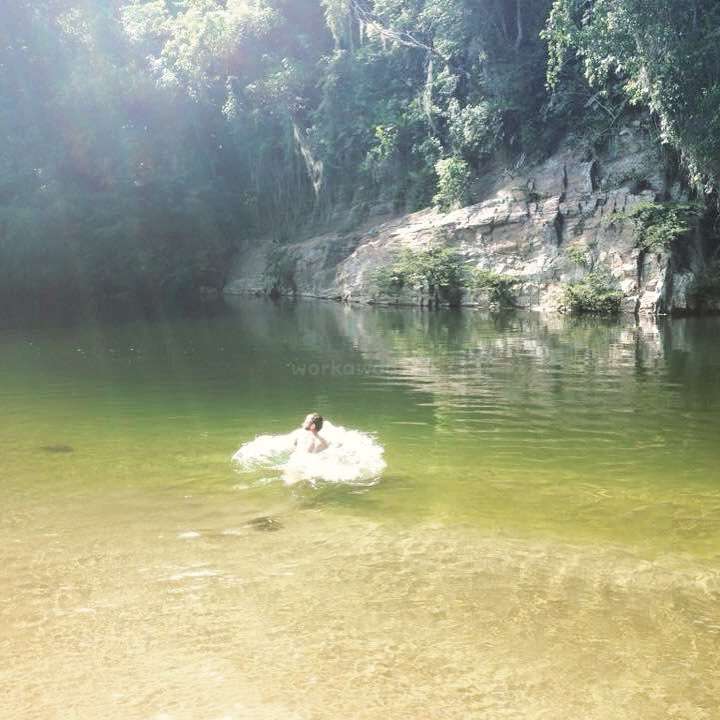
Palina Greenbelt Ecopark is home to 21 mangrove species, including unique hybrid varieties that researchers have documented on-site. The site sits along the Palina River, whose waters run clear enough to reflect the tangled canopy overhead. That clarity is not accidental. It is the direct result of years of community-driven replanting, water management, and the conscious decision to allow only low-impact tourism.
Tour Costs, Timing, and What the P1,500 River Cruise Actually Includes
Marco arrived on a Tuesday morning in late February 2025, just before the summer heat makes midday uncomfortable on the water. The entrance fee at the gate was P10, roughly equivalent to less than a quarter U.S. dollar at current exchange rates. He almost laughed at the number. Then he stopped, because he understood the fee was not the point.
The tour options are structured and transparent.
| Tour Option | Duration | Price (PHP) | What’s Included |
|---|---|---|---|
| Entrance Only | Self-guided | P10 | Site access, walking paths |
| 1-Hour River Tour | 1 hour | P1,500 | Boat, local guide, mangrove cruise |
| River Tour + Lunch | 3 hours | Higher rate | Boat, guide, Capisnon seafood meal |
Marco chose the full package, the one-hour river cruise paired with two additional hours onshore, including a seafood lunch featuring local Capisnon cuisine. The meal centered on freshwater and estuary catches prepared by community members from within the barangay. The prawns, he later told his cousin, tasted different from anything in Manila. Cleaner. More immediate.
What the Mangrove Canopy Reveals After Forty Minutes on the Water
The boat moved quietly. The guide, a young man from Barangay Cagay, pointed out mangrove varieties by name: bakhaw, pototan, pagatpat. He spoke about each species the way a person talks about neighbors. Familiar. Specific. Not rehearsed.
Marco had toured mangroves in other parts of Southeast Asia. In most cases, the ecology lecture came from a laminated card, and the guide checked a phone between stops. Here, the knowledge felt inherited. The community at Palina had been working this landscape long enough that understanding had passed between generations.
At the forty-minute mark, the river narrowed. The canopy closed overhead. The light filtering through root systems turned a deep, saturated green. Marco stopped taking photographs. There was a moment, not spiritual in any religious sense, just intensely present, where the noise of decision-making and itinerary management went quiet.
“The Palina River’s clear, shimmering currents tell a story of environmental rebirth deep in the heart of Sitio Cablatan in Barangay Cagay.”
—
That rebirth was not metaphorical. The river had not always looked like this. Older residents of Barangay Cagay remember a time when sedimentation and unmanaged fishing pressure had dulled the water and thinned the mangrove stands. The recovery took organized, sustained effort from the community. Not a government mandate from a distance, but a local decision, repeated over years, to do something different.
The ASEAN Stamp and What It Means for Roxas City’s Small-Scale Fishers
The ASEAN recognition that now appears in Palina River’s promotional materials is not merely ceremonial. It signals a regional benchmark for sustainable tourism, one that evaluates conservation outcomes alongside visitor experience and direct community economic benefit.
For the fishers and boat operators of Barangay Cagay, the recognition has a practical dimension. Tourism revenue supplements fishing income during off-seasons. The community-run meal service means that families are cooking and selling within a sustainable quota system. The economic circle is tight and deliberate.
Marco watched one of the boat operators carefully tie off after a tour. The man was probably in his mid-fifties, and he worked the mooring line with the efficiency of someone who had done it thousands of times. He was not a tourism performer. He was a resident who had added one more skill to a life built on this water.
That distinction matters more than it might appear on a trip-planning spreadsheet.
Leaving Palina River With Something That Did Not Fit in the Luggage
Marco’s three-hour visit cost him P1,510 in total, inclusive of the entrance fee and the full river tour and lunch package. Converting at current rates, that sits under USD $27. He had spent more on a single cocktail in Bonifacio Global City the week before.
He did not leave feeling like he had found a bargain. He left feeling like he had witnessed a model. A place where the economics of tourism had been arranged so that the least powerful people in the supply chain, the fisherfolk, the cooks, the guides, captured the most direct benefit. That arrangement is rarer than it should be anywhere in the world.
The drive back to Roxas City took the same 15 to 20 minutes. The rice fields passed in the same flat light. But the conversation in the car was different on the return. Quieter at first. Then full of questions about how Palina had managed what so many other natural sites in the Philippines had failed to protect.
Effective ecotourism requires three converging conditions: conservation of biological diversity, sustainable use of ecological resources, and direct support for local economies through jobs and locally sourced services. Palina Greenbelt Ecopark does not just claim to meet those criteria. It has been evaluated against them, regionally recognized, and is still holding the line.
The entrance fee is P10. The question of whether a place like this survives the next decade of tourism pressure depends on something considerably harder to price.
Frequently Asked Questions

You Might Also Like
AIDA Cruises Just Celebrated 30 Years by Rewarding Its Best Partners at Sea
Twelve categories. One freshly refurbished ship. And a ceremony that signals just how seriously Germany’s…
Thailand’s Healing Journey Campaign Is Changing How Tourists Travel
What if the most luxurious thing you could do for yourself this year wasn’t a…

Colombia Just Crossed Five Million Air Passengers in a Single January
More than five million passengers flew through Colombian airports in January 2026 alone — and…
Leave a Reply