
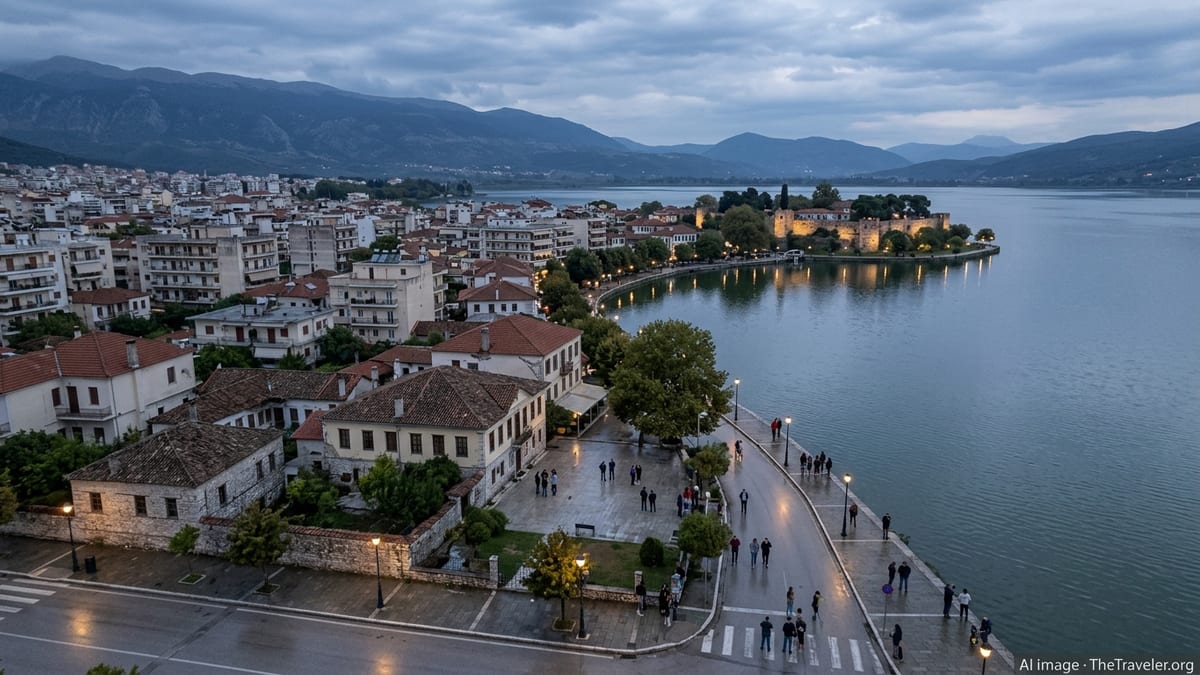
Just before midnight on Tuesday, March 25, 2026, a 4.3-magnitude earthquake struck the region of Ioannina in northwestern Greece, jolting residents awake and sending shockwaves through one of the country’s most historically significant cities. Buildings swayed, people rushed outside, and an immediate sense of unease settled over the area as the tremors subsided — only to be followed by aftershocks that kept nerves on edge through the early morning hours.
Ioannina, a city built along the shores of Lake Pamvotis and surrounded by the rugged Pindus mountain range, sits in a seismically active part of Greece. While earthquakes are not uncommon in the region, a 4.3-magnitude tremor striking just before midnight carries real weight — both literally and in terms of the disruption it causes to daily life, infrastructure, and public safety.
Authorities moved quickly after the quake, deploying emergency teams to assess buildings and infrastructure across the affected area. The focus, officials noted, was on identifying damage, monitoring for further seismic activity, and keeping residents informed as the situation developed.
What Happened During the Ioannina Earthquake
The earthquake hit just before midnight local time, meaning most residents were either asleep or preparing for bed when the ground began to move. That timing matters — a late-night tremor gives people less time to react, and the darkness adds an additional layer of disorientation and fear.
The tremor was felt across a broad area, not just in Ioannina itself. That wide reach is consistent with a shallow or moderately shallow earthquake, which tends to distribute ground motion over a larger geographic footprint than deeper seismic events.
Aftershocks followed the main quake, extending the period of uncertainty for residents and complicating the work of engineers and emergency personnel trying to evaluate structural damage. Each aftershock carries the risk of worsening existing damage to already-stressed buildings, which is why authorities treated the situation as an ongoing concern rather than a single isolated event.
Key Facts at a Glance
- Magnitude: 4.3
- Date and time: Just before midnight, Tuesday, March 25, 2026
- Location: Ioannina, northwestern Greece
- Aftershocks: Continued to be felt following the main tremor
- Response: Emergency teams deployed; infrastructure assessment underway
- Monitoring: Seismic experts and authorities actively tracking ongoing activity
| Detail | Information |
|---|---|
| Earthquake magnitude | 4.3 |
| Date of event | March 25, 2026 |
| Time of event | Just before midnight (local time) |
| Affected region | Ioannina, northwestern Greece |
| Aftershocks reported | Yes — ongoing at time of reporting |
| Emergency response | Teams deployed for damage assessment |
Why This Matters for Residents and Visitors
Greece sits on one of the most seismically active belts in Europe, and Ioannina’s position in the northwest places it within reach of fault systems that have historically produced significant ground movement. For the people who live there, a near-midnight earthquake is not just an inconvenience — it’s a direct threat to home safety, building integrity, and peace of mind.
The concern with a 4.3-magnitude quake isn’t always the tremor itself. It’s what comes after. Aftershocks can arrive within minutes, hours, or even days, and they carry the risk of causing additional structural damage to buildings already weakened by the initial event. Older buildings, in particular, may show damage that isn’t immediately visible but becomes dangerous over time.
For anyone currently in Ioannina — residents and travelers alike — the practical advice from emergency situations like this is consistent: stay away from damaged structures, follow official guidance from local authorities, and avoid re-entering any building that hasn’t been cleared by engineers or safety inspectors.
The city’s infrastructure was being evaluated in the aftermath, with emergency teams on the ground working to identify any compromised structures, utilities, or road conditions that could pose ongoing risks.
What Authorities Are Doing — and What Comes Next
The response to the Ioannina earthquake has followed the standard framework for seismic events in Greece: rapid deployment of emergency teams, systematic building inspections, and continuous monitoring of seismic activity by experts.
Authorities launched a thorough assessment immediately after the quake, with the goal of determining the full extent of any damage and identifying safety risks before residents could be caught off guard by structural failures or utility hazards. That work was still underway at the time of reporting, with teams moving through the city and surrounding areas.
Seismic monitoring will continue for days or weeks following a tremor of this size. Experts track aftershock patterns to assess whether the seismic sequence is winding down or whether a larger event could follow — a process that requires patience, equipment, and consistent data collection.
For now, the emphasis from officials is on prevention: preventing further harm, securing vulnerable structures, and ensuring that residents have the information they need to stay safe while the full picture of the earthquake’s impact comes into focus.
Frequently Asked Questions
What was the magnitude of the Ioannina earthquake?
The earthquake measured 4.3 in magnitude and struck just before midnight on Tuesday, March 25, 2026.
Where exactly did the earthquake hit?
The tremor struck the Ioannina region in northwestern Greece and was felt across a broad area surrounding the city.
Were there aftershocks following the main earthquake?
Yes. Aftershocks continued to be felt after the main tremor, prompting authorities to maintain active monitoring of the situation.
Was significant structural damage reported?
Authorities deployed emergency teams to assess damage, but a full evaluation of the extent of structural harm was still underway at the time of reporting.
Is it safe to travel to Ioannina after the earthquake?
Officials were actively assessing safety risks and monitoring the region. Anyone planning to visit or currently in the area should follow guidance from local authorities and avoid any structures not yet cleared by inspectors.
How long will authorities continue monitoring the situation?
Seismic monitoring typically continues for days to weeks following an earthquake of this size, with experts tracking aftershock patterns and assessing whether further significant tremors are likely.




Leave a Reply