
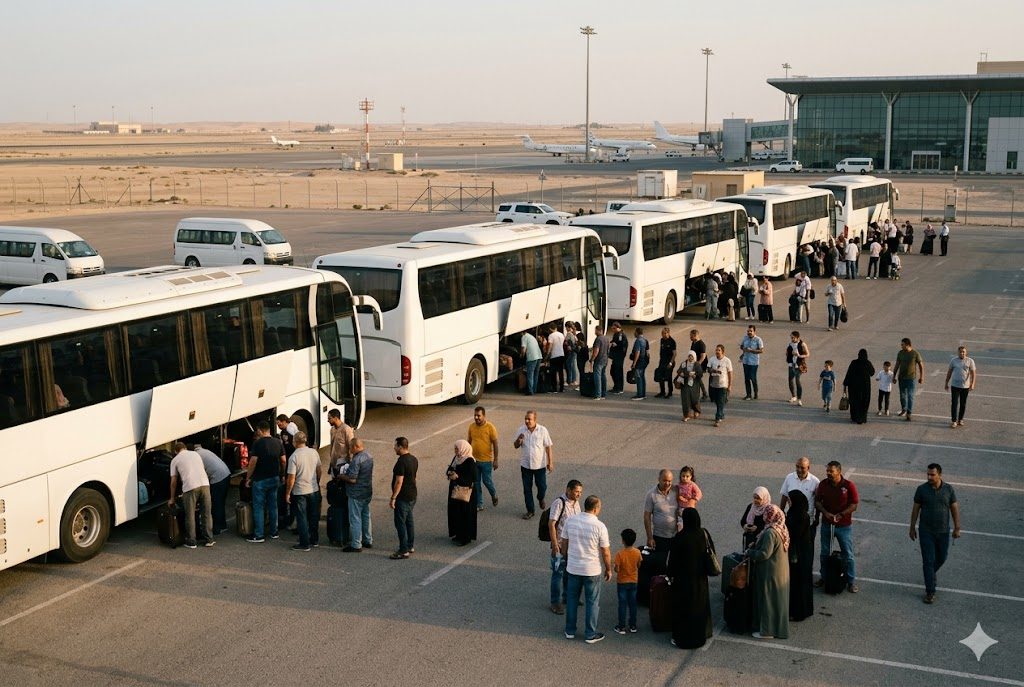
Kuwait International Airport is temporarily closed — and Jazeera Airways has found a way around it. Rather than canceling flights and leaving travelers stranded ahead of Eid, the airline has built an entirely new travel pathway connecting Kuwait to Cairo, Amman, and destinations across India, using a creative overland-to-air model that few carriers would attempt.
For thousands of families separated by distance, the timing could not be more meaningful. Eid reunions that seemed impossible just weeks ago are now back on the table, thanks to a logistical workaround that routes passengers through Saudi Arabia before they ever board a plane.
Here is everything you need to know about how this works, who it affects, and what to expect if you are planning to travel.
Why Kuwait’s Airport Is Out of the Picture — And What Jazeera Is Doing About It
According to reports from the Kuwait Directorate General of Civil Aviation (DGCA), Kuwait International Airport has been temporarily closed for safety reasons. That closure created an immediate problem for airlines operating out of Kuwait — and a significant disruption for passengers with travel plans already in motion.
Jazeera Airways responded by introducing what it describes as an “overland-to-air” model. Instead of departing from Kuwait International Airport, travelers now begin their journey at the Kuwait International Fairgrounds in Mishref, where they check in for their flights. From there, a coordinated bus service transports passengers across the border to Qaisumah Airport in Saudi Arabia, where they board their flights.
It is an unconventional arrangement, but it keeps the routes alive. And for families counting down the days to Eid, that matters enormously.
How the Jazeera Airways Overland-to-Air Journey Actually Works
The process is more organized than it might sound. Jazeera has structured the experience so that passengers are guided through each step without having to navigate the logistics independently.
- Travelers check in at the Kuwait International Fairgrounds (Mishref) — not at the airport
- A coordinated bus journey transfers passengers to Qaisumah Airport in Saudi Arabia
- Flights then depart from Qaisumah to international destinations including Cairo, Amman, and cities across India
- The arrangement was designed specifically to maintain connectivity during the airport closure period
The key word here is “coordinated.” Jazeera has not simply told passengers to make their own way to Saudi Arabia. The bus transfer is part of the ticketed journey, making this feel closer to a connection than a complication.
Routes Restored: Cairo, Amman, and India Links Back on the Map
The destinations Jazeera has prioritized for this restored service reflect where the demand is highest — and where the emotional stakes of missing Eid are greatest.
| Destination | Region | Departure Point | Status |
|---|---|---|---|
| Cairo | North Africa / Middle East | Qaisumah Airport, Saudi Arabia | Restored via overland model |
| Amman | Middle East | Qaisumah Airport, Saudi Arabia | Restored via overland model |
| India (multiple cities) | South Asia | Qaisumah Airport, Saudi Arabia | Restored via overland model |
Cairo and Amman are critical corridors for Arab expatriates living in Kuwait who travel home for religious holidays. The India links carry equal significance for the large South Asian workforce based in Kuwait, many of whom save their annual leave specifically for Eid travel.
Restoring these three corridors — even through an indirect route — means the majority of Jazeera’s most time-sensitive passengers still have a way home.
Who This Affects Most — And Why the Timing Hits Hard
The Eid travel season is one of the busiest and most emotionally charged periods on the aviation calendar across the Gulf region. Flights sell out weeks in advance. Families coordinate schedules across multiple countries. Missing a flight during this window does not just mean rebooking — it can mean missing the celebration entirely.
The communities most directly affected by this situation include:
- Egyptian expatriates in Kuwait traveling to Cairo for Eid family gatherings
- Jordanian expatriates with family connections in Amman
- South Asian workers — particularly from India — who travel home during the holiday season
- Anyone who booked Jazeera Airways flights out of Kuwait International Airport before the closure was announced
For these travelers, Jazeera’s overland model is not a minor inconvenience to work around. It is the difference between making it home for Eid or not.
Officials have noted that the temporary closure was driven by safety considerations, which means the disruption was not something the airline or passengers could have anticipated far in advance. Jazeera’s response — building an alternative system rather than issuing mass cancellations — has been positioned as a direct effort to protect those plans.
What Travelers Should Expect Going Forward
The overland-to-air arrangement is described as a response to a temporary closure, which suggests it is not intended to be a permanent fixture. Once Kuwait International Airport reopens following the safety-related work, normal flight operations are expected to resume.
In the meantime, anyone booked on Jazeera Airways flights from Kuwait should be aware of the following practical points:
- Check-in now takes place at the Kuwait International Fairgrounds in Mishref, not at the airport terminal
- Allow additional travel time to account for the bus transfer to Qaisumah
- Confirm current check-in procedures directly with Jazeera Airways before your travel date, as arrangements may evolve
- The routes to Cairo, Amman, and India are confirmed as operating through this model
The broader takeaway is that Jazeera Airways has kept its network intact during a period when many carriers might have simply grounded their Kuwait operations. Whether the overland model continues beyond the immediate Eid period depends on how long the airport closure remains in effect — something the DGCA has not yet publicly specified in detail.
Frequently Asked Questions
Why is Kuwait International Airport closed?
According to the Kuwait Directorate General of Civil Aviation (DGCA), the airport has been temporarily closed for safety reasons. A specific timeline for reopening has not been confirmed in available reports.
How does the Jazeera Airways overland-to-air model work?
Passengers check in at the Kuwait International Fairgrounds in Mishref, then travel by coordinated bus to Qaisumah Airport in Saudi Arabia, where they board their Jazeera Airways flights.
Which Jazeera Airways routes have been restored through this model?
The routes confirmed as restored include flights to Cairo, Amman, and multiple destinations in India, all operating via Qaisumah Airport.
Is the bus transfer included in the ticket, or do passengers arrange it separately?
Based on the source reporting, the bus journey is described as coordinated by the airline as part of the overland-to-air model, suggesting it is part of the organized travel arrangement rather than something passengers handle independently.
Is this arrangement permanent?
No. The overland-to-air model is described as a response to a temporary airport closure. Normal operations are expected to resume once Kuwait International Airport reopens.
What should I do if I have an existing Jazeera Airways booking from Kuwait?
Travelers should contact Jazeera Airways directly to confirm updated check-in locations and procedures before their travel date, as the logistics are tied to the ongoing airport closure situation.




Leave a Reply