
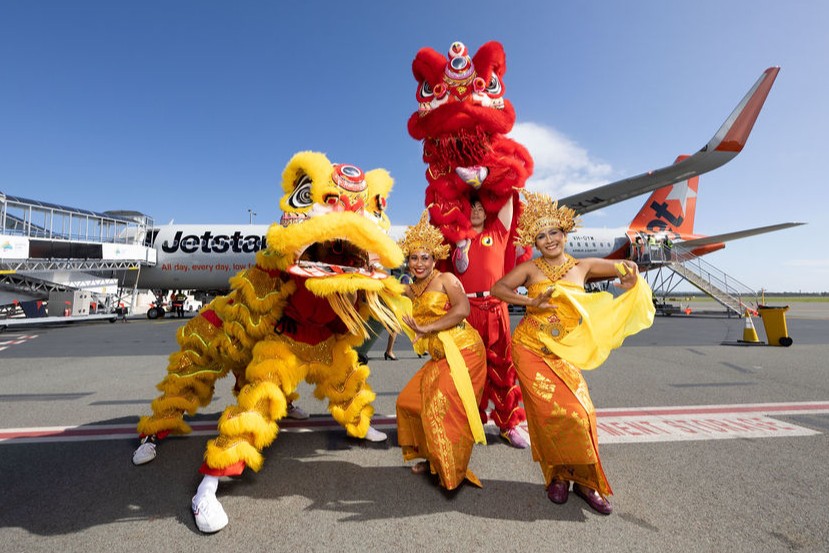
The Sunshine Coast is about to get a whole lot closer to Southeast Asia. Jetstar has launched a new international service connecting the Sunshine Coast directly with Bali, with continuing flights onward to Singapore — giving the region its first direct link to two of Asia’s most visited destinations.
The route operates three times per week and uses the Airbus A321LR, a modern long-range narrowbody aircraft known for its fuel efficiency and passenger comfort. For a region that has long relied on Brisbane or Sydney as gateways to international travel, this marks a meaningful shift in how Sunshine Coast residents — and visitors — can move around the world.
The significance goes well beyond convenience. Regional tourism advocates and business communities have pointed to international air access as one of the most important levers for economic growth, and a direct Bali-Singapore corridor positions the Sunshine Coast to compete more seriously for Asian tourism dollars and trade relationships.
What the New Jetstar Route Actually Means for the Sunshine Coast
Before this service, travelers from the Sunshine Coast wanting to fly to Bali or Singapore typically had to drive or fly south to Brisbane first, adding hours and cost to any international trip. The new Jetstar service eliminates that friction entirely for many travelers.
The route connects Sunshine Coast Airport directly to Ngurah Rai International Airport in Bali, with continuing service to Singapore’s Changi Airport. That structure means passengers can book through to Singapore without the hassle of a separate connection in a major Australian hub.
The Airbus A321LR is well-suited to this kind of regional international flying. It offers greater range than older narrowbody aircraft, making direct routes like Sunshine Coast to Bali viable in a way that wasn’t always possible. Passengers can expect a modern cabin experience rather than an aging workhorse aircraft.
Route Details at a Glance
Here’s what travelers need to know about the new service:
- Airline: Jetstar
- Route: Sunshine Coast – Bali, with continuing service to Singapore
- Frequency: Three times per week
- Aircraft: Airbus A321LR
- Service type: International scheduled service
| Route Segment | Type | Frequency | Aircraft |
|---|---|---|---|
| Sunshine Coast to Bali | Direct international | 3x weekly | Airbus A321LR |
| Bali to Singapore | Continuing service | 3x weekly | Airbus A321LR |
| Sunshine Coast to Singapore | Via Bali connection | 3x weekly | Airbus A321LR |
Why Bali and Singapore Were the Right Targets
The choice of Bali and Singapore as the first international destinations from the Sunshine Coast isn’t accidental. Both cities draw enormous numbers of Australian tourists each year, and both sit at the heart of Southeast Asian commerce and culture.
Bali has been one of the top international destinations for Australians for decades — a short-haul escape with a well-established tourism infrastructure that appeals to families, couples, and solo travelers alike. Direct access from the Sunshine Coast removes one of the last remaining barriers for regional Queensland residents wanting to make the trip.
Singapore, meanwhile, serves a different purpose. As one of Asia’s primary financial and logistics hubs, onward access to Changi Airport opens up connections across the wider region — to Southeast Asia, South Asia, and beyond. For businesses on the Sunshine Coast, that kind of connectivity has real commercial value.
Officials and regional stakeholders have noted that improved international air access tends to generate a multiplier effect — attracting more inbound tourism, encouraging investment, and making a region more attractive to businesses that need to move people and goods internationally.
The Real-World Impact on Tourism, Trade, and the Local Economy
For the Sunshine Coast, this route isn’t just a travel convenience — it’s an economic signal. Regions with direct international air connections consistently attract more overseas visitors, and those visitors tend to stay longer and spend more than those who arrive via domestic connections.
The tourism upside is the most immediate. Travelers from Bali and Singapore now have a direct path to the Sunshine Coast, meaning the region can be marketed as a destination — not just a stopover — to Southeast Asian audiences who might previously have defaulted to Sydney, Melbourne, or the Gold Coast.
On the trade side, the Singapore connection is particularly notable. The Sunshine Coast has growing sectors in technology, agribusiness, and advanced manufacturing, and access to Singapore’s commercial ecosystem could help local businesses build partnerships and supply chains that were previously harder to establish without convenient air links.
Local businesses in hospitality, retail, and services are also positioned to benefit. International air routes tend to drive spending across the broader visitor economy, not just in accommodation and attractions but in everything from restaurants to transport providers.
- Travelers needed to connect through Brisbane or Sydney to reach Bali or Singapore, adding hours and extra cost to international trips.
- No direct international air link existed between the Sunshine Coast and Southeast Asia's major tourism and business hubs.
- The region faced limited visibility as an international destination for Southeast Asian travelers planning Australian holidays.
- Direct flights to Bali operate three times per week using the modern Airbus A321LR aircraft, removing the need for a southern hub connection.
- Continuing service from Bali to Singapore provides onward access to one of Asia's most important financial and transit hubs.
- The Sunshine Coast can now be marketed directly to Bali and Singapore audiences as a destination in its own right, boosting inbound tourism potential.
What Happens Next for Sunshine Coast International Connectivity
The launch of this service represents the start of a new chapter for Sunshine Coast Airport’s international ambitions rather than an endpoint. Regional airports that successfully establish their first international routes tend to use that momentum to attract additional carriers and destinations over time.
The three-times-weekly frequency gives Jetstar room to assess demand before potentially increasing services. If load factors are strong — which the airline would be betting on given the well-documented appetite for Bali travel among Queenslanders — there is a natural path toward more frequent operations.
For now, the focus will be on building awareness of the new route among Sunshine Coast residents and ensuring that inbound travelers from Bali and Singapore know the direct option exists. That marketing work, done well, could accelerate the economic benefits the region is hoping to capture.
The broader picture is one of a regional city increasingly punching above its weight in terms of international connectivity — and this Jetstar service is the clearest evidence yet that the Sunshine Coast is serious about competing on a global stage.
Frequently Asked Questions
How often does the Jetstar Sunshine Coast to Bali service operate?
The service runs three times per week.
What aircraft does Jetstar use on the Sunshine Coast-Bali route?
Jetstar operates the route using the Airbus A321LR, a modern long-range narrowbody aircraft.
Can I fly from the Sunshine Coast all the way to Singapore on this service?
Yes. The route continues from Bali to Singapore, allowing passengers to travel from the Sunshine Coast to Singapore via Bali on the same service.
Is this the first international route from Sunshine Coast Airport?
What are the expected benefits for the Sunshine Coast economy?
The new service is expected to boost inbound tourism, strengthen trade relations, and improve investment potential by connecting the region to Bali and Singapore.
When did the Jetstar Sunshine Coast-Bali service launch?
The service was announced and reported in late March 2026, though the exact first departure date has not been specified in confirmed details.



Leave a Reply