
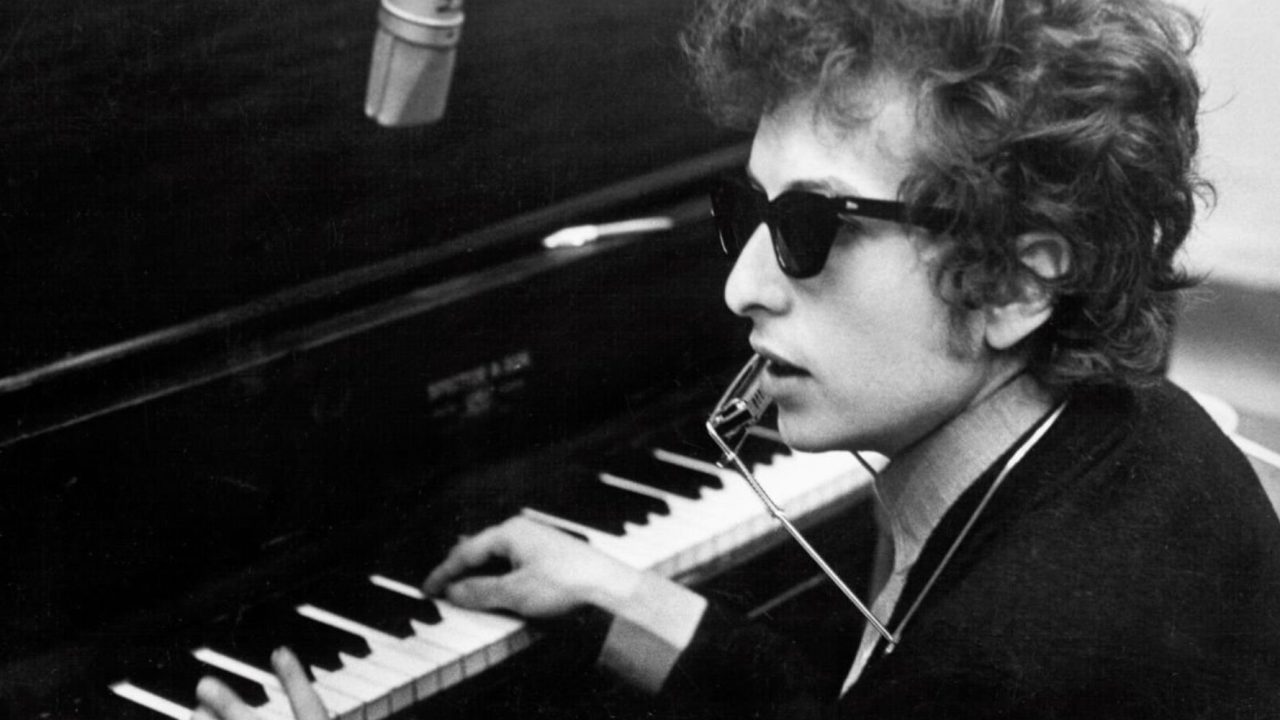
Some cover versions improve on the original. Most don’t come close. And then there is Jimi Hendrix’s take on Bob Dylan’s “All Along the Watchtower” — a recording so definitive that Dylan himself eventually conceded the song belonged to Hendrix.
Released in 1967, Dylan’s original version appeared on his album John Wesley Harding. It was a sparse, acoustic folk arrangement — understated, almost restrained. Within months, Hendrix had taken it apart and rebuilt it into something entirely different: electric, urgent, and seismic. The result is widely considered one of the greatest cover versions in rock history.
What makes this story remarkable isn’t just the quality of the cover. It’s what happened afterward — the way the original artist stepped back and, in doing so, acknowledged that another musician had heard something in his own song that he hadn’t fully realized himself.
The Song Dylan Wrote and Hendrix Owned
“All Along the Watchtower” was written by Bob Dylan and first recorded for his 1967 album John Wesley Harding. Dylan’s version runs just over two and a half minutes. It is quiet and deliberate — a parable-like lyric delivered over acoustic guitar and understated instrumentation. The imagery is biblical and cryptic: a joker, a thief, a watchtower, and an approaching wind.
Jimi Hendrix recorded his version in 1968, releasing it as a single that same year. The Hendrix Experience transformed the track with layered electric guitars, a driving rhythm, and a sense of escalating tension that Dylan’s original never attempted to build. Where Dylan’s recording feels like a meditation, Hendrix’s feels like an oncoming storm.
The cover became one of Hendrix’s most celebrated recordings and reached number 20 on the Billboard Hot 100 in the United States, performing even better in the UK where it reached number 5. It remains a fixture on lists of the greatest guitar performances and greatest rock songs ever recorded.
Why Hendrix’s Version Hit Differently
Hendrix didn’t simply electrify the song — he restructured the way it felt. His arrangement opens with the guitar figure that Dylan’s version places near the end, effectively reversing the emotional arc. The result is a track that feels like it begins in the middle of something already in motion, already urgent.
The guitar work throughout is layered and complex. Hendrix reportedly recorded multiple guitar parts, building a texture that was unusual for a single at the time. The solo sections don’t just ornament the song — they carry as much narrative weight as the lyrics themselves.
What Hendrix understood, and what made his version so enduring, is that Dylan’s lyric contains an inherent tension that the original recording deliberately holds back. Hendrix released it.
Dylan’s Own Reaction — and What It Means
Bob Dylan has been performing “All Along the Watchtower” live for decades. Notably, he has consistently performed it closer to Hendrix’s arrangement than to his own original recording. This is not a small detail. For a songwriter of Dylan’s stature to adopt another artist’s interpretation of his own work as the definitive version is an extraordinary act of artistic honesty.
Dylan has spoken publicly about his admiration for what Hendrix did with the song, acknowledging that Hendrix’s version revealed dimensions of the track that Dylan himself had not fully explored. The song, in a very real sense, passed from one artist to another — and both artists seemed to understand that.
This dynamic is rare in popular music. Songwriters rarely cede ownership of their own material in this way, even informally. That Dylan did so speaks to how completely Hendrix transformed what the song could be.
A Snapshot of Two Versions Side by Side
| Detail | Bob Dylan Original (1967) | Jimi Hendrix Cover (1968) |
|---|---|---|
| Album/Release | John Wesley Harding | Single release |
| Instrumentation | Acoustic guitar, bass, drums | Layered electric guitars, bass, drums |
| Tone | Sparse, meditative | Electric, urgent, building tension |
| US Chart Position | Not released as a single | Number 20, Billboard Hot 100 |
| UK Chart Position | Not released as a single | Number 5 |
| Dylan’s live approach | Original arrangement | Adopted Hendrix-style arrangement |
Why This Cover Still Matters Decades Later
The story of “All Along the Watchtower” is taught in music schools and cited in discussions about the nature of interpretation, authorship, and what it means to truly understand a song. It raises questions that don’t have easy answers: Does a song belong to the person who wrote it, or to the person who best understood it?
Hendrix died in September 1970, just two years after his version was released. He was 27 years old. The brevity of his career makes his catalogue — and particularly recordings like this one — feel even more significant. In the short time he had, he produced work that permanently changed how certain songs are heard.
“All Along the Watchtower” is the clearest example of that. Dylan wrote the words and the melody. Hendrix wrote the feeling. And in the decades since, it has become almost impossible to hear one version without the other echoing behind it.
That’s not a common thing in music. It might be a once-in-a-generation thing.
Frequently Asked Questions
When did Bob Dylan originally release “All Along the Watchtower”?
Dylan released the song in 1967 on his album John Wesley Harding.
When did Jimi Hendrix release his cover version?
Hendrix released his cover as a single in 1968, shortly after Dylan’s original appeared on John Wesley Harding.
How did Hendrix’s version perform on the charts?
The Hendrix version reached number 20 on the US Billboard Hot 100 and number 5 in the UK.
Did Bob Dylan ever acknowledge Hendrix’s version as superior?
Dylan has publicly expressed admiration for Hendrix’s interpretation and has performed the song live using an arrangement closer to Hendrix’s version than his own original recording.
What made Hendrix’s arrangement so different from Dylan’s original?
Hendrix transformed the track with layered electric guitars, a more urgent rhythm, and a restructured arrangement that released the tension Dylan’s sparse acoustic version deliberately held back.
Is this considered one of the greatest cover versions ever recorded?
Yes — it is widely cited by music critics and historians as one of the greatest cover versions in rock history and a landmark moment in Hendrix’s career.


Leave a Reply