
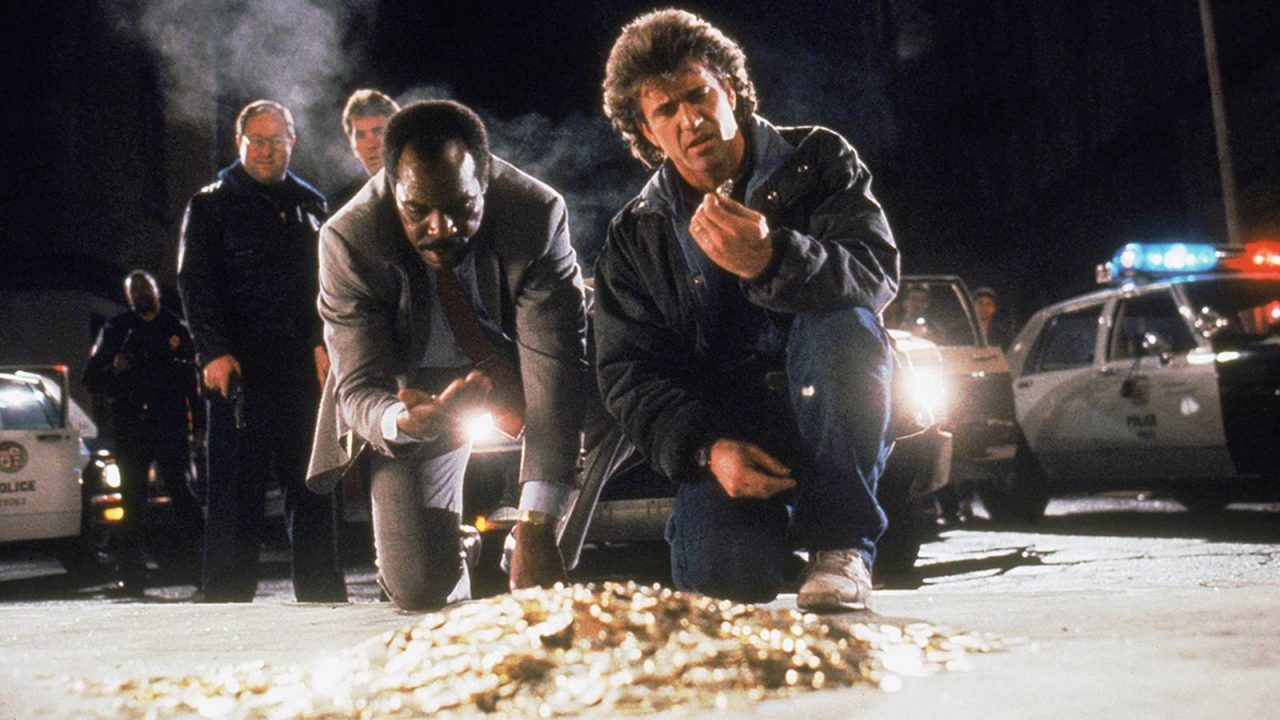
Sequels that genuinely surpass their originals are rare enough to feel almost mythological in Hollywood. Yet Lethal Weapon 2, released in 1989, is widely regarded as one of the clearest examples of a franchise entry that didn’t just match its predecessor — it outright bettered it. Thirty-seven years later, the film still holds up as a masterclass in action filmmaking, and its reputation has only grown with time.
The original Lethal Weapon (1987) was a massive hit that introduced the world to the combustible partnership between Mel Gibson’s Martin Riggs and Danny Glover’s Roger Murtaugh. It was sharp, emotionally grounded, and genuinely thrilling. So how did the sequel manage to top it? The answer lies in a combination of tighter storytelling, a more compelling villain, stronger character development, and a willingness to go bigger without losing the human core that made the first film work.
Why Lethal Weapon 2 Is Considered Better Than the Original
The first film leaned heavily on Riggs as a broken man — a suicidal cop with nothing to lose. That emotional hook was powerful, but it also meant the character had limited room to evolve within the story. By the time the sequel arrived, Riggs had been rebuilt just enough to make his vulnerability feel different. He still carried grief, but now he had something to protect, which raised the stakes in a way the original couldn’t quite achieve.
The villain situation is also a key factor. Lethal Weapon 2 introduced South African diplomats using diplomatic immunity to operate a drug trafficking operation — a premise that gave the film a sharp political edge that felt genuinely provocative for its era. The antagonists weren’t just dangerous; they were untouchable, at least legally. That frustration — watching corrupt people hide behind institutional protection — gave Riggs and Murtaugh’s eventual reckoning a cathartic punch that the first film’s villains never quite delivered.
Diplomatic immunity became one of the most quoted and parodied elements of the entire franchise. The phrase entered pop culture in a way that few action movie moments do, which speaks to how effectively the film used its central conceit.
What the Sequel Did That Most Follow-Ups Fail To Do
Most sequels fall into one of two traps: they either repeat the original beat for beat, or they overcorrect so dramatically that the film loses its identity entirely. Lethal Weapon 2 avoided both. It kept the buddy-cop chemistry that made the first film work while expanding the world, raising the emotional stakes, and introducing supporting characters — most notably Joe Pesci’s Leo Getz — who added genuine comic texture without undercutting the tension.
The film also deepened the Murtaugh side of the equation. Where the original was arguably more Riggs-centric, the sequel gave Glover’s character real dramatic weight, particularly in scenes that forced him to confront both personal danger and moral complexity.
That balance — action, humor, and genuine emotion — is extraordinarily difficult to maintain. The fact that director Richard Donner pulled it off in a sequel, under enormous commercial pressure, makes the achievement all the more impressive.
How Lethal Weapon 2 Stacks Up Against the Franchise
| Film | Release Year | General Reception | Notable Element |
|---|---|---|---|
| Lethal Weapon | 1987 | Strong critical and commercial hit | Introduced Riggs and Murtaugh; dark emotional tone |
| Lethal Weapon 2 | 1989 | Widely considered the best in the series | Diplomatic immunity villain; expanded character depth |
| Lethal Weapon 3 | 1992 | Mixed; lighter in tone | Rene Russo joins the cast |
| Lethal Weapon 4 | 1998 | Divisive; seen as a franchise closer | Jet Li as villain; family-focused themes |
The Rare Club of Sequels That Beat the Original
Film history gives us only a handful of sequels that are genuinely argued to surpass their originals. The Godfather Part II, The Dark Knight, Aliens, Terminator 2 — these are the titles that tend to come up in that conversation. Lethal Weapon 2 belongs in that company, even if it doesn’t always get the same level of critical reverence.
Part of that may be the genre. Action comedies are rarely treated with the same seriousness as prestige dramas or science fiction epics. But entertainment value, craft, and emotional resonance don’t belong exclusively to any one genre — and by all three measures, Lethal Weapon 2 delivers.
The film’s action sequences remain impressively staged. The toilet bomb scene, the stilt house destruction, the climactic confrontation on the cargo ship — these are set pieces that hold up decades later, not just as nostalgia but as genuinely well-constructed filmmaking.
Why This Film Still Matters 37 Years Later
There’s a reason people keep coming back to Lethal Weapon 2. It hits a very specific sweet spot that Hollywood has struggled to replicate ever since: a film that’s funny without being frivolous, violent without being nihilistic, and emotionally engaging without being manipulative.
The chemistry between Gibson and Glover remains one of the great on-screen partnerships in action cinema. And unlike many films of its era, the sequel’s willingness to engage with real-world themes — institutional corruption, the abuse of legal protections, the limits of what law enforcement can actually do — gives it a texture that purely escapist action films often lack.
Whether you’re revisiting it or watching it for the first time, Lethal Weapon 2 holds up as proof that sequels, when done right, can be more than just a second helping. They can be the definitive version of the story.
Frequently Asked Questions
When was Lethal Weapon 2 released?
Lethal Weapon 2 was released in 1989, two years after the original Lethal Weapon debuted in 1987.
Who directed Lethal Weapon 2?
The film was directed by Richard Donner, who also directed the original Lethal Weapon.
Who are the main stars of Lethal Weapon 2?
The film stars Mel Gibson as Martin Riggs and Danny Glover as Roger Murtaugh, with Joe Pesci also appearing in a notable supporting role as Leo Getz.
What makes Lethal Weapon 2 better than the original, according to critics?
Analysts and film critics generally point to its stronger villain premise involving diplomatic immunity, deeper character development for both leads, and a better balance of humor, action, and emotional stakes.
How many Lethal Weapon films were made in total?
There are four films in the main Lethal Weapon franchise, released in 1987, 1989, 1992, and 1998 respectively.
Is Lethal Weapon 2 considered one of the best action sequels ever made?
It is widely regarded as one of the rare sequels that surpasses its original, often mentioned alongside films like Aliens and Terminator 2 in discussions about the best action follow-ups in cinema history.

Leave a Reply