
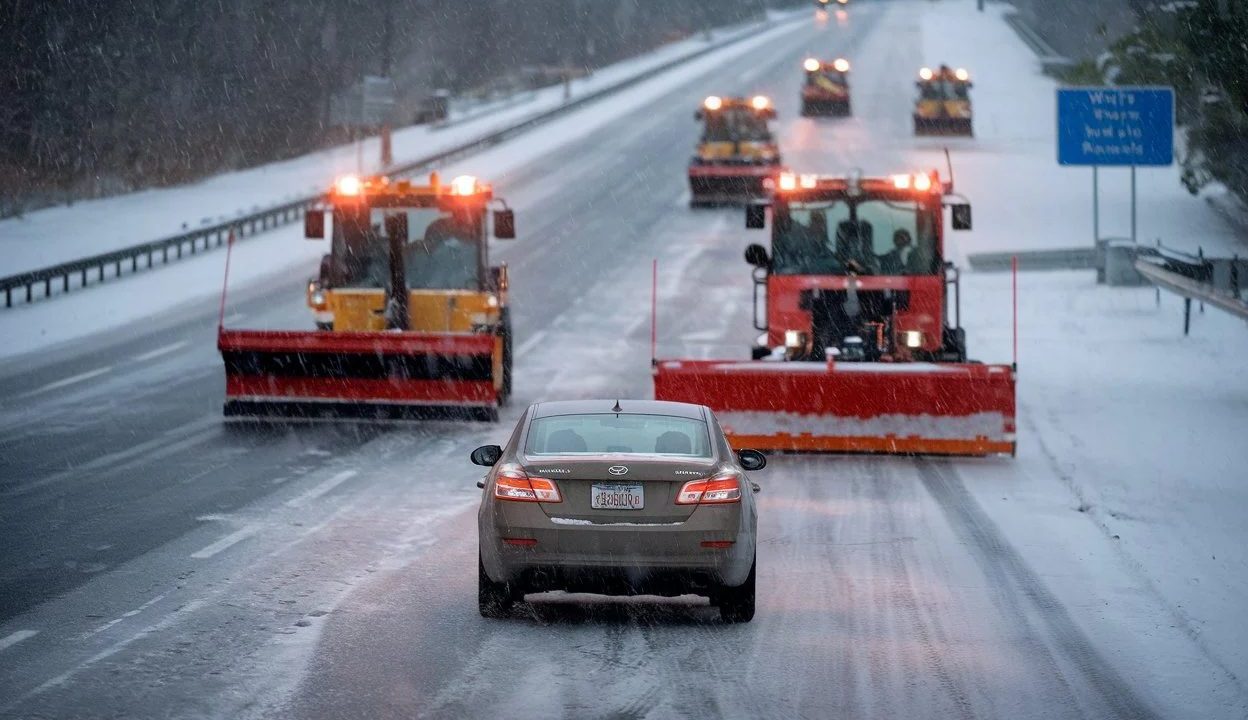
Wind gusts reaching up to 50 mph, roads dropping below freezing overnight, and multiple crashes before dawn — that was the reality facing Livingston County, New York, on the morning of February 17, 2026. What started as a winter storm warning quickly became a full travel advisory, forcing officials to urge residents to stay off the roads entirely.
By late morning, conditions had improved enough for the Level 1 travel advisory to be lifted. But the hours before that announcement were anything but calm. The storm left a clear mark on local roads and on the people who depend on them.
Here’s what happened, why it escalated so quickly, and what Livingston County residents should keep in mind as winter weather patterns continue through the season.
How the Livingston County Winter Storm Unfolded
The storm hit Livingston County in the early hours of February 17, 2026. Snowfall arrived alongside strong, gusty winds that pushed conditions from manageable to dangerous within a short window. The National Weather Service reported wind gusts reaching up to 50 mph, which combined with falling and blowing snow to create near-whiteout conditions on some stretches of road.
Road temperatures fell below freezing, turning wet pavement into ice. That combination — fresh snow, high winds, and frozen road surfaces — is one of the most treacherous setups a driver can face. Visibility drops, stopping distances increase dramatically, and even experienced drivers can lose control on seemingly clear stretches.
The result was multiple crashes overnight. Officials responded by issuing a Level 1 travel advisory for Livingston County, a formal warning that asks residents to avoid unnecessary travel and to exercise extreme caution if they must go out.
What a Level 1 Travel Advisory Actually Means
Not everyone is familiar with how travel advisory levels work, so it’s worth clarifying. A Level 1 advisory — the level issued for Livingston County during this storm — is the least severe of the tiered system used in New York State, but it is still a serious public safety warning.
- Level 1 (Advisory): Residents are asked to avoid unnecessary travel. Roads are hazardous, and travel is not recommended unless essential.
- Level 2 (Warning): Only those with urgent needs or essential employment should travel. Conditions are significantly dangerous.
- Level 3 (Emergency): All travel is banned except for emergency vehicles and first responders.
The fact that officials moved to issue a Level 1 advisory reflects how seriously they took the overnight crash reports and the deteriorating road conditions. It is not a step taken lightly, and it carries a direct message: stay home if you can.
Storm Conditions at a Glance
| Condition | Details |
|---|---|
| Storm date | February 17, 2026 |
| Location affected | Livingston County and greater Rochester area |
| Wind gusts | Up to 50 mph |
| Road surface conditions | Below freezing, icy |
| Hazards reported | Multiple overnight crashes, blowing snow, reduced visibility |
| Advisory level issued | Level 1 Travel Advisory |
| Advisory lifted | Late morning, February 17, 2026 |
| Weather source | National Weather Service (NWS) |
Who Felt It Most — and Why the Greater Rochester Area Was Watching
Livingston County sits in a region of western New York that is no stranger to winter weather. But the combination of factors on February 17 — freezing temperatures, high wind speeds, and snowfall arriving overnight when fewer plows and emergency vehicles are on patrol — created conditions that were harder to manage than a standard snowfall.
The greater Rochester area was also affected, according to reporting on the storm. That broader geographic reach meant more commuters, more freight traffic, and more people who might not have been aware of how quickly conditions had deteriorated before they got behind the wheel.
Officials have consistently noted that overnight winter storms are particularly dangerous precisely because many drivers head out in the morning without fully accounting for how much conditions changed while they were asleep. Roads that looked passable at midnight can be sheets of ice by 6 a.m.
The Advisory Is Lifted — But Roads Deserve Respect
By late morning on February 17, conditions had improved enough for the Level 1 travel advisory to be officially lifted. That is genuinely good news. It means road crews had made enough progress, temperatures had shifted, and the immediate danger had passed to a degree that officials felt comfortable removing the formal restriction.
But lifting an advisory does not mean roads return to summer-dry conditions instantly. In the hours following a storm like this, drivers should still expect:
- Packed snow and ice on secondary and rural roads that see less treatment
- Refreezing in shaded areas, particularly in the afternoon and evening
- Reduced visibility near open fields where wind can still push loose snow across roadways
- Lingering hazards at intersections and on bridges, which freeze faster than open road surfaces
Residents in Livingston County and the surrounding region are encouraged to check local road condition updates before traveling, even after advisories are lifted.
What to Watch for as Winter Continues
February and March in western New York are historically active months for winter weather. The conditions that produced this storm — cold air masses, lake-effect amplification, and high wind events — remain possible through early spring.
The National Weather Service continues to monitor conditions in the region and issues updated forecasts that can help residents plan ahead. Signing up for local emergency alerts, checking NWS updates, and keeping emergency supplies in vehicles are all practical steps that local safety officials routinely recommend.
For Livingston County, this storm served as a reminder that winter is not finished — and that when officials issue a travel advisory, the safest response is to take it seriously.
Frequently Asked Questions
When was the Livingston County travel advisory issued and lifted?
The Level 1 travel advisory was issued on the morning of February 17, 2026, and was lifted by late morning the same day once conditions improved.
What caused the travel advisory to be issued?
A combination of heavy snowfall, wind gusts up to 50 mph, freezing road temperatures, and multiple overnight crashes prompted officials to issue the advisory.
What areas were affected by the storm?
Livingston County and the greater Rochester area were both reported to be affected by the hazardous winter storm conditions.
How high were wind gusts during the storm?
The National Weather Service reported wind gusts reaching up to 50 mph during the storm, which contributed to blowing snow and dangerous visibility conditions.
Does a lifted travel advisory mean roads are fully safe?
Not necessarily — drivers should still expect residual icy patches, refreezing in shaded areas, and reduced traction on secondary roads even after an advisory is lifted.
Where can Livingston County residents find road condition updates?
The National Weather Service and local county emergency management offices provide updated road condition and weather information; residents are encouraged to check these sources before traveling after any winter storm.




Leave a Reply