
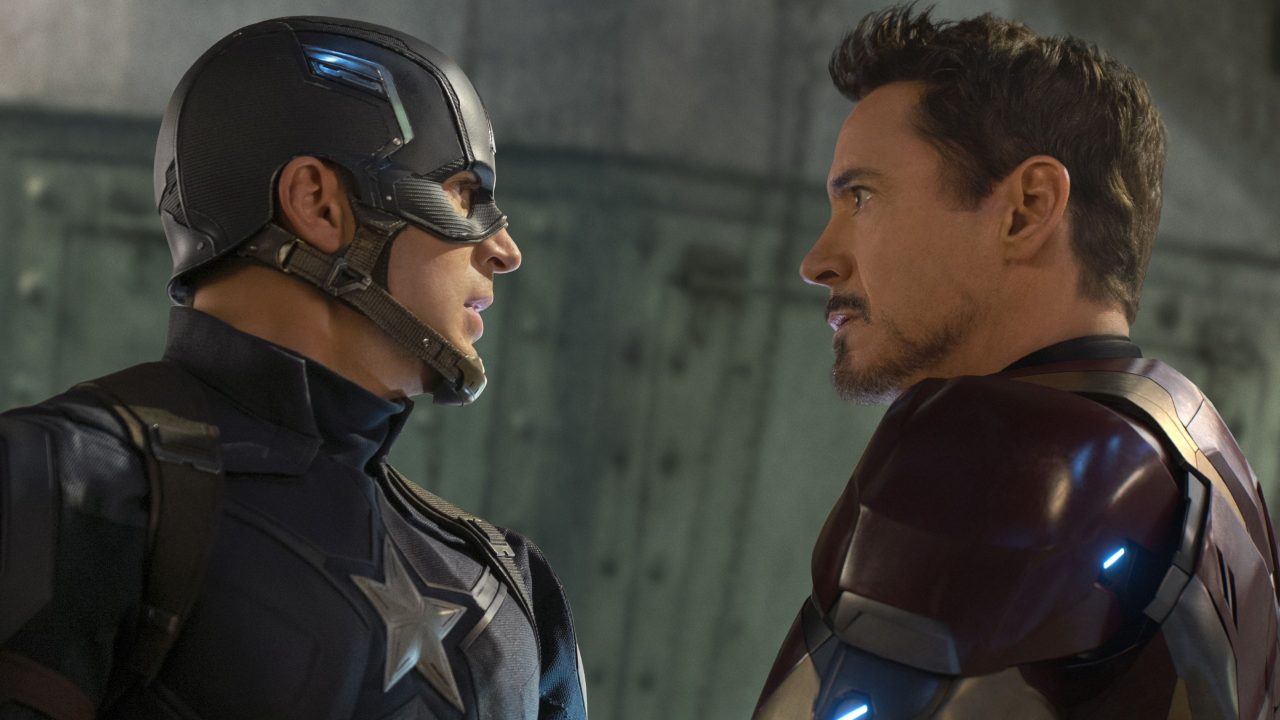
What if everything you thought you knew about the original Marvel Civil War was wrong — and a new movie is about to prove it?
With Avengers: Doomsday shaping up to be a large-scale ideological conflict between superheroes, fans and critics are revisiting the original Captain America: Civil War with fresh eyes. And the more people look back, the clearer something becomes: the debate over who was right — Steve Rogers or Tony Stark — wasn’t actually as balanced as the film presented it.
Marvel is essentially revisiting the Civil War framework on a grander stage, and this time the moral lines appear to be drawn even more sharply. That makes it worth asking: in the original conflict, was Team Cap always the correct side? A growing number of viewers think so — and the setup for Doomsday may be designed to confirm it.
Why the Civil War Debate Has Never Really Gone Away
When Captain America: Civil War released in 2016, Marvel went to considerable lengths to present the Sokovia Accords conflict as genuinely two-sided. Tony Stark’s argument — that unchecked superpowered individuals needed governmental oversight — was framed as reasonable, even sympathetic. The film gave him real emotional weight: guilt over Ultron, grief over lives lost.
But the years since have not been kind to the pro-Accords position. Rewatches have revealed that the Sokovia Accords, as written, would have placed the Avengers under the control of a United Nations panel — a body that, as the film itself shows, could be manipulated, delayed, or outright compromised. Zemo’s entire plan depended on that bureaucratic rigidity working exactly as he needed it to.
Steve Rogers’ argument was simpler and, in hindsight, harder to refute: when the people giving the orders have agendas of their own, surrendering autonomy isn’t accountability — it’s vulnerability.
How Avengers: Doomsday Reframes the Original Civil War
The significance of Avengers: Doomsday in this conversation is that it appears to be constructing a similar ideological split, but with the benefit of everything the MCU has built since 2016. The heroes entering this conflict carry the full weight of their histories — including the consequences of the Accords, the Blip, and the events of every Phase that followed.
Crucially, the framing around Tony Stark’s legacy has shifted. In Civil War, Tony was positioned as a flawed but well-intentioned figure. But the broader MCU has gradually revealed how many of the catastrophic events in the universe trace back, directly or indirectly, to Stark decisions — Ultron being the most obvious example, but far from the only one.
That recontextualization matters. If Doomsday is built on a Civil War-style conflict, and if Tony Stark’s ideological position is now understood as having been rooted in ego and guilt rather than genuine principle, then the side opposing that position — the Team Cap equivalent — isn’t just sympathetic. It’s structurally correct.
The Case Against Tony Stark’s Side, Laid Out Clearly
It helps to lay out exactly why the pro-oversight position in Civil War has aged so poorly when examined closely.
- The Accords removed individual moral judgment — heroes would need approval before acting, even in emergencies where delay meant death.
- The oversight body was immediately compromised — the Vienna bombing, orchestrated by Zemo, demonstrated exactly how fragile and manipulable that structure was.
- Tony’s motivations were personal, not principled — his support for the Accords was driven largely by guilt over Ultron and pressure from grieving families, not from a coherent philosophy of governance.
- The intelligence community had already proven untrustworthy — by the time of Civil War, S.H.I.E.L.D. had been revealed as thoroughly infiltrated by HYDRA, making any argument for institutional trust deeply suspect.
- Steve Rogers was ultimately proven right about Bucky — his instinct to protect his friend, dismissed as bias by Tony’s side, turned out to be correct. Bucky had been framed.
What This Means for Audiences Watching Doomsday
For audiences heading into Avengers: Doomsday, this retrospective matters because it shapes how the new conflict should be read. If the film presents another ideological divide among heroes, viewers now have nearly a decade of MCU storytelling informing which side of that divide tends to hold up.
The pattern the MCU has established — sometimes deliberately, sometimes seemingly by accident — is that institutional control of superheroes consistently fails, and that individual moral agency, even when messy, produces better outcomes than bureaucratic oversight.
| Position | Key Argument | How It Aged |
|---|---|---|
| Team Cap (Rogers) | Oversight removes moral autonomy; institutions can be corrupted | Validated — Zemo exploited Accords structure; Bucky was innocent |
| Team Iron Man (Stark) | Unchecked heroes need governmental accountability | Undermined — oversight body was immediately manipulated; Stark’s motives were personal |
The honest reading of Civil War, viewed through everything that came after, is that the film was never truly balanced. It presented the appearance of balance while structurally favoring Rogers’ position — the plot itself proved him right at nearly every turn.
Avengers: Doomsday inherits that legacy. Whatever new conflict it constructs, it does so in a universe where the audience already knows, at some level, which kind of argument tends to win.
Frequently Asked Questions
Is Avengers: Doomsday officially a remake of Civil War?
Not a direct remake, but it is widely understood to revisit the ideological conflict between heroes that defined Civil War, on a larger scale.
Why do people say Team Cap was always right in Civil War?
Because the plot of the film itself validated Rogers’ position — the oversight structure was compromised by Zemo, and Bucky, whom Rogers defended, was proven innocent.
What were the Sokovia Accords?
A United Nations framework introduced in Civil War that would have placed the Avengers under governmental oversight and required approval before they could act.
How does Tony Stark’s legacy affect the Doomsday narrative?
The broader MCU has increasingly shown that many catastrophic events trace back to Stark decisions, which reframes his Civil War position as rooted in guilt rather than sound principle.
Has Marvel officially confirmed the ideological themes of Avengers: Doomsday?
Full plot details have not been confirmed; the thematic analysis here is based on what has been reported and observed about the film’s setup.

Leave a Reply