
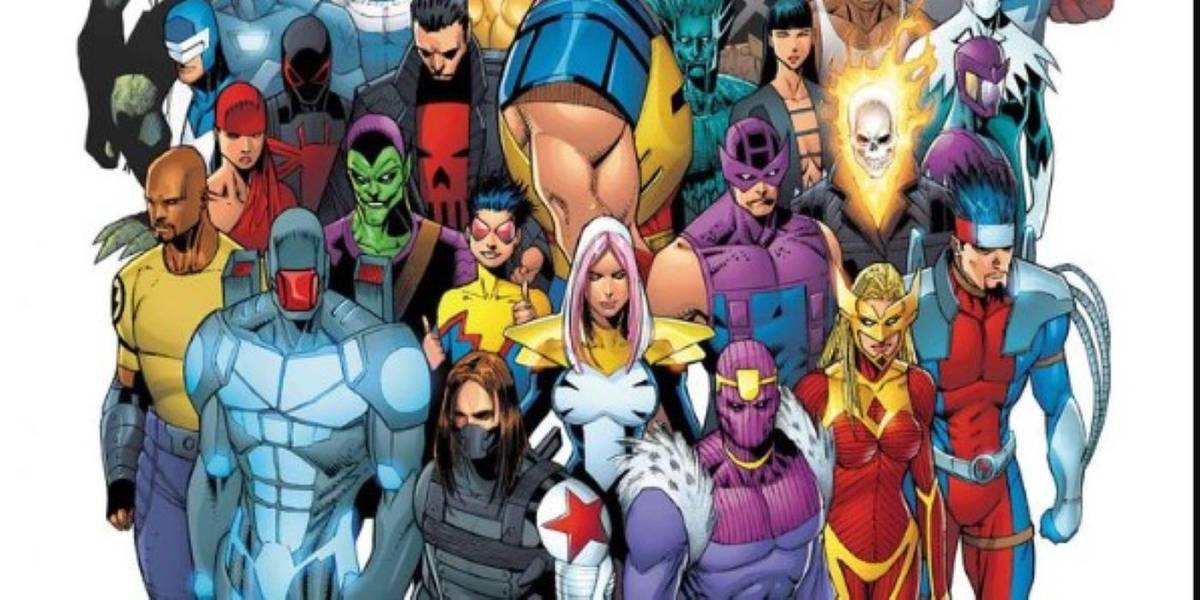
Not every Marvel villain needs cosmic powers or a mutation to be genuinely terrifying. Some of the most compelling antagonists in the publisher’s long history have been ordinary human beings — people armed with nothing more than intelligence, resources, ideology, and an absolute refusal to lose.
That’s actually what makes non-powered villains so fascinating. There’s no convenient weakness to exploit, no radiation accident to reverse. When a brilliant strategist or a ruthlessly ambitious operator decides to destroy a superhero, they do it with planning, patience, and cold-blooded determination. That’s a different kind of threat entirely.
Marvel’s roster of powerless villains spans decades and dozens of titles, but certain characters have consistently stood out — not just as obstacles for heroes to punch through, but as genuinely complex figures whose motivations hold up under scrutiny. Here’s a look at the greatest non-powered villains in Marvel history, and what makes each one worth remembering.
Why Non-Powered Villains Hit Different in Marvel Comics
Superpowered threats are Marvel’s bread and butter. But the non-powered villain occupies a unique narrative space. They can’t be defeated by a stronger punch or a more powerful energy blast. They have to be outthought, outmaneuvered, or simply outlasted.
That creates a different kind of story tension. When Norman Osborn runs a government agency, or when Wilson Fisk controls an entire criminal empire from a legitimate office, the hero can’t just fly in and punch the problem away. The threat is systemic, political, and deeply human — which is often far more unsettling than a god with a grudge.
Non-powered villains also tend to function as mirrors. They reflect back the worst of human ambition, tribalism, and the hunger for control. That’s part of why they endure across reboots and retcons when flashier antagonists fade.
The Greatest Non-Powered Marvel Villains, Ranked
The following characters represent the best of what Marvel has produced in the category of human — or at least non-superpowered — villainy. Each has left a lasting mark on the comics, and several have successfully crossed over into film and television.
| Rank | Villain | Primary Affiliation / Role | What Makes Them Dangerous |
|---|---|---|---|
| 1 | Wilson Fisk (Kingpin) | Crime lord / political operator | Physical dominance combined with vast criminal and political reach |
| 2 | Norman Osborn | Former Green Goblin / government director | Tactical genius who weaponizes public legitimacy |
| 3 | Baron Zemo | Hydra / Thunderbolts leader | Master strategist with a multi-generational grudge |
| 4 | Red Skull | Hydra founder / ideological extremist | Ideological conviction and near-inexhaustible resources |
| 5 | Justin Hammer | Arms dealer / corporate rival to Tony Stark | Wealth, industrial sabotage, and political manipulation |
| 6 | Bullseye | Assassin / Daredevil nemesis | Superhuman precision without actual superpowers |
| 7 | The Hood (Parker Robbins) | Crime boss / supernatural power broker | Organized the entire Marvel criminal underworld |
| 8 | Taskmaster | Mercenary / trainer of villains | Photographic reflexes that replicate any fighting style |
| 9 | Madame Hydra (Viper) | Hydra leader / terrorist | Ruthless ideological commitment and tactical expertise |
| 10 | The Jackal (Miles Warren) | Geneticist / Spider-Man antagonist | Scientific expertise weaponized through cloning and obsession |
The Characters Who Defined the Category
Wilson Fisk is arguably the definitive non-powered Marvel villain. He’s built empires, survived wars, held political office, and repeatedly broken the people who tried to stop him — not through superpowers but through sheer will, physical conditioning, and a network of influence that reaches into every corner of the Marvel universe.
Norman Osborn represents a different kind of threat. His genius is real, his resources are vast, and his capacity for manipulation is extraordinary. During the Dark Reign era of Marvel Comics, he ran a government-sanctioned team of villains disguised as heroes — a storyline that demonstrated just how dangerous a smart, motivated human being can be when given institutional cover.
Baron Zemo brings something neither Fisk nor Osborn quite has: a genuine ideological legacy. His vendetta against Captain America is personal and generational, rooted in his father’s history with the Allies in World War II. That kind of deep motivation makes him consistently compelling across decades of stories.
Bullseye occupies a unique position on this list. He has no powers in the traditional sense — what he has is an almost supernatural level of skill. He can turn any object into a lethal weapon with perfect accuracy, and his psychological instability makes him unpredictable in ways that even more powerful villains are not.
What These Villains Reveal About Marvel Storytelling
The staying power of non-powered villains in Marvel’s history says something meaningful about what the best superhero stories are actually about. When a character like Red Skull or Madame Hydra persists across generations of readers, it’s not because of flashy abilities — it’s because they embody something true about how power, ideology, and human cruelty actually operate in the world.
Taskmaster’s photographic reflexes are a clever power concept, but what makes the character interesting is the tragedy embedded in the ability — the idea that learning to copy everyone else’s skills comes at the cost of losing your own memories and identity. That’s a story about sacrifice and identity, not just combat.
The Jackal is a scientist whose genuine expertise curdled into obsession. The Hood is an ordinary criminal who stumbled into power and then had to figure out how to hold it. These aren’t cosmic threats. They’re recognizably human, which is exactly what makes them stick.
Marvel has always understood that the most durable villains aren’t the ones with the biggest power sets. They’re the ones with the most coherent — even if deeply wrong — worldview. That’s the thread connecting every character on this list, and it’s why non-powered villains continue to be some of the most interesting figures in the publisher’s catalogue.
Frequently Asked Questions
Who is considered the greatest non-powered villain in Marvel Comics?
Wilson Fisk, also known as the Kingpin, is widely regarded as the definitive non-powered Marvel villain, combining physical dominance with vast criminal and political influence.
Does Taskmaster actually have superpowers?
Taskmaster possesses photographic reflexes, allowing him to replicate any fighting style he observes — a unique ability that sits on the borderline between skill and power, though he has no traditional superpowers.
What made Norman Osborn such a significant villain beyond his Green Goblin identity?
Osborn’s tactical intelligence and capacity for manipulation allowed him to gain government authority and run a team of villains disguised as heroes, making him dangerous in ways that went far beyond physical combat.
Why does Baron Zemo remain relevant decades after his creation?
Zemo’s multi-generational grudge against Captain America and his genuine strategic brilliance give him a depth of motivation that keeps him compelling across different eras of Marvel storytelling.
Have any of these non-powered villains appeared in Marvel films or television?
Several have, including Wilson Fisk, Baron Zemo, Taskmaster, Justin Hammer, and Bullseye, all of whom have featured prominently in the Marvel Cinematic Universe across films and streaming series.
What separates a non-powered villain from a hero who simply lacks powers?
Non-powered Marvel villains are defined not by an absence of ability but by the specific combination of human ambition, ideology, and ruthlessness that makes them genuinely threatening without relying on mutation or cosmic enhancement.

Leave a Reply