
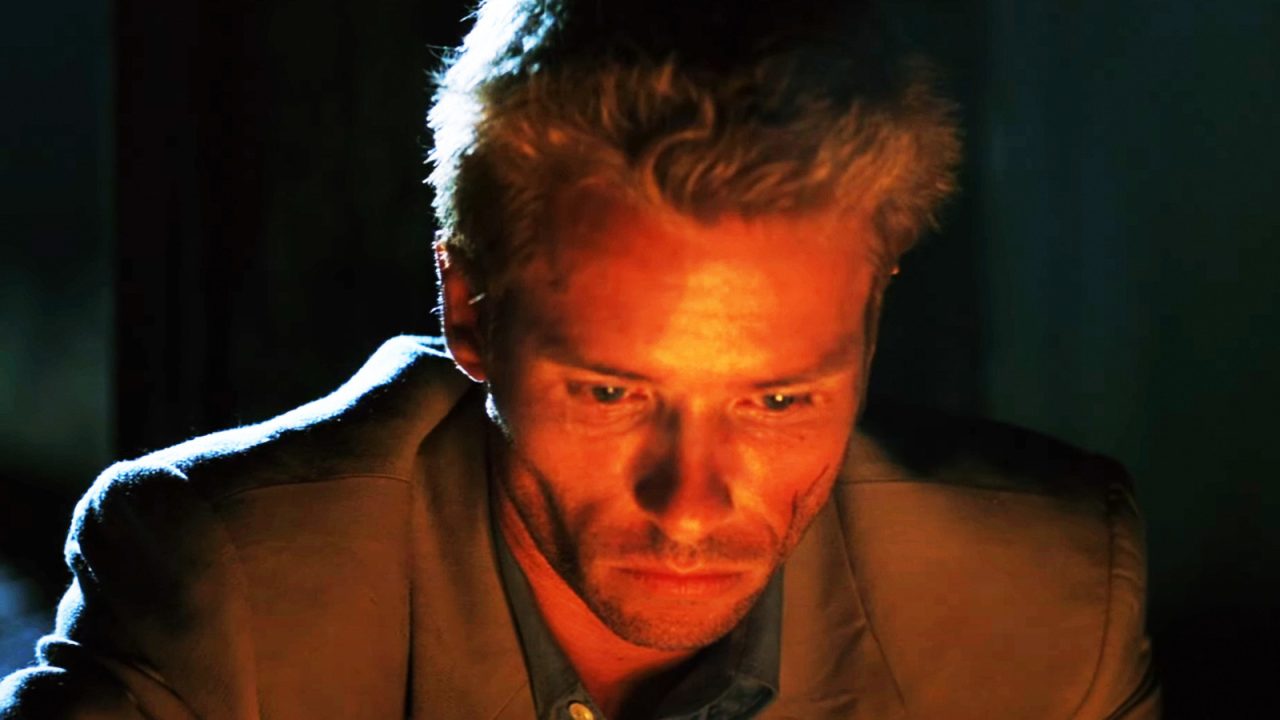
Few films in modern cinema history arrived with as much disruptive force as Memento. When Christopher Nolan released it in 2000, he didn’t simply introduce himself to the world — he rewired how audiences thought about storytelling itself. Twenty-five years later, the film stands not just as a landmark of independent cinema, but as the blueprint for everything Nolan would go on to build.
The premise sounds deceptively simple: a man searching through his own fractured memories for the truth about a crime. What made it radical was how Nolan chose to tell that story — structured in reverse chronological order, forcing viewers to experience the same disorientation as its protagonist. It was a film that demanded active participation, not passive watching.
A quarter-century on, Memento remains one of the most discussed, dissected, and rewatched films of its era — and its influence on both mainstream and independent filmmaking is hard to overstate.
Why Memento Was Unlike Anything Audiences Had Seen
At its core, Memento is a film about memory, identity, and the stories we tell ourselves to make sense of the world. The central character, Leonard, suffers from anterograde amnesia — meaning he cannot form new memories. He navigates his reality through polaroid photographs, handwritten notes, and tattoos etched onto his own body.
What Nolan understood, and what very few filmmakers had attempted before, was that structure itself could be a storytelling device. By presenting the film’s scenes in reverse order, the audience shares Leonard’s condition in a visceral, experiential way. You don’t just observe his confusion — you feel it. Each scene ends where the next one begins, meaning viewers are always one step behind, always catching up, always uncertain about who to trust.
That structural ambition was not a gimmick. It served the film’s deepest themes. If memory is unreliable, and identity is constructed from memory, then who are any of us, really? These are not small questions, and Nolan embedded them inside a taut, propulsive neo-noir thriller that never once felt like homework.
The Film That Defined Christopher Nolan’s Career DNA
Looking back at Nolan’s filmography — from The Dark Knight to Inception to Oppenheimer — the fingerprints of Memento are everywhere. The fascination with time and its manipulation. The morally ambiguous protagonist. The structural puzzles that reward multiple viewings. The insistence that mainstream audiences are capable of engaging with genuinely complex ideas.
Before Memento, Nolan had made one feature — the low-budget British thriller Following, released in 1998. That film showed early promise, but it was Memento that announced him as a major talent. The film was made on a modest independent budget, shot largely in California motels and diners, and yet it carried the weight and ambition of something far larger.
The script, which Nolan adapted from a short story by his brother Jonathan Nolan, won widespread critical praise and earned an Academy Award nomination for Best Original Screenplay. That recognition cemented the film’s status not just as a cult favourite, but as a genuinely important work of cinema.
What Made It Work — The Craft Behind the Concept
Structural experimentation can easily collapse into confusion. What prevented that in Memento was the rigour of its execution. Every element — performance, cinematography, editing, score — worked in service of the central idea.
- The non-linear structure: Black-and-white sequences run chronologically forward, while colour sequences run in reverse. The two timelines eventually converge, delivering a final revelation that recontextualises everything the viewer has watched.
- The performances: The lead performance grounds the film emotionally, ensuring that the intellectual puzzle never overwhelms the human story beneath it.
- The screenplay: Adapted from Jonathan Nolan’s short story “Memento Mori,” the script is a model of controlled complexity — intricate without being impenetrable.
- The themes: Questions of guilt, grief, self-deception, and the reliability of subjective experience run through every scene, giving the film genuine philosophical weight.
| Film Element | Detail |
|---|---|
| Release Year | 2000 |
| Director | Christopher Nolan |
| Based On | Short story by Jonathan Nolan |
| Previous Nolan Feature | Following (1998) |
| Awards Recognition | Academy Award nomination for Best Original Screenplay |
| Narrative Structure | Reverse chronological order; dual timelines (colour and black-and-white) |
Why It Still Matters 25 Years Later
The films that endure are the ones that speak to something permanent in human experience. Memento endures because the questions it raises — about memory, truth, and self-knowledge — are not going away. If anything, they feel more urgent in an era of information overload, competing narratives, and an increasingly fractured sense of shared reality.
The film also matters as a reminder of what independent cinema can achieve when a filmmaker refuses to compromise on vision. Nolan made Memento without the resources of a major studio, without franchise backing, without a safety net — and produced something that changed the course of his career and left a permanent mark on film culture.
For anyone who hasn’t seen it, the 25th anniversary is as good a reason as any to watch it for the first time. For those who have, it rewards revisiting — because knowing the ending doesn’t diminish the experience. If anything, it deepens it. That’s the mark of a film built to last.
Frequently Asked Questions
When was Memento released?
Memento was released in the year 2000, marking Christopher Nolan’s major breakthrough as a filmmaker.
What is Memento about?
The film follows a man searching through his fragmented memories for the truth, told through a reverse chronological narrative structure that mirrors the protagonist’s experience of amnesia.
What was Christopher Nolan’s film before Memento?
Before Memento, Nolan directed Following, a low-budget British thriller released in 1998.
Is Memento based on a book or short story?
Yes — Nolan adapted the screenplay from a short story by his brother Jonathan Nolan, titled “Memento Mori.”
Did Memento win any Academy Awards?
The film received an Academy Award nomination for Best Original Screenplay, though specific win details are not confirmed in the available source material.
Why is Memento considered important to Christopher Nolan’s career?
Memento established the core themes and structural ambitions — non-linear time, morally complex protagonists, intellectually demanding narratives — that would define Nolan’s entire subsequent filmography.


Leave a Reply