
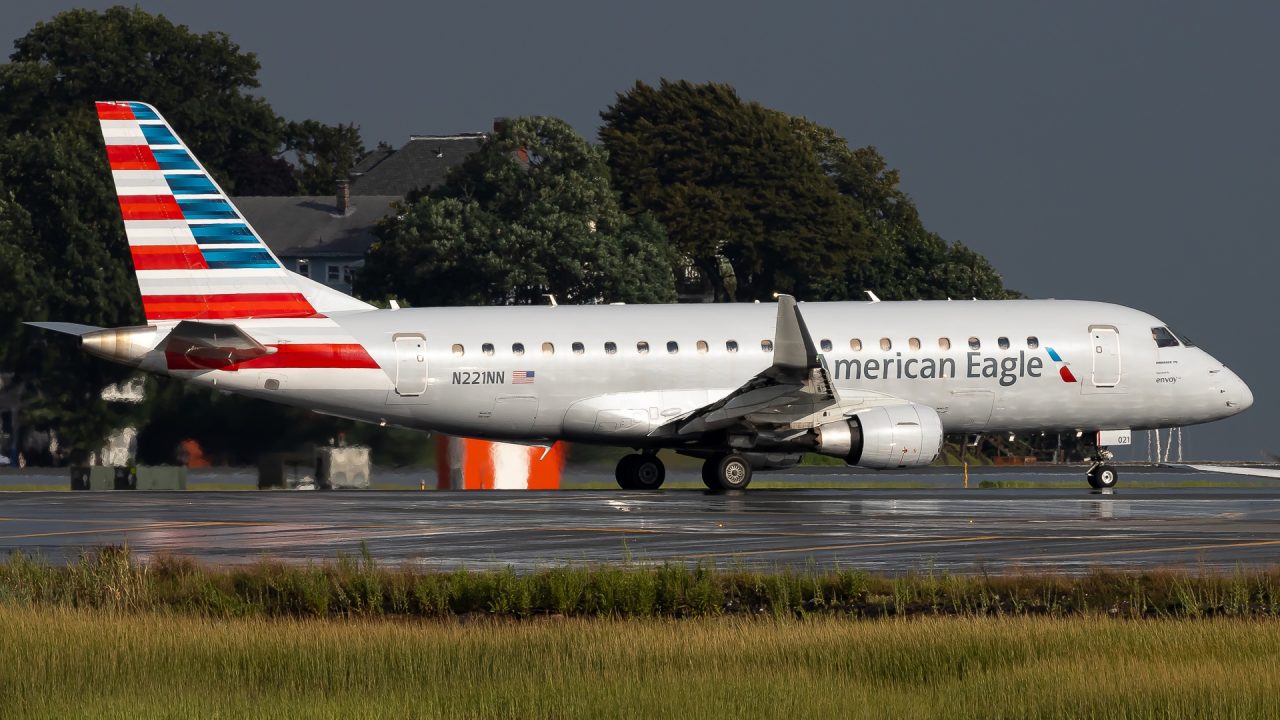
Here is an uncomfortable truth about American aviation: the resumption of Miami-Caracas flights is being celebrated as a triumph of connectivity, when it may actually be one of the most politically fraught airline decisions in recent memory.
American Airlines is preparing to restore nonstop service between Miami and Caracas, Venezuela, by April 30, 2026. It will be the first time a U.S. carrier has served Venezuela since American itself suspended operations in March 2019. The announcement has drawn applause from travel advocates, Venezuelan diaspora communities, and aviation analysts eager to see transatlantic corridors reopen.
But not everyone is cheering. The return comes amid unresolved geopolitical tensions, lingering security questions, and a diplomatic landscape that shifted dramatically just weeks before the announcement. So let’s ask the harder question: is this reconnection a genuine milestone, or is it a calculated risk dressed up as progress?
The 6-Year Void: What the Suspension of US-Venezuela Flights Actually Cost
To understand the debate, you need to understand what the suspension actually meant for real people. American Airlines began operating in Venezuela in 1987. Before suspending service in March 2019, it was the only U.S. airline still serving the country. Delta Air Lines and United Airlines had already exited the Venezuelan market in 2017, leaving American as the last American carrier standing.
When American pulled out, it didn’t just end a flight route. It severed a critical air bridge between Venezuela and the United States at a moment when hundreds of thousands of Venezuelans were fleeing economic collapse and political instability. The Miami-Caracas corridor had been one of the busiest in Latin America. Its closure forced travelers into multi-stop itineraries through Panama City, Bogotá, or Lima, adding hours and hundreds of dollars to every journey.
The Venezuelan diaspora in South Florida alone numbers in the hundreds of thousands. For families split across borders, the absence of direct flights wasn’t an inconvenience. It was a humanitarian gap.
| Airline | Last Year Serving Venezuela | Reason for Exit |
|---|---|---|
| Delta Air Lines | 2017 | Security concerns, currency controls |
| United Airlines | 2017 | Security concerns, currency controls |
| American Airlines | March 2019 | Security and operational concerns |
| American Airlines (return) | April 30, 2026 (planned) | DOT clearance received; security assessments ongoing |
The Case for Returning: Diaspora Demand, DOT Clearance, and Economic Logic
Supporters of the resumption make a compelling case rooted in demand, diplomacy, and dollars. The U.S. Department of Transportation has already granted American Airlines clearance to resume nonstop flights between Miami and Venezuela. That regulatory green light is not a trivial detail. The DOT does not hand out international route approvals without reviewing safety, security, and diplomatic frameworks.
American Airlines announced in late January 2026 that it intended to reconnect with Venezuela. The airline plans to operate daily service, pending final government approval and subject to ongoing security assessments. The first flights on the Miami-Caracas and Miami-Maracaibo routes will likely be operated by Envoy, an American Airlines regional subsidiary. Envoy operates smaller aircraft, which makes sense for a route being reintroduced cautiously after years of dormancy.
The economic argument is straightforward. South Florida’s Venezuelan community represents one of the largest diaspora populations in the United States. Remittances, family visits, and business travel between the two cities represent a substantial untapped market. No other U.S. carrier currently serves Venezuela. American Airlines has a genuine first-mover advantage here, and it is smart to capitalize on it.
“American Airlines becomes the first airline to reconnect Venezuela with the United States.”
— American Airlines official press release, 2026
There is also a humanitarian dimension that deserves weight. Venezuelans in the diaspora have been navigating expensive, indirect routes for years. Restoring direct service reduces travel time, lowers costs, and reconnects families. That is not a minor benefit. For communities that have been separated by geography, politics, and economics, a direct flight is an act of reunion.
The Case Against: Geopolitical Timing, Security Gaps, and Diplomatic Volatility
The skeptics have equally serious points. The timing of this announcement is hard to ignore. American Airlines revealed its intention to return to Venezuela just weeks after the U.S. conducted military strikes in the country. That sequence raises questions about whether this route is a commercial decision, a diplomatic signal, or both.
The phrase “pending government approval and subject to security assessments” appears repeatedly in American’s official communications. That language is not boilerplate. It reflects genuine uncertainty about whether conditions on the ground in Venezuela are stable enough to support regular commercial operations. Airlines don’t hedge like this when they’re confident.
Venezuela’s aviation infrastructure has also deteriorated significantly over the past seven years. Airports that were functional in 2019 may face maintenance backlogs, equipment shortages, and staffing gaps. Operating into an environment with degraded ground infrastructure creates real operational risks for any carrier.
Critics also point to the currency and financial environment. One reason Delta and United exited in 2017 was Venezuela’s currency controls, which made it nearly impossible for airlines to repatriate revenue earned in bolivars. While the financial environment has shifted somewhat, fundamental economic instability persists. Airlines need to be able to move money, and Venezuela’s track record on that front remains problematic.
Then there is the question of passenger safety. The U.S. State Department has maintained travel advisories for Venezuela citing crime, civil unrest, and arbitrary detention. Airlines operate in the airspace, not on the streets, but passengers still need to get to and from airports. That ground-level risk doesn’t disappear because a flight route has been approved.
What the Data on Suspended and Restored Routes Actually Shows
History offers useful context here. When airlines restore suspended international routes after long gaps, outcomes vary widely depending on the underlying conditions that caused the suspension in the first place.
Routes suspended for purely commercial reasons, such as low demand or fuel costs, tend to recover quickly once restored. Routes suspended due to political instability or security concerns follow a different pattern. Initial demand is often strong, driven by pent-up travel from diaspora communities. But sustained performance depends on whether the conditions that caused the suspension have genuinely improved, or merely paused.
In the case of Cuba, for example, U.S. airlines rushed to restore service after the 2016 diplomatic opening. Several carriers subsequently scaled back or suspended those routes again as political conditions fluctuated. The lesson was that enthusiasm at launch does not guarantee long-term viability.
Venezuela’s situation is arguably more complex than Cuba’s. The political environment remains contested, the economy is fragile, and U.S.-Venezuela diplomatic relations are subject to rapid reversal. American Airlines is using Envoy’s smaller regional aircraft for the initial service, which suggests the airline itself is calibrating for uncertainty. That is a prudent hedge, but it also signals that internal confidence in the route’s stability is not absolute.
The Editorial Verdict: Cautious Optimism With Eyes Open
This debate doesn’t resolve cleanly into a winner. Both sides are making legitimate arguments from real evidence. But on balance, the resumption of Miami-Caracas flights is the right decision, provided American Airlines and U.S. regulators maintain the conditional framework they’ve established.
The DOT clearance matters. The use of smaller regional aircraft for the initial service matters. The explicit language about ongoing security assessments matters. These are not cosmetic caveats. They represent a structure that allows the route to exist while preserving the ability to suspend it quickly if conditions deteriorate.
The humanitarian case for the route is strong. Hundreds of thousands of people with family ties across this corridor have been navigating expensive, indirect travel for seven years. Restoring a direct connection has immediate, tangible value for real families. That benefit should not be discounted simply because the political environment is complicated.
At the same time, the critics are right to flag the timing. Announcing a return to Venezuela weeks after U.S. military strikes in the country is not a neutral act. It carries diplomatic weight whether American Airlines intends it to or not. Travelers and policymakers should understand that this route exists at the intersection of commerce and geopolitics, and conditions can change fast.
What the Miami-Caracas Resumption Signals for US-Latin America Aviation Policy
The broader implications of this debate extend well beyond a single flight route. American Airlines’ return to Venezuela will be watched closely by other carriers evaluating politically sensitive markets across Latin America and beyond. If the route performs well and operates safely, it may encourage other airlines to reconsider markets they abandoned during periods of instability.
It also raises a policy question that the aviation industry has been reluctant to confront directly: at what point does the withdrawal of commercial air service become a tool of geopolitical pressure, rather than a purely commercial decision? When Delta and United exited Venezuela in 2017, and when American followed in 2019, those decisions aligned conveniently with U.S. foreign policy toward the Maduro government. The resumption now aligns with a different, if still complicated, diplomatic moment.
Airlines are not foreign policy instruments. But they are not politically neutral either. The Miami-Caracas corridor has always been more than a business route. It has been a lifeline, a diplomatic signal, and a measure of how two countries relate to each other. Its reopening after seven years is genuinely significant. Whether it stays open will depend less on ticket sales than on decisions made in capitals far from any airport terminal.
The real test of whether this reconnection represents a new era or just a brief interlude will come not on opening day, but in the months that follow, when the operational reality of flying into Caracas meets the political volatility that never really went away.
Frequently Asked Questions

You Might Also Like
Thailand Cuts Hotel Rates 40% While Songkran Faces Travel Chaos
Hotels in northern Thailand are cutting room rates by as much as 40% — and…

New York’s 3D-Printed Gun Crackdown Is Changing the Safety Conversation
Ghost guns that can be assembled at home, machine guns converted with illegal switches, and…

Canada’s Express Entry Overhaul Is Opening Doors Skilled Workers Didn’t Expect
Canada's entire approach to economic immigration is being redesigned from the ground up — and…
Leave a Reply