
▶ Read transcript
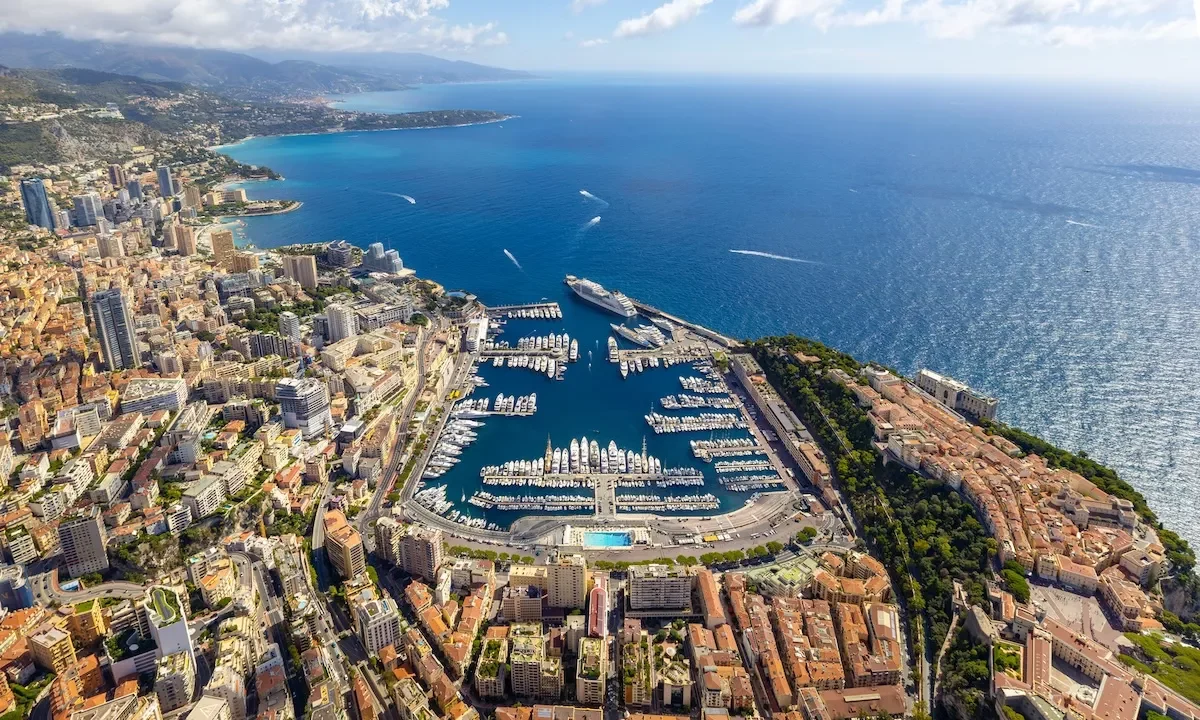
Here’s what you need to know about Monaco’s bold new tourism push. The tiny principality, just two square kilometers in size, officially launched its international campaign in April 2026 called “Monaco, Everything at Once.” The idea is to reframe Monaco’s extreme density as its biggest selling point — arguing that visitors can move from a Michelin-starred restaurant to a world-class museum to a Formula One circuit faster than most cities can get you across town on the subway. That’s a real shift from previous branding, which leaned heavily on the casino, the Grand Prix, and royal glamour. Critics worry the “everything” pitch sounds more like a buffet than a luxury experience, and that overpromising to visitors in such a compact space is a recipe for disappointment. Supporters say it smartly widens Monaco’s appeal without dropping its price point. If you’re considering a trip, the takeaway is simple — Monaco may actually deliver more variety than its reputation suggests, so plan loosely and leave room for the unexpected.
She had exactly 36 hours between a business meeting in Nice and a flight from Milan. On a friend’s dare, she decided to spend them in Monaco. By the time she boarded her train home, she had watched a classic car auction, eaten a three-course lunch on a terrace overlooking the Mediterranean, and stumbled into a contemporary art opening two blocks from the casino. She hadn’t planned any of it.
That accidental abundance is precisely what Monaco’s tourism authority is now trying to bottle and sell to the world. In April 2026, the Principality officially launched its international campaign, titled Monaco, Everything at Once. The slogan is simple. The ambition behind it is anything but.
The Debate Monaco’s New Campaign Has Ignited
The campaign arrives at a loaded moment for luxury travel. Post-pandemic tourism has fractured into two competing philosophies: slow travel, which prizes depth and stillness, and intensity travel, which prizes maximum experience per hour. Monaco has planted its flag firmly in the second camp.
That choice has split observers. On one side, tourism analysts and brand strategists argue the campaign is a shrewd, overdue correction. Monaco has long been underselling its own variety. On the other side, critics warn that cramming luxury, culture, motorsport, gastronomy, and nightlife into a single pitch risks diluting each of them, turning a principality into a theme park brochure.
The stakes are real. Monaco’s economy depends heavily on tourism and financial services. Strengthening leisure travel demand, particularly among younger high-net-worth travelers who prioritize experience over status, is a strategic necessity, not a marketing experiment.
Why the ‘Everything at Once’ Argument Has Real Teeth
Supporters of the campaign make a compelling geographic point first. Monaco covers roughly two square kilometers. That compression, which other destinations might treat as a liability, becomes an asset when framed correctly. A visitor can move from a Michelin-starred restaurant to a world-class oceanographic museum to a Formula One circuit in the time it takes to cross a mid-sized European city by subway.
The campaign’s own premise, as reported by Monaco Life, is that this density has been systematically underplayed. Previous branding leaned hard on the casino, the Grand Prix, and the royal family. Those are powerful symbols, but they also create a narrow mental image that excludes travelers who don’t gamble, don’t follow motorsport, and aren’t celebrity-watching.
By pivoting to abundance rather than exclusivity, Monaco potentially widens its appeal without lowering its price point. That is a difficult balance to strike, and the campaign appears to have thought carefully about it. The messaging, according to Riviera Radio, targets leisure travelers specifically, not just the ultra-wealthy segment that already knows Monaco intimately.
There is also a timing argument. Monaco’s tourism rebounded strongly in 2025, creating a window of momentum. Launching a major international campaign while sentiment is already positive is smart sequencing. It amplifies an existing trend rather than trying to reverse a negative one.
The Case Against: When ‘Everything’ Becomes Nothing in Particular
Critics of the campaign are not arguing that Monaco lacks variety. They are arguing that the framing itself is a problem. Luxury travel, historically, has sold restraint. The most prestigious destinations in the world — Kyoto, the Amalfi Coast, certain Swiss valleys — market themselves through selectivity, not abundance. Saying you offer everything at once is the language of a buffet, not a tasting menu.
| Destination | Core Brand Promise | Campaign Approach |
|---|---|---|
| Monaco (2026) | Density of experience | Everything at Once — abundance messaging |
| Kyoto, Japan | Depth and cultural immersion | Slow, curated, seasonal storytelling |
| Maldives | Isolation and exclusivity | Scarcity and privacy as the luxury |
| Dubai | Scale and spectacle | Superlatives — biggest, tallest, most |
The table above illustrates the risk. Dubai already owns the “everything, bigger” lane. If Monaco’s campaign reads as a smaller, more expensive version of that pitch, it loses its differentiation. Monaco’s historic edge was always that it felt curated, not sprawling. The casino had dress codes. The restaurants had waiting lists. The Grand Prix had paddock passes you couldn’t simply buy.
There is also a practical concern about visitor expectations. Campaigns that promise everything create travelers who arrive expecting everything. When a shop is closed on Sunday afternoon or a museum is at capacity, the gap between promise and reality becomes a social media complaint. Overpromising is a specific risk for compact destinations where the experience is highly concentrated and therefore highly visible.
“In luxury travel, it means adapting to a ‘more accessible luxury’ aimed at reaching a larger pool of potential clients.”
— Monaco Press Releases, via LinkedIn
That quote from Monaco’s own communications reveals the tension clearly. “More accessible luxury” is a phrase that contains a contradiction. Accessibility and luxury have historically been defined against each other. Resolving that tension in practice, not just in language, is the real challenge the campaign sets up.
What the Tourism Data Actually Suggests About Compact Luxury Destinations
The objective picture is more nuanced than either side acknowledges. Monaco’s tourism did rebound in 2025, suggesting underlying demand is healthy. The campaign launches into favorable conditions, not a recovery situation. That matters because brand campaigns perform differently depending on whether they are building on momentum or trying to create it from scratch.
The shift toward “more accessible luxury” also reflects a documented global trend. High-net-worth millennials and Gen Z travelers consistently report valuing experience density over price signals. They want to feel they used their time well, not just their money. A destination that can credibly claim you will do more in two days there than two weeks elsewhere speaks directly to that psychology.
| Travel Philosophy | Core Promise | Time Orientation | Target Traveler | Risk Level | Monaco Alignment |
|---|---|---|---|---|---|
| Intensity Travel | Maximum experiences per hour | Short, dense stays | Business travelers, thrill-seekers | High – can feel rushed | Primary – campaign's core identity |
| Slow Travel | Depth, stillness, cultural immersion | Extended stays, weeks+ | Retirees, remote workers | Low – may bore some | Minimal – contradicts campaign ethos |
| Luxury Curated Travel | Bespoke, pre-planned exclusivity | Flexible, quality-driven | High-net-worth individuals | Medium – cost vs. value | Partial – Monaco's heritage strength |
| Accidental Discovery | Unplanned serendipitous finds | Any duration | Spontaneous adventurers | Medium – unpredictable | High – mirrors the 36-hour anecdote |
| Destination Branding | Singular iconic identity | Campaign-driven cycles | Aspirational mass market | High – risks oversimplification | Contested – critics warn of theme park effect |
The data also suggests that awareness, not appeal, is Monaco’s primary problem. Most travelers who have visited Monaco rate it highly. The conversion gap is between people who find it appealing in the abstract and those who actually book it. A campaign designed to “strengthen awareness and desirability,” as TravelPulse reported, is addressing the right metric.
Where the data gets murkier is on the question of whether slogan-driven campaigns move the needle for destinations that are already famous. Monaco is not an undiscovered location. Everyone has heard of it. The challenge is changing the mental model people hold, and that is a slower, harder process than awareness advertising typically delivers.
The Editorial Position: Monaco Is Right to Try This, but the Execution Is Everything
The campaign is the correct strategic bet. Monaco has spent decades letting three or four iconic images do all the work. The casino, the yacht harbor, the Grand Prix circuit. Those images are powerful, but they are also limiting. They attract a specific type of visitor and repel everyone who doesn’t see themselves in that picture.
Reframing density as the core value proposition is genuinely smart. It is also honest. Monaco really does offer a remarkable concentration of high-quality experiences in a small area. The campaign is not inventing something false; it is surfacing something real that the marketing had been obscuring.
The risk is not in the idea. The risk is in the word “everything.” Everything is a promise that cannot be kept. The campaign would be stronger with a slightly more specific frame: not everything, but anything, within a single afternoon. That version of the pitch is both more credible and more intriguing.
What This Debate Means for Luxury Tourism Branding After 2026
Monaco’s campaign will be watched closely by other compact, high-cost destinations. Singapore, San Marino, Liechtenstein, and even city-states like Vatican City all face versions of the same challenge: how do you expand your visitor base without diluting the perception of exclusivity that justifies your price point?
If Monaco’s campaign succeeds in measurably increasing leisure travel bookings through 2026 and into 2027, it will validate the abundance model for small luxury destinations. It will also put pressure on larger, slower-moving destinations to articulate their own density of value more aggressively.
If the campaign underdelivers, it will reinforce the counterargument that luxury destinations should resist the temptation to broaden their pitch and instead double down on scarcity and selectivity. Either outcome will shape how destination marketing organizations think about the trade-off between reach and prestige for years to come.
The most interesting question is not whether Monaco can deliver everything at once. It almost certainly can, for the right visitor on the right day. The real question is whether a two-word slogan can actually change what a place means in the global imagination, or whether places, like people, are mostly stuck with the first impression they made decades ago.
Frequently Asked Questions

You Might Also Like
Air Travel Is Set to Double by 2050 and Asia Is Leading the Way
By 2050, the global aviation industry is expected to look almost unrecognizable compared to today…
British Airways Is Adding More Costa Rica Flights Than Most UK Travellers Realise
British Airways is adding more flights to Costa Rica — and moving them to a…
A-Rosa Sena Hits Amsterdam Bridge and Ends a Dream River Cruise
Two hundred and eighty travelers were aboard the luxury river cruise ship A-Rosa Sena when…
Leave a Reply