
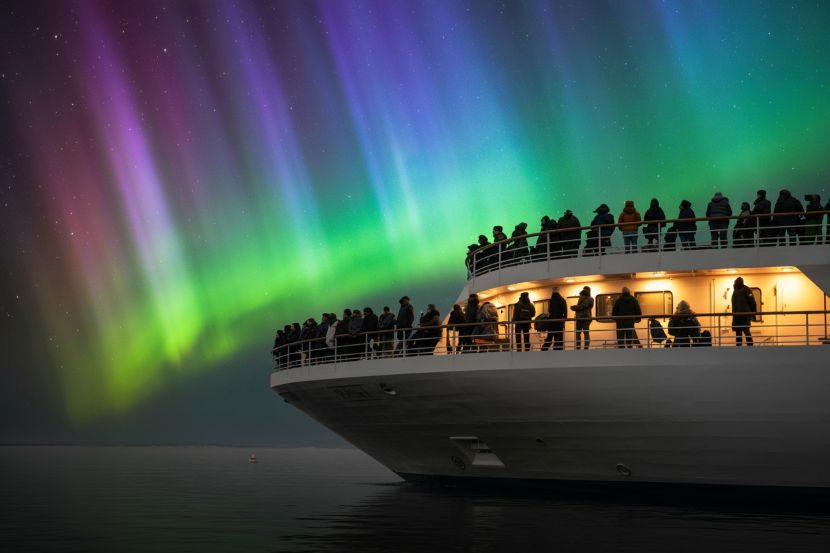
Alaska sits directly beneath the auroral oval — one of the few places on Earth where the northern lights appear not as a rare event, but as a regular feature of the night sky. For travelers who want to witness the aurora borealis without standing frozen in a field, a Northern Lights Alaska cruise offers something genuinely different: the spectacle of dancing lights above glaciers, fjords, and wilderness, viewed from the relative comfort of a ship moving through some of the most dramatic scenery on the planet.
The appeal is straightforward. You get the dark skies and high-latitude positioning that aurora chasing demands, combined with the kind of landscape — towering ice fields, wildlife-rich coastlines, dense temperate rainforest — that makes the daylight hours just as rewarding as the nights. For 2026, interest in these itineraries is running high, and for good reason.
Whether you’re planning your first trip to Alaska or returning to see it under a different kind of light, here’s what you actually need to know before booking.
When to Go: The Window That Actually Works
Timing matters more for aurora travel than almost any other type of trip. The confirmed best period for a Northern Lights Alaska cruise runs from late August through late April, when nights are long enough and dark enough for aurora displays to be visible.
September stands out as a particularly strong month. The autumnal equinox is known to boost geomagnetic activity, which increases the likelihood of aurora appearances. You also get the added benefit of autumn colors on the land and relatively mild temperatures compared to the deep winter months.
The core trade-off is simple: the closer you travel to midwinter, the longer your dark windows each night, but the colder and more challenging conditions become. Late summer and early fall offer a balance — genuine darkness, active aurora seasons, and landscapes that are still fully accessible for excursions.
What Makes an Alaska Cruise Different From Other Aurora Experiences
Most aurora hunting involves stationary waiting — booking a cabin in northern Scandinavia or Canada and hoping the sky cooperates. A cruise itinerary changes that dynamic entirely. The ship moves, which means you’re not locked to one location if cloud cover rolls in. Crew and naturalists on aurora-focused voyages typically monitor forecasts and position the vessel for the best viewing conditions available each night.
Beyond the lights themselves, the daytime experience is genuinely world-class. Alaska’s Inside Passage and Gulf Coast waters pass through glacier country, and many itineraries include stops near Glacier Bay, Kenai Fjords, or the Tongass National Forest — the largest national forest in the United States. Wildlife sightings of humpback whales, orcas, sea otters, brown bears, and bald eagles are common along these routes.
The combination of aurora viewing at night and wilderness exploration during the day is what separates this experience from a simple aurora trip or a standard Alaska summer cruise.
Key Planning Details for a Northern Lights Alaska Cruise
| Factor | Details |
|---|---|
| Best overall season | Late August through late April |
| Peak aurora month | September (autumnal equinox boosts geomagnetic activity) |
| Aurora visibility requirement | Dark nights — not available during Alaska’s summer midnight sun period |
| Key natural feature | Alaska sits beneath the auroral oval, ensuring frequent displays |
| Daytime highlights | Glaciers, fjords, temperate rainforest, and diverse wildlife |
| Trip style | Combines ship-based comfort with land excursions |
One practical note: Alaska’s summer cruising season — the period most people associate with Alaska travel — runs roughly from May through early August. That window is spectacular for scenery and wildlife, but the near-constant daylight makes aurora viewing essentially impossible. If northern lights are your priority, you need to book outside that window entirely.
What This Trip Actually Feels Like — and Who It’s For
A Northern Lights Alaska cruise isn’t a passive experience. Passengers who get the most out of these itineraries tend to be people who are comfortable with variable conditions — clouds happen, aurora forecasts shift, and the wilderness operates on its own schedule. The reward for that flexibility is extraordinary.
On a clear night, watching green and violet curtains of light ripple across a sky reflected in glacier water is the kind of moment that’s genuinely difficult to describe. Travelers who have done both land-based aurora trips and cruise-based ones consistently describe the cruise version as more complete — the scenery provides context and scale that a remote cabin simply can’t match.
The trip suits solo travelers, couples, and small groups equally well. It’s particularly well-suited to people who want adventure without sacrificing comfort — the ship provides a warm base, reliable meals, and expert guidance, while the excursions push into genuinely wild territory.
How to Approach Booking for 2026
With aurora travel surging in popularity globally, the best cabins on Alaska aurora cruises — particularly those running in September — tend to fill well ahead of departure. If your dates are flexible, late August and October also fall within the confirmed aurora season and may offer more availability.
Look for itineraries that specifically highlight aurora viewing as a feature rather than a footnote. Some voyages include onboard naturalists or aurora guides who provide briefings, night watches, and real-time sky condition updates. That kind of dedicated programming makes a measurable difference in how much of the experience passengers actually catch.
Layering your trip — arriving a few days early in Anchorage or Juneau, for example — also expands your opportunities. More nights in the aurora zone means more chances to see the lights, and Alaska’s gateway cities offer their own worthwhile experiences.
Frequently Asked Questions
What is the best time of year for a Northern Lights Alaska cruise?
The confirmed aurora season runs from late August through late April, with September considered the peak month due to increased geomagnetic activity around the autumnal equinox.
Why is Alaska such a reliable place to see the northern lights?
Alaska sits beneath the auroral oval, a zone of consistent aurora activity that makes displays both frequent and vivid compared to many other destinations.
Can you see the northern lights on a standard Alaska summer cruise?
No — Alaska’s summer midnight sun means there is no true darkness from roughly May through early August, making aurora viewing impossible during that window.
What else is there to do on a Northern Lights Alaska cruise besides watching the aurora?
Daytime itineraries typically include glacier viewing, fjord cruising, wildlife spotting, and land excursions into wilderness areas such as temperate rainforests and coastal habitats.
Is a cruise better than a land-based trip for seeing the aurora in Alaska?
Cruise itineraries offer the advantage of mobility — ships can reposition to avoid cloud cover — while also providing the context of Alaska’s dramatic scenery that land-based stays cannot replicate.
How far in advance should I book a 2026 Northern Lights Alaska cruise?
Demand for aurora-focused itineraries is high, and September departures in particular fill early — booking as far in advance as possible is advisable to secure preferred cabin options and dates.



Leave a Reply