
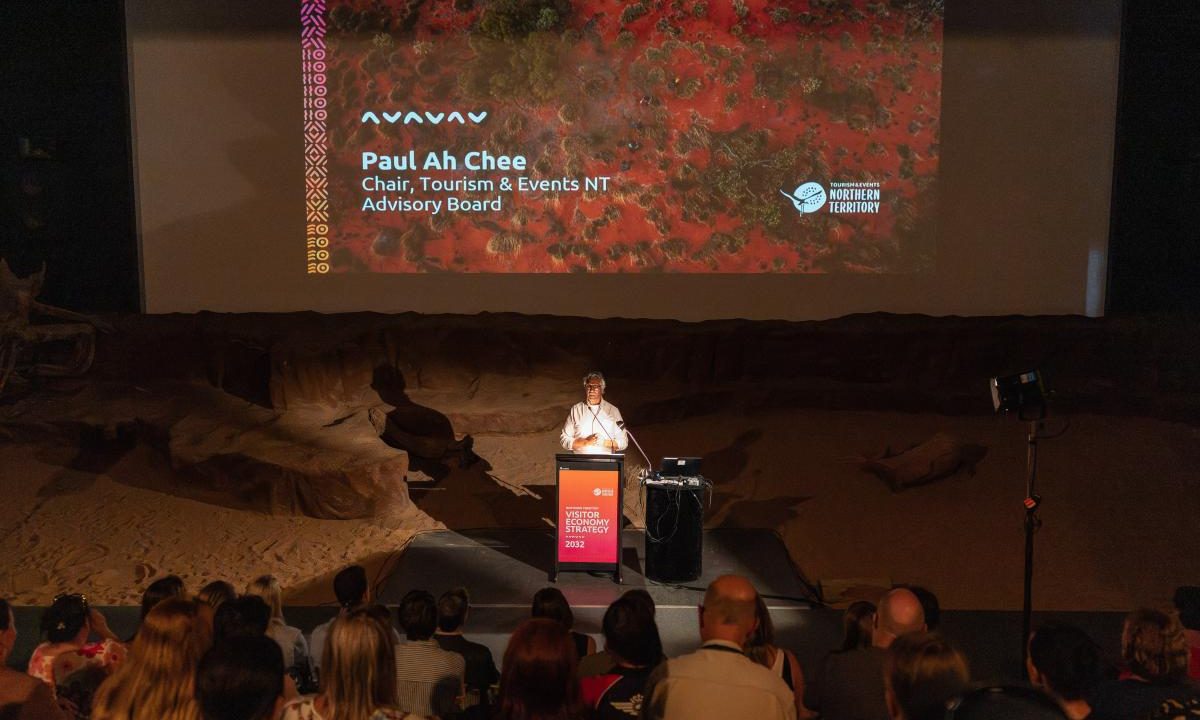
Three billion dollars. That’s the target sitting at the center of Australia’s most ambitious regional tourism plan in recent memory — and the Northern Territory is now officially on the clock to deliver it.
The Northern Territory Visitor Economy Strategy 2032 has been formally unveiled, laying out a sweeping roadmap designed to transform one of Australia’s most iconic but historically underleveraged destinations into a serious global tourism powerhouse. The plan sets a clear headline goal: grow the Territory’s visitor economy to $3 billion and attract 1.7 million individual visits by 2032.
For a region that has long traded on its extraordinary natural landscapes and deep cultural heritage without fully capitalizing on either, this strategy represents a significant shift in ambition — and in approach.
What the Northern Territory Visitor Economy Strategy 2032 Actually Sets Out to Do
At its core, this is a long-term economic blueprint, not a marketing campaign. The strategy was built through deep collaboration with industry professionals and received backing from national partners — a process designed to ensure the plan reflects on-the-ground realities rather than top-down assumptions.
The result is a framework that doesn’t treat the Northern Territory as a single, uniform destination. Instead, it establishes meticulous regional frameworks specifically tailored to the distinct needs and opportunities of two key areas: the Top End and Central Australia. Both regions have different visitor profiles, infrastructure challenges, and cultural drawcards, and the strategy acknowledges that a one-size-fits-all approach won’t work.
The broader vision is built around converting what officials describe as surging international and domestic interest in the Territory into tangible, lasting economic outcomes — not just visitor numbers that look good on paper, but genuine revenue flowing into local communities and businesses.
The Numbers Behind the Plan
The strategy’s targets are specific enough to be meaningful and ambitious enough to demand real action. Here’s a snapshot of what the plan is working toward:
| Target | Goal by 2032 |
|---|---|
| Visitor Economy Value | $3 billion AUD |
| Individual Visitor Journeys | 1.7 million |
| Regional Focus Areas | Top End and Central Australia |
| Strategy Horizon | 2032 |
These figures position the Northern Territory as a destination that is no longer content to be a bucket-list afterthought. The strategy signals a deliberate push to compete — both nationally and on the global stage — for a larger share of high-value tourism spend.
Why This Matters Beyond the Territory’s Borders
Australia’s tourism sector has been working hard to rebuild and reposition itself in the post-pandemic travel landscape. International visitor numbers have been recovering, and competition among destinations — both within Australia and globally — has intensified sharply.
Against that backdrop, the Northern Territory’s strategy carries weight beyond its own borders. A successful $3 billion visitor economy in the Territory would strengthen Australia’s overall tourism narrative, particularly around nature-based, cultural, and Indigenous tourism experiences — segments that are growing in global demand.
Supporters of the plan argue that the Territory’s combination of ancient landscapes, living Indigenous culture, and genuinely remote adventure experiences is difficult for any other destination in the world to replicate. The strategy appears designed to leverage exactly that uniqueness rather than compete on price or volume alone.
The involvement of national partners in developing the plan also suggests this isn’t purely a Territory-level initiative. There’s federal-level interest in seeing the Northern Territory reach its tourism potential, which could translate into coordinated marketing efforts and infrastructure investment down the line.
What This Means for Travelers, Businesses, and Local Communities
For travelers, the strategy signals that the Northern Territory is actively investing in the visitor experience — which should mean better infrastructure, more developed itineraries, and a stronger range of accommodation and touring options as the plan takes effect over the coming years.
For tourism businesses operating in the region — whether in Darwin, Alice Springs, Kakadu, or anywhere along the many iconic routes in between — the strategy represents an official commitment to growing the pool of visitors they can serve. The regional frameworks tailored to the Top End and Central Australia suggest that operators in both areas can expect targeted support rather than generic territory-wide initiatives.
For local and Indigenous communities, the implications run deeper. Tourism in the Northern Territory has long intersected with questions of cultural ownership, land management, and economic equity. A strategy of this scale, built with industry input, will need to navigate those dynamics carefully if the $3 billion target is to represent genuine prosperity rather than growth that bypasses the communities at the heart of the Territory’s appeal.
What Comes Next for the 2032 Strategy
The strategy has now been officially released, which marks the transition from planning to implementation. The framework is in place; the harder work of executing it begins now.
The 2032 target year gives stakeholders roughly six years to deliver on the vision. That’s enough time to build real momentum — but not so long that urgency can be deferred. Progress against the 1.7 million visitor journeys target and the $3 billion economic value goal will likely become key benchmarks for measuring whether the strategy is working.
Regional implementation through the Top End and Central Australia frameworks will be worth watching closely. How those tailored approaches are resourced and activated will determine whether the strategy’s ambitions translate into outcomes that are felt across the Territory, not just in headline statistics.
For now, the Northern Territory has made its intentions clear — and the tourism world is paying attention.
Frequently Asked Questions
What is the Northern Territory Visitor Economy Strategy 2032?
It is a comprehensive long-term blueprint designed to grow the Northern Territory’s visitor economy to $3 billion and attract 1.7 million individual visitor journeys by the year 2032.
Who was involved in developing this strategy?
The strategy was developed through collaboration with industry professionals and received backing from national partners, according to the plan’s official release.
Which regions of the Northern Territory does the strategy focus on?
The strategy establishes specific regional frameworks for two key areas: the Top End and Central Australia, each with tailored approaches to growth.
When was the strategy officially released?
The Northern Territory Visitor Economy Strategy 2032 was officially unveiled and presented to the public in March 2026.
How many visitors is the strategy aiming to attract?
The strategy targets 1.7 million individual visitor journeys to the Northern Territory by 2032.
Will the strategy affect international as well as domestic visitors?
Yes — the strategy is designed to convert both surging international and domestic interest in the region into tangible economic outcomes, according to the plan’s stated vision.




Leave a Reply