
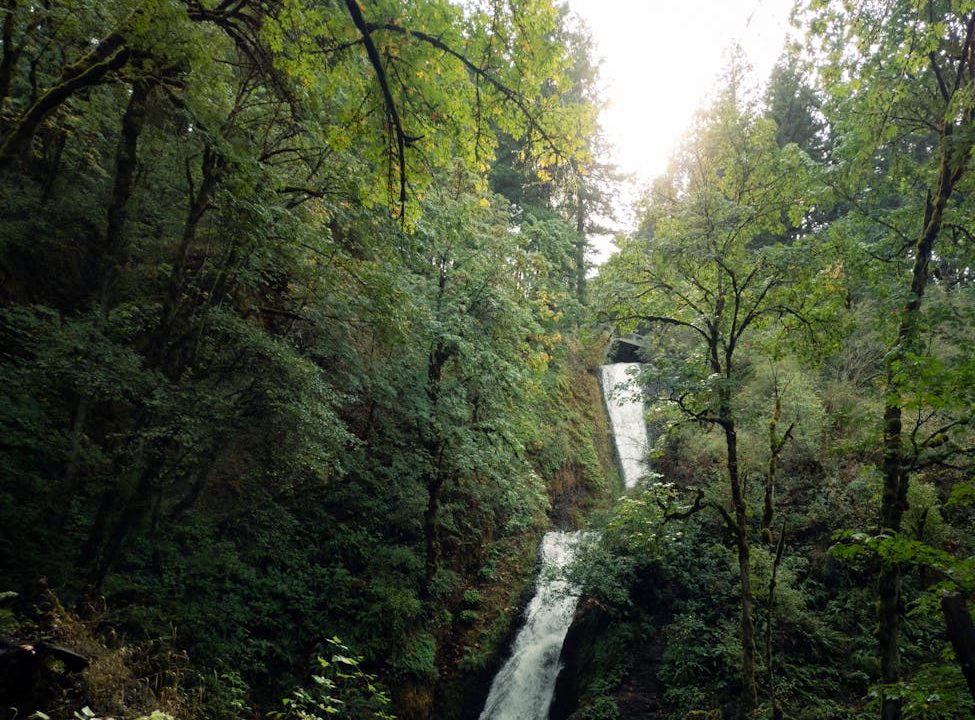
Oregon hides dozens of world-class waterfalls beyond Multnomah Falls — and the seven secret cascades in this guide reward adventurous hikers with solitude, raw beauty, and experiences that most tourists will never know exist.
Oregon’s Best-Kept Waterfall Secrets
Oregon is a state practically engineered by water. Thousands of miles of rivers carve through ancient lava fields, cathedral forests, and glacier-carved valleys, dropping over cliffs and mossy ledges in cascades so beautiful they feel like something conjured from a dream. Most visitors to the state make a beeline for Multnomah Falls in the Columbia River Gorge — and honestly, who can blame them? It’s magnificent. But pull up any Oregon topographic map and you’ll quickly realize that Multnomah is just the loudest member of a very large choir.
We spent months off the beaten path, talking to local hikers, Forest Service rangers, and stubborn old trail blazers who’ve been bushwhacking these hills since before GPS was a concept. What we found was a state absolutely riddled with secret waterfalls — places where the only footprints in the mud are from elk, and the roar of falling water is yours alone to enjoy. Here are seven of Oregon’s most spectacular hidden cascades, and exactly how to find them.
Featured
(Upper Proxy Falls)
River Falls at Peak
(Ramona Falls)
1. Pinard Falls — Umpqua National Forest
Deep in the Umpqua National Forest south of Cottage Grove, Pinard Falls drops a dramatic 60 feet into a fern-draped grotto that genuinely looks like something from a fantasy novel. The trail to reach it is a gentle 1.4-mile round trip through old-growth Douglas fir, and yet on most weekends you’ll find yourself entirely alone. The forest here is cathedral-quiet except for the distant rumble of the falls, which grows into a full-throated roar as you round the final bend. Look for the unmarked trailhead off Row River Road — the Forest Service keeps signage deliberately minimal, and that’s a feature, not a bug.
2. Wolf Creek Falls — South Umpqua River Trail
Don’t confuse this gem with the more famous (and still underrated) Susan Creek Falls nearby. Wolf Creek Falls on the South Umpqua River Trail rewards hikers who push past the first mile with a stunning two-tiered drop of nearly 75 feet, framed by bigleaf maples that turn molten gold every October. The upper tier is dramatic; the lower tier, visible only if you scramble carefully down a side path worn by curious deer, is intimate and heart-stopping. This is old Oregon — wet, green, and glittering with moss so thick it feels like the trees are wearing sweaters.
3. Proxy Falls — Three Sisters Wilderness
Technically, Proxy Falls appears on some maps, but it remains shockingly unknown outside of Oregon hiking circles. Located near the turnoff for the McKenzie Pass Scenic Byway, the 1.7-mile loop trail to Proxy Falls winds through a surreal lava field before depositing you at not one but two spectacular waterfalls. Upper Proxy fans out over a 200-foot basalt wall in delicate curtains of white water that literally disappear into the porous lava at the bottom — the water doesn’t pool, it simply vanishes into the earth. It is, without exaggeration, one of the most otherworldly sights in the American West.
4. Ramona Falls — Mount Hood Wilderness
Yes, Ramona Falls has a trail name and a parking area — but its location near Mount Hood doesn’t mean it’s crowded. The 7-mile round-trip hike crosses the Sandy River twice on seasonal bridges (check conditions before you go) and climbs gently through alpine forest before revealing a waterfall that cascades over a massive mossy basalt formation like a bridal veil spread across a cathedral organ. The sheer scale of the basalt columns behind the falls makes this one of the most photographically stunning waterfalls in the Pacific Northwest. Visit in June when snowmelt turns the volume up to eleven.
5. Niagara Falls (Oregon’s Version) — Santiam State Forest
Oregon has its own Niagara, and it’s nothing like the New York version — which is to say, it’s far more mysterious and far less crowded. Tucked inside Santiam State Forest east of Salem, this forgotten waterfall plunges through a narrow basalt slot canyon draped in licorice fern and sword fern. The trail is unmaintained and requires some confident route-finding, but hikers who reach the canyon rim are rewarded with views of a powerful, churning cascade that few Oregonians even know exists. This is the kind of place that makes you feel like an actual explorer.
6. Steelhead Falls — Deschutes River, Central Oregon
Central Oregon is famous for its high desert landscape, so most visitors never think to look for waterfalls here. That’s exactly why Steelhead Falls on the Deschutes River remains one of Oregon’s best-kept secrets. A short but steep 2-mile round-trip hike drops into a dramatic basalt gorge where the Deschutes River pinches between canyon walls and erupts over a 20-foot ledge into a jade-green pool. Wild horses have been spotted on the canyon rim. Native steelhead trout muscle upstream through the churning water below. It’s rugged, raw, and nothing like the Oregon most tourists experience.
7. Deschutes River Falls — Near Maupin
Not to be confused with Steelhead Falls, this lesser-known gem near the whitewater rafting town of Maupin is accessed via a rough dirt road that keeps most casual tourists at bay. The falls themselves are wide and powerful — over 100 feet across during spring runoff — and set against the ochre and rust-colored walls of the Deschutes Canyon. Come in April or May when the flow is at its peak and the canyon walls are dusted with yellow arrowleaf balsamroot wildflowers. Bring a picnic, bring a camera, and bring patience for the washboard road. Every jarring mile is worth it.
Best Time to Visit
Late spring — particularly April through June — is prime waterfall season in Oregon. Snowmelt from the Cascades dramatically increases flow on nearly every falls in the state. That said, autumn brings its own magic, with golden foliage framing the cascades and far fewer hikers on the trail.
What to Bring
Oregon’s waterfall trails are almost always wet. Waterproof boots are not optional — they’re survival gear. Bring trekking poles for stream crossings, layers for the microclimate near the falls (it’s always colder and wetter than you expect), and a paper map or downloaded offline map. Cell service near most of these locations is nonexistent.
Seasonal bridges (such as those on the Ramona Falls trail) are removed in winter and may not be reinstalled until late spring. Unmaintained trails like Oregon’s Niagara require confident navigation skills. Cell service is nonexistent near most of these locations — always download offline maps and tell someone your plans before heading out.
Leave No Trace
The reason these waterfalls remain pristine is because relatively few people know about them. Please keep it that way. Pack out everything you bring in, stay on established trails where they exist, and resist the urge to tag these locations publicly on social media. Some beautiful things are worth protecting through silence.

Leave a Reply