
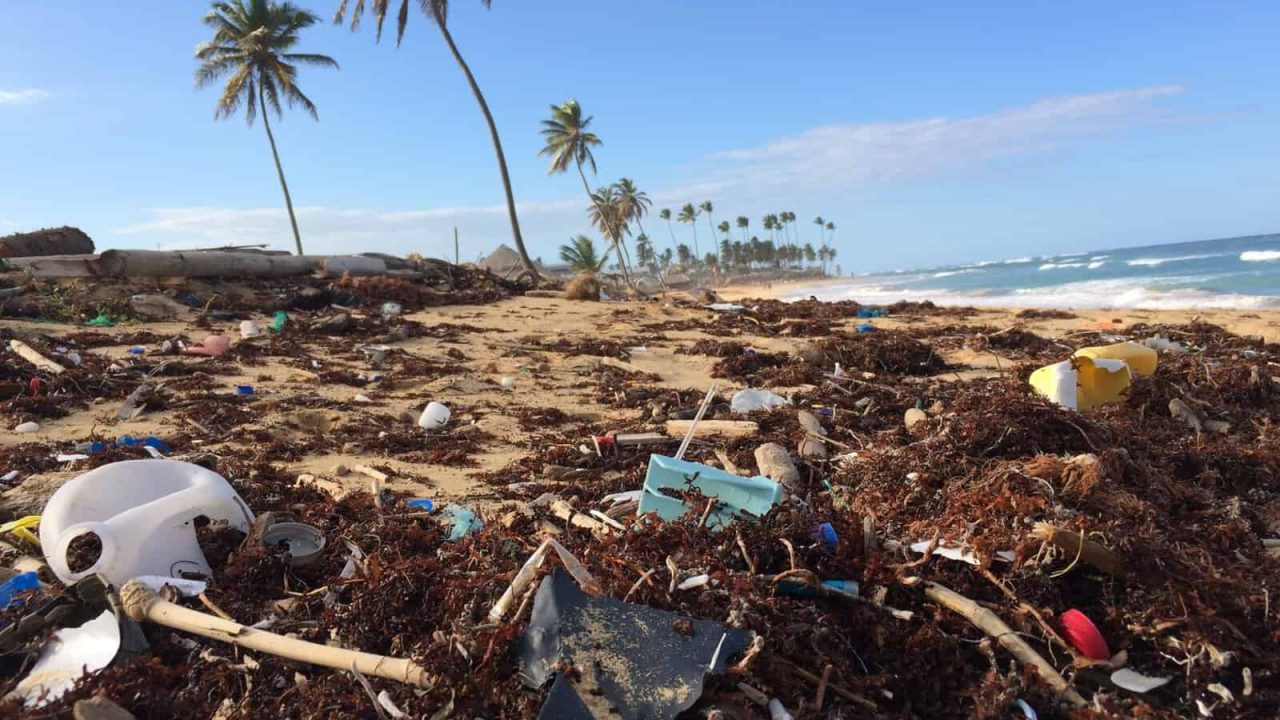
The Pacific Islands have spent decades selling paradise — and now they’re asking visitors to help protect it. A new campaign launched at the South Pacific Tourism Exchange (SPTE) 2026 is making a direct ask of travelers: swap single-use plastics for sustainable alternatives, and carry that commitment with you when you travel through some of the world’s most ecologically fragile destinations.
The initiative, called ‘This for That’, was formally unveiled in Nadi, Fiji — a central hub for regional travel — by Fiji’s Deputy Prime Minister and Minister for Tourism and Civil Aviation, Viliame Gavoka. Its arrival marks a notable shift in how Pacific governments and tourism bodies are framing the relationship between visitors and the environment they come to experience.
The campaign was introduced alongside a broader acknowledgment that plastic pollution has been quietly building beneath the surface of the Pacific’s turquoise waters, and that the travel industry itself has contributed to the problem it profits from promoting.
What the ‘This for That’ Campaign Actually Means
The name is straightforward by design. ‘This for That’ frames sustainable travel as a simple exchange: give up something harmful, get something better in return. The concept is built around replacing single-use plastic items with reusable alternatives — and making that swap feel like a natural part of traveling rather than an inconvenience.
The campaign was launched through the Pacific Tourism Organisation (SPTO), which coordinated the rollout with the Fijian government. By choosing SPTE 2026 as the platform — a major industry gathering — organizers signaled that this isn’t a fringe environmental message. It’s being positioned as a core part of how the Pacific wants to be seen and visited going forward.
The launch in Nadi was described as a united front between regional governments and the tourism sector, with environmental stewardship framed not as a burden on travelers but as an integrated part of the travel experience itself.
The Crisis Driving the Campaign
The Pacific Islands face a plastic pollution problem that is both visible and deeply structural. The region’s geography — thousands of islands spread across an enormous ocean — makes waste management extraordinarily difficult. Much of the plastic that ends up in Pacific waters comes from tourism activity, shipping lanes, and broader ocean currents carrying debris from distant coastlines.
Coral reefs, which support entire marine ecosystems and underpin the tourism economies of countries like Fiji, are among the most affected. Plastic waste entangles marine life, smothers coral, and breaks down into microplastics that enter the food chain. The very natural features that draw millions of visitors each year are under direct threat from the habits those visitors bring with them.
Campaign advocates argue that the travel industry has a particular responsibility here — it promotes the beauty of these places while simultaneously generating some of the waste that degrades them.
| Campaign Element | Detail |
|---|---|
| Campaign Name | ‘This for That’ |
| Launch Event | South Pacific Tourism Exchange (SPTE) 2026 |
| Launch Location | Nadi, Fiji |
| Presenting Official | Viliame Gavoka, Deputy Prime Minister and Minister for Tourism and Civil Aviation of Fiji |
| Organizing Body | Pacific Tourism Organisation (SPTO) |
| Core Focus | Replacing single-use plastics with sustainable alternatives |
| Target Audience | International and regional travelers to the Pacific Islands |
Why This Matters for Anyone Planning to Visit the Pacific
If you’re traveling to Fiji, Samoa, Vanuatu, or anywhere else across the Pacific in 2026 or beyond, this campaign is likely to shape what you encounter on the ground. Hotels, tour operators, and transport providers connected to the SPTO network are expected to align with the campaign’s principles — which means travelers may increasingly find single-use plastics phased out of their experience.
That’s not a small thing. For many travelers, the convenience of bottled water, plastic-wrapped amenities, and disposable packaging is simply assumed. The ‘This for That’ model asks visitors to arrive prepared: with reusable water bottles, bags, and a willingness to adapt.
The broader implication is that sustainable travel in the Pacific is moving from optional to expected. Officials have noted that environmental stewardship is being integrated into the fabric of the travel experience — not offered as an add-on for eco-conscious visitors, but embedded in how the region operates.
For the Pacific Islands themselves, the stakes are existential. These are nations on the front lines of climate change and environmental degradation. The health of their reefs, beaches, and ocean ecosystems is inseparable from their economic survival. Tourism is one of their primary revenue sources — and the environment is the product.
What Happens Next for the Campaign
The SPTE 2026 launch was the formal beginning, not the finish line. With the SPTO and the Fijian government now publicly committed to the initiative, the next phase involves rolling out the campaign across member nations and tourism businesses throughout the Pacific region.
The campaign’s framing as an industry-wide movement — rather than a government regulation — suggests the approach will rely heavily on voluntary adoption by tourism operators, airlines, accommodation providers, and the travelers themselves. Whether that voluntary model proves sufficient to create measurable change will be one of the key questions as 2026 progresses.
Supporters of the initiative argue that embedding sustainability into the travel experience, rather than legislating it from outside, is more likely to produce lasting behavioral change among the millions of visitors the Pacific welcomes each year. The coming months will test whether the ‘This for That’ framework can scale from a high-profile launch event into something that genuinely shifts how people travel through one of the world’s most environmentally sensitive regions.
Frequently Asked Questions
What is the ‘This for That’ campaign?
It is a sustainable travel initiative launched by the Pacific Tourism Organisation and the Fijian government that asks travelers to replace single-use plastics with reusable alternatives when visiting Pacific Island destinations.
Where and when was the campaign launched?
The campaign was officially launched in Nadi, Fiji, during the South Pacific Tourism Exchange (SPTE) 2026.
Who presented the campaign launch?
Fiji’s Deputy Prime Minister and Minister for Tourism and Civil Aviation, Viliame Gavoka, formally presented the initiative at the SPTE 2026 event.
Which organization is behind the campaign?
The Pacific Tourism Organisation (SPTO), in coordination with the Fijian government, is the primary body driving the initiative across the Pacific region.
Will travelers be required to follow the campaign’s guidelines?
The campaign appears to be structured around voluntary adoption by tourism operators and travelers rather than mandatory regulation, though this has not been fully detailed in confirmed announcements.
Why is plastic pollution such a significant issue for the Pacific Islands?
The Pacific Islands’ coral reefs, marine ecosystems, and tourism economies depend directly on healthy ocean environments, which are threatened by plastic waste generated in part by travel activity in the region.



Leave a Reply