
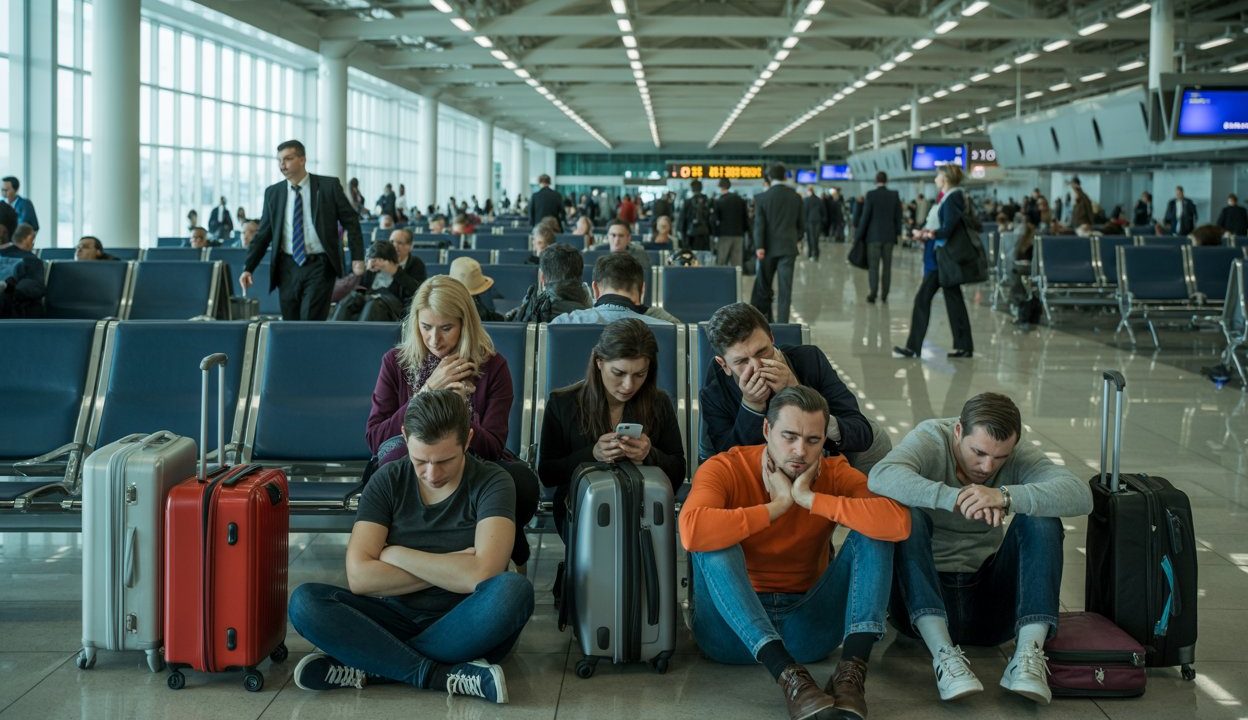
More than 30 flights have been cancelled across Paris and other major French airports, leaving thousands of passengers stranded or scrambling to rebook on routes stretching from the Middle East to Scandinavia to the United Kingdom.
The disruption is widespread. A total of 31 flights have been cancelled across five airports — Charles de Gaulle, Orly, Nice Côte d’Azur, Lyon Saint-Exupéry, and Bordeaux-Mérignac — hitting airlines including Air France, SAS, and Lufthansa. The affected routes cover some of Europe’s busiest travel corridors, and the timing is particularly painful for passengers with connecting itineraries through Paris hubs.
Whether you’re booked on a business trip to Frankfurt, a holiday to Dubai, or a short-haul hop to London, this disruption has the potential to ripple far beyond the flights that are directly cancelled.
Which Airports and Airlines Are Caught Up in the Paris Flight Cancellations
The cancellations are not limited to Paris. While Charles de Gaulle and Orly are the largest hubs affected, the disruption has spread to regional airports, meaning passengers departing from Nice, Lyon, and Bordeaux are also facing uncertainty.
Air France, as France’s flag carrier and the dominant operator at both CDG and Orly, is among the airlines with cancelled services. SAS and Lufthansa — two of Europe’s most active carriers on French routes — are also listed among those with affected flights. The combination of a major national carrier and key European operators means the disruption is being felt across a broad network, not just a handful of niche routes.
The destinations hit span multiple continents and travel categories. Long-haul routes to the Gulf — including Dubai, Bahrain, Riyadh, and Doha — are affected alongside medium-haul services to Tel Aviv and Oslo, and short-haul European connections to Frankfurt, London, Berlin, Munich, Amsterdam, Toulouse, Nice, and Marseille.
A Full Look at What’s Been Cancelled
Here is a breakdown of the confirmed scope of the disruptions based on available information:
| Airport | Airlines Affected | Sample Destinations Impacted |
|---|---|---|
| Charles de Gaulle (CDG) | Air France, Lufthansa, SAS | Dubai, Oslo, Frankfurt, Amsterdam, Tel Aviv |
| Orly (ORY) | Air France | London, Nice, Toulouse, Marseille |
| Nice Côte d’Azur | Multiple carriers | Paris, European connections |
| Lyon Saint-Exupéry | Multiple carriers | Paris, European connections |
| Bordeaux-Mérignac | Multiple carriers | Paris, European connections |
The mix of domestic and international routes means this isn’t just a problem for overseas travellers. Passengers using Paris as a transit point between regional French cities and international destinations face a compounded risk — their connecting flight may be cancelled even if their first leg operates normally.
Why This Matters Beyond the Immediate Cancellations
When flights are cancelled at a hub the size of Charles de Gaulle — one of Europe’s busiest airports — the knock-on effects move fast. Passengers booked on later flights can find themselves affected by aircraft positioning problems, crew availability issues, and gate congestion even when their own flight isn’t directly listed as cancelled.
The routes involved here are not low-traffic. Dubai, Frankfurt, Amsterdam, and London are among the highest-volume connections in and out of France. Cancellations on these corridors affect business travellers, tourists, and people travelling for personal reasons in roughly equal measure.
For passengers travelling to destinations like Bahrain, Riyadh, Doha, and Tel Aviv, rebooking options may be more limited than on purely European routes, given fewer competing carriers and less frequent schedules. Those travellers face a harder recovery path if their flight is among those cancelled.
What Affected Passengers Should Do Right Now
If you have a flight booked through any of the five affected airports, the priority is to check your flight status directly with your airline — not through third-party apps, which can lag behind real-time changes. Most major carriers, including Air France and Lufthansa, offer rebooking options without change fees when cancellations are confirmed on their end.
Passengers with travel insurance should document everything: cancellation notices, any out-of-pocket expenses for meals or accommodation, and correspondence with the airline. European Union passenger rights rules (EC 261/2004) generally entitle passengers to compensation and care when flights are cancelled at EU airports under certain conditions — it’s worth understanding what applies to your specific situation.
Those on connecting itineraries should contact their airline as soon as possible. Waiting until the last minute significantly reduces the available rebooking options, particularly on routes where seat availability is already tight.
The situation across French airports remains fluid, and further updates are expected as airlines work through the affected schedules. Passengers are strongly advised to monitor official airline channels rather than waiting for airport announcements alone.
Frequently Asked Questions
How many flights have been cancelled in total?
A total of 31 flights have been cancelled across the five affected French airports.
Which airports are affected by the cancellations?
Charles de Gaulle, Orly, Nice Côte d’Azur, Lyon Saint-Exupéry, and Bordeaux-Mérignac are all affected.
Which airlines have had flights cancelled?
Air France, SAS, and Lufthansa are among the confirmed airlines with cancelled services.
Which destinations are impacted by the disruptions?
Affected routes include Dubai, Bahrain, Riyadh, Tel Aviv, Doha, Oslo, Frankfurt, London, Toulouse, Nice, Berlin, Munich, Marseille, and Amsterdam.
What is causing the cancellations?
The specific cause of the disruptions has not been confirmed in the available information at this time.
Are domestic French routes also affected?
Yes — domestic routes including services to Toulouse, Nice, and Marseille are among those impacted, not just international flights.


Leave a Reply