
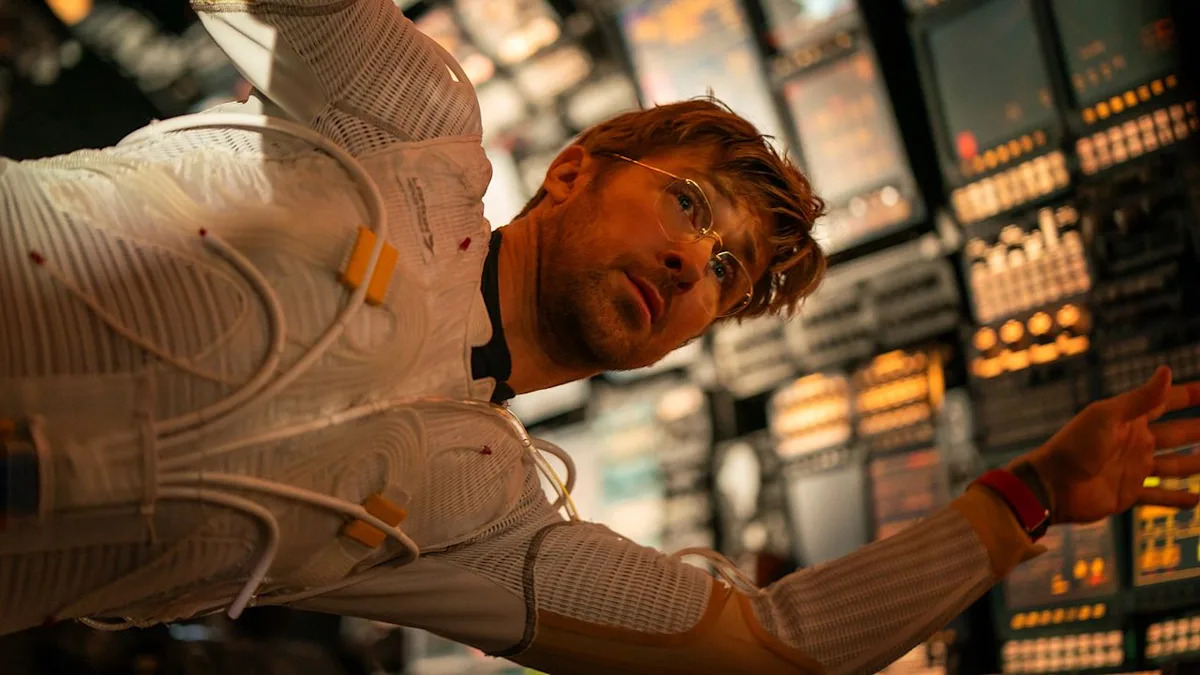
What if the movie that Hollywood infamously fell apart over was actually the one we needed most? That question has quietly resurfaced now that Phil Lord and Chris Miller — the directing duo fired from Solo: A Star Wars Story back in 2017 — have delivered what early audiences are calling one of the best sci-fi films in years with Project Hail Mary.
Project Hail Mary doesn’t just prove Phil Lord and Chris Miller are talented — it shows with painful clarity exactly what kind of talent Lucasfilm discarded when it replaced them on Solo: A Star Wars Story.
The film, which features aliens, interstellar adventure, action, and genuine suspense, is a reminder of exactly what Lord and Miller bring to a project. And for a lot of Star Wars fans, watching it stings just a little — because it raises the same uncomfortable question all over again: what did we actually lose when Lucasfilm let them go?
The answer, based on what Project Hail Mary demonstrates, might be more than anyone wanted to admit at the time.
What Lord and Miller Actually Do That Nobody Else Does
Phil Lord and Chris Miller have one of the most distinctive creative fingerprints in modern Hollywood. They turned a toy commercial into The Lego Movie, a dated TV premise into two genuinely funny Jump Street films, and an animated Spider-Man spinoff into an Oscar-winning cultural landmark with Spider-Man: Into the Spider-Verse.
The throughline in all of it is the same: they take material that sounds like it shouldn’t work and find the emotional and comedic truth buried inside it. They don’t just execute a concept — they interrogate it, play with audience expectations, and usually end up making something that feels alive in a way that slicker, more controlled productions don’t.
— On the Lord & Miller creative method
That’s exactly what Project Hail Mary appears to deliver. A sci-fi epic built around interstellar stakes and an unlikely connection between species — the kind of story that demands both spectacle and genuine heart. Lord and Miller, by all accounts, brought both.
The Solo Situation: What Actually Happened
When Lord and Miller were hired to direct Solo: A Star Wars Story, it seemed like an inspired pairing. A charming, roguish protagonist with a comedic edge, a franchise that needed some looseness after the rigidity of the saga films — it made sense on paper.
What followed became one of the most-discussed director departures in recent Hollywood history. Lucasfilm and producer Kathleen Kennedy ultimately replaced Lord and Miller with Ron Howard after significant portions of the film had already been shot, citing creative differences. The official line pointed to concerns about the improvisational style Lord and Miller favored, which reportedly clashed with the scripted precision that screenwriter Lawrence Kasdan expected.
Lord and Miller’s version of Solo has never been officially released or confirmed to exist in complete form. Their shot footage was largely replaced during Ron Howard’s reshoots, meaning audiences never had the chance to judge the results for themselves — a fact that makes the debate even more difficult to resolve.
Ron Howard completed the film. Solo was released in 2018 and performed well below expectations — a rare box office stumble for the Star Wars brand at the time. Critics found it competent but unremarkable. The spark that the original hiring had promised never materialized in the final product.
Why Project Hail Mary Makes the Loss Feel Bigger
Here’s the thing about watching Lord and Miller thrive on Project Hail Mary: it doesn’t just remind you they’re talented. It shows you specifically what kind of talent they have — and how perfectly suited it was to what Solo needed to be.
Project Hail Mary is, at its core, a story about an unlikely bond forming across an enormous gulf of difference. It requires warmth, wit, and the ability to make audiences genuinely feel something for characters who shouldn’t logically connect. That’s a Lord and Miller specialty. That was also, arguably, exactly what a Han Solo origin story needed — a film less concerned with mythology and more focused on charm, relationship, and the scrappy energy of someone figuring out who they are.
| Dimension | Solo (Ron Howard) | Project Hail Mary (Lord & Miller) |
|---|---|---|
| Tone | Competent but controlled | Warm, witty, alive |
| Critical Reception | Unremarkable | Among best sci-fi in years |
| Box Office | Well below expectations | TBD |
| Creative Style | Scripted precision | Improvisational, interrogative |
| Emotional Core | Box-checking mythology | Genuine cross-species connection |
The version of Solo we got was a film that checked boxes. The version Lord and Miller might have made, based on the evidence of their broader career and now this film, could have been something people actually loved.
The Broader Pattern Hollywood Keeps Ignoring
Lord and Miller aren’t alone in this kind of story. The history of big-franchise filmmaking is littered with visionary directors who were brought in for their distinct voice and then sidelined when that voice turned out to be, well, distinct.
What makes the Lord and Miller case particularly sharp is that they didn’t disappear after Solo. They went and made Spider-Man: Into the Spider-Verse as producers, which won the Academy Award for Best Animated Feature. They kept working. They kept delivering. And now Project Hail Mary adds another chapter to a filmography that keeps proving the same point.
The question isn’t whether Lord and Miller are good enough for Star Wars. The question is whether Star Wars, in its current institutional form, is structured to let filmmakers like Lord and Miller actually do what they do.
What This Means for Star Wars Going Forward
Lucasfilm has faced its share of turbulence since the Solo era. The sequel trilogy concluded to divided reactions. Several announced film projects have stalled or been quietly shelved. The franchise is in a period of recalibration, with various directors and projects still finding their footing.
Meanwhile, Project Hail Mary is out here demonstrating what a Lord and Miller sci-fi epic actually looks like when nobody pulls the reins. It’s the kind of film that makes audiences remember why they fell in love with big-screen adventure in the first place.
Whether Lucasfilm draws any lessons from that contrast is, of course, another matter entirely.
Frequently Asked Questions

You Might Also Like
Once Upon a Time in America Made This List — But Where It Ranked May Surprise You
What makes a movie truly epic? It’s not just runtime or budget — it’s the…

Monarch Season 2 Just Made Mothra’s Monsterverse History More Confusing
A single scene in Monarch: Legacy of Monsters season 2 has quietly dropped what may…

The Superhero Show Taking Over Prime Video This Week
Robert Kirkman’s animated superhero series Invincible has returned for its fourth season on Prime Video…
Leave a Reply