
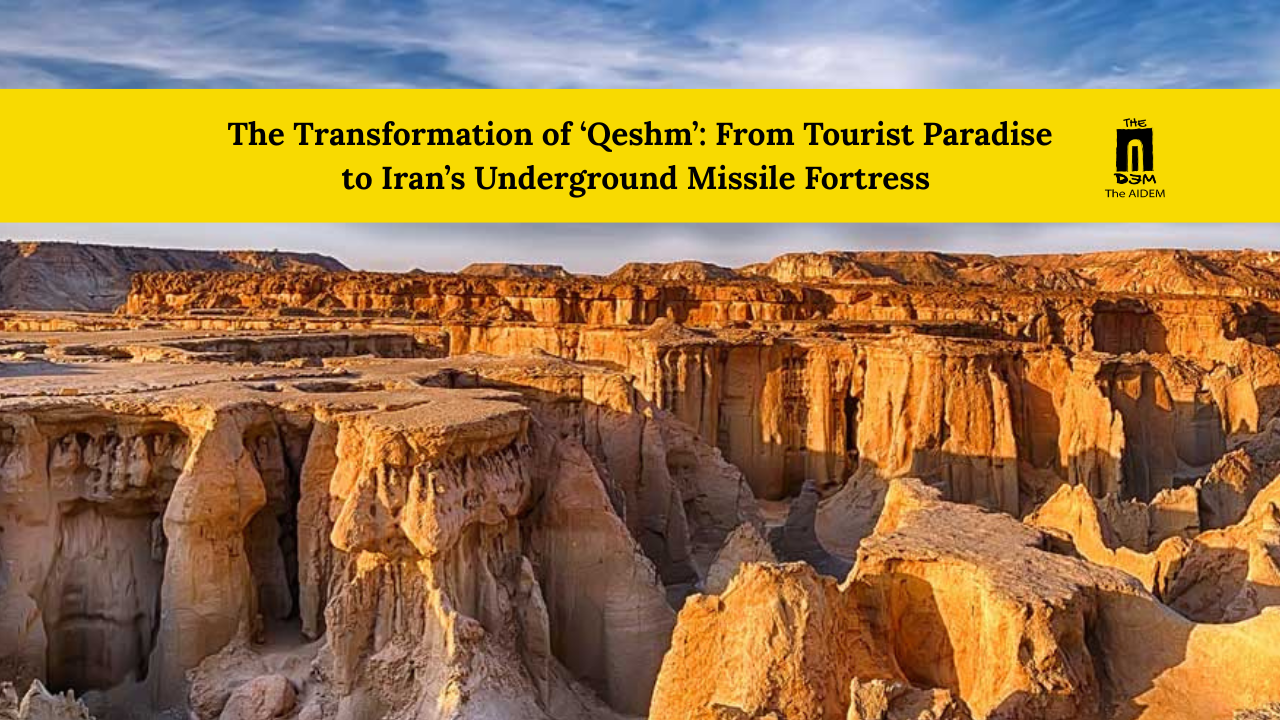
Once known for its salt caves, dramatic landscapes, and duty-free shopping, Qeshm Island is no longer the quiet Persian Gulf retreat it used to be. Iran has systematically transformed its largest island into what analysts describe as a fortified military position — one that sits directly astride one of the most consequential shipping corridors on the planet.
The shift is striking precisely because of what Qeshm used to represent. For years, the island operated as a free-trade zone, drawing visitors and merchants alike. Today, that same geography — its proximity to Bandar Abbas and the Strait of Hormuz — makes it something else entirely: a strategic pressure point in a region where global energy supplies hang in the balance.
Understanding how that transformation happened, and why it matters well beyond Iran’s borders, requires a closer look at where Qeshm sits and what Iran has built there.
Why Qeshm Island’s Location Changes Everything
Qeshm is the largest island in Iran, positioned just off the coast of Bandar Abbas in Hormozgan Province. That might sound like a geographic footnote, but it isn’t. The island sits at the edge of the Strait of Hormuz — the narrow waterway through which a significant portion of the world’s oil supply passes every single day.
Whoever controls the land flanking that strait holds enormous leverage. Iran has clearly recognized this. By fortifying Qeshm with missile defense systems and constructing underground facilities on the island, Tehran has turned a tourist destination into a military asset that cannot be ignored by naval planners, energy markets, or foreign governments.
The Strait of Hormuz is not just a regional concern. It is a chokepoint for global oil shipping, meaning any military escalation near Qeshm Island carries consequences felt in fuel prices and supply chains far from the Persian Gulf.
What Iran Has Actually Built on Qeshm Island
These are not minor additions. Underground military infrastructure is specifically designed to survive aerial bombardment and complicate any effort to neutralize the island’s capabilities from the air.
Paired with missile systems, these installations give Iran the ability to threaten shipping traffic through the Strait of Hormuz from a hardened, well-positioned base. The island has, in effect, become a cornerstone of Iran’s broader military strategy in the Persian Gulf region.
| Feature | Detail |
|---|---|
| Island classification | Largest island in Iran |
| Location | Off the coast of Bandar Abbas, Hormozgan Province |
| Strategic proximity | Adjacent to the Strait of Hormuz |
| Historical role | Free-trade zone and tourist destination |
| Known military infrastructure | Missile defense systems, underground facilities |
| Strategic designation | Key military base and cornerstone of Iran’s regional strategy |
What makes this transformation particularly notable is the speed and deliberateness of it. Qeshm was not historically a military outpost — it was an economic and tourism asset. The decision to militarize it reflects a calculated shift in how Iran views the island’s value.
The Strait of Hormuz — Why the World Is Watching
The Strait of Hormuz is one of those geographic features that appears on maps as a thin blue line but carries enormous real-world weight. It is the primary maritime route for oil exported from the Persian Gulf, connecting producers in the region to buyers across Asia, Europe, and beyond.
Any disruption to traffic through the strait — whether through military action, blockade, or the mere credible threat of either — ripples outward almost immediately into energy prices and supply security. That is precisely why Qeshm Island’s militarization is not just a story about Iran’s domestic defense posture. It is a story about global economic vulnerability.
By positioning missile systems and hardened underground facilities on an island that flanks this waterway, Iran has given itself the ability to threaten, delay, or complicate passage through the strait without necessarily deploying a surface fleet. Observers note that this kind of asymmetric capability — shore-based, concealed, and difficult to pre-empt — is exactly what smaller military forces use to offset the advantages of larger naval powers.
What This Means for the Region and for Travelers
For the tourism industry, the transformation of Qeshm Island represents a near-total reversal of what the island once offered. Its salt caves, natural landscapes, and free-trade zone status made it a genuine draw for visitors. That identity has been substantially displaced by its new military profile.
- Qeshm’s free-trade zone status and tourist infrastructure have been overshadowed by its military buildup
- The island’s proximity to Bandar Abbas — a major Iranian port — amplifies its strategic value
- Regional governments and international shipping companies must now factor Qeshm’s military capabilities into risk assessments
- Any future conflict involving the Strait of Hormuz would almost certainly involve Qeshm Island as a front-line position
For the broader region, the message is clear. Iran has made a long-term commitment to using Qeshm not as an economic showcase but as a military deterrent. Whether that posture succeeds in its strategic goals — or whether it invites countermeasures from rival powers — remains an open question.
What Comes Next for Qeshm and the Persian Gulf
What is confirmed is that the transformation is already substantially underway — missile systems are in place, underground facilities exist, and Iran has publicly framed the island as central to its regional military strategy.
The Persian Gulf remains one of the most closely watched bodies of water on earth, and Qeshm Island now sits at the center of that attention in a way it never did when tourists were visiting its salt caves. How neighboring states, international naval forces, and global energy markets respond to this evolving reality will shape the strategic picture in the Gulf for years to come.
The island’s dual identity — peaceful destination and hardened military base — is not really a contradiction. It is a reflection of how quickly geography can be repurposed when the strategic stakes are high enough.
Frequently Asked Questions
Where is Qeshm Island located?
Qeshm Island is located off the coast of Bandar Abbas in Iran’s Hormozgan Province, making it the largest island in Iran and placing it near the Strait of Hormuz.
What military infrastructure has Iran built on Qeshm Island?
According to available reporting, Iran has installed missile defense systems and constructed underground facilities on the island as part of its broader military strategy in the Persian Gulf.
Why is the Strait of Hormuz strategically important?
The Strait of Hormuz is a vital maritime route for global oil shipping, meaning any military presence that can threaten it carries significant consequences for international energy supplies.
Was Qeshm Island always a military base?
No. Qeshm historically functioned as a free-trade zone and tourist destination, known for its natural landscapes and salt caves, before Iran shifted its focus toward militarizing the island.
Does the militarization of Qeshm affect international shipping?
Regional analysts suggest that shore-based missile systems near the Strait of Hormuz do factor into shipping risk assessments, though specific disruptions have not been confirmed in
Is tourism still possible on Qeshm Island?



Leave a Reply